Quick Verdict
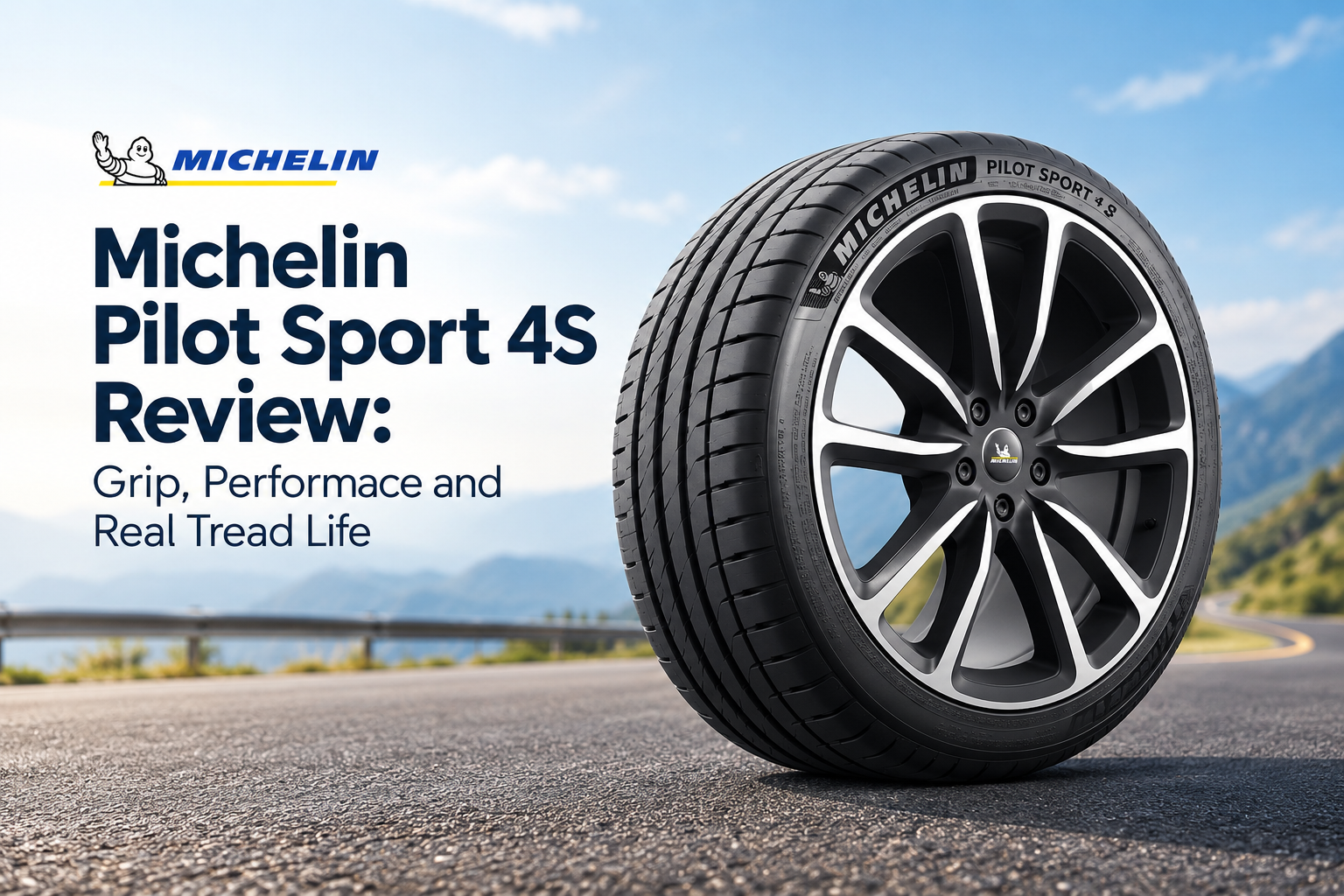
The Michelin Pilot Sport 4S has been the tire enthusiasts cross-shop first since 2016, and it still earns that spot. Class-leading dry grip, top-three wet braking, and a surprisingly comfortable ride, held back only by tread life that rarely matches the warranty and a price that sits at the top of its class.
Advantages
- Best-in-class dry grip that's held up for nearly a decade against newer rivals
- Wet braking and rain confidence rank in the top three of its class
- Surprisingly comfortable and quiet ride for a max-performance tire
- Rare 30,000-mile treadwear warranty, unusual for this category
- OEM choice for Porsche, Ferrari, Corvette, and BMW M cars
Disadvantages
- Real-world tread life often falls well short of the warranty, especially for hard drivers
- Staggered-fitment vehicles get their rear tire warranty cut in half
- Among the most expensive tires in its class
- Zero winter capability, a hard limit below 40°F
- Slightly less steering feedback at the limit than close rivals like the Continental ExtremeContact Sport 02
-
Dry Performance
-
Wet Performance
-
Steering Feel and Handling
-
Ride Comfort and Noise
-
Tread Life
-
Value for Money
The Michelin Pilot Sport 4S has been the tire people cross-shop against everything else in this class since 2016, and it still is, nearly a decade later. That’s rare in tires. A “best in class” title usually lasts two or three years before a rival catches up.
This Michelin Pilot Sport 4S review looks at what still makes it special and where it actually struggles. Continental, Pirelli, and Goodyear have all sharpened their flagship tires since 2016. Is it still worth the price?
This review pulls from lab test scores, professional tire tests run across the US and Europe, real owner mileage reports, and notes from drivers who’ve put thousands of miles on this tire in the rain, on the highway, and at the track. Here’s the honest picture.
Michelin Pilot Sport 4S Key Specs
| Spec | Detail |
|---|---|
| Tire type | Max performance summer tire |
| Season | Summer only, not safe below 40°F (4°C) |
| Sizes | 116+ sizes, 17 to 22 inch rims, 205mm to 355mm wide |
| Speed rating | Up to Y (186 mph) |
| UTQG rating | 300 AA A |
| Treadwear warranty | 6 years or 30,000 miles |
| Price per tire | Roughly $185 to $450, depending on size |
| OEM fitment | Porsche 911, Corvette, Ferrari 488/F8, BMW M cars, Mercedes-AMG, Audi RS, Tesla Model 3 Performance |
| First launched | 2016, replaced the Pilot Super Sport |
What Makes the Michelin Pilot Sport 4S Different
Most summer tires ask you to pick a side: grippy and stiff, or comfortable and soft. Michelin built the tread of the Pilot Sport 4S with two different rubber compounds side by side to avoid that trade-off.
The outer half of the tread, the part doing the work when you’re cornering hard, uses a stiffer, high-grip compound borrowed from Michelin’s racing programs. The inner half, closer to the center of the tire, uses a softer, silica-heavy compound built for wet grip and everyday comfort. That split matters more than it sounds. It means the same tire can feel planted in a fast corner and still soak up a pothole on the drive home.
Underneath, a stiff polyester and steel-belted casing keeps the tire’s shape from flexing too much at high speed. That’s why the steering feels tight and direct instead of vague. On certain sizes, Michelin also bonds a foam layer inside the tire to cut down on the humming noise that hollow tire cavities tend to make on the highway.
None of this is unique to Michelin anymore. Pirelli and Continental use their own versions of the same idea. But Michelin has had nine years to refine this specific formula, and it shows in how balanced the tire feels compared to newer rivals still finding their footing.
Michelin Pilot Sport 4S Review: Dry and Wet Grip
Dry grip is where this tire earns its reputation. In independent lab testing, it scores in the low 90s out of 100 for dry grip. It has taken first or second place in nearly every major group test run since it launched, against tires that came out years later.
Braking distances are short, turn-in is sharp, and the tire doesn’t get squirmy mid-corner the way softer tires can. One BMW M3 owner on a tire forum said switching to this tire sharpened the car’s turn-in more than he thought possible. That comment gets echoed again and again across owner reviews.
Wet grip is just as strong, and honestly the more impressive number given how good the dry side already is. A long-term tester who drove this tire through 1,200 miles of California rain said hydroplaning never crossed his mind once, even on flooded highway stretches.
Lab data backs that up. It’s consistently a top-three performer for wet braking in comparative tests. Aquaplaning resistance isn’t the absolute best in class, but it’s close enough that most drivers will never notice the gap.
Steering Feel and Handling
Handling is confident rather than razor sharp. Owners who’ve run this tire back-to-back against the Continental ExtremeContact Sport describe the Michelin as slightly less communicative right at the limit. It trades a small amount of raw feedback for a smoother, more forgiving ride.
On a public road, most drivers won’t notice. On a track day pushing near the tire’s actual limit, a small number of enthusiasts do prefer the sharper feel of a rival tire. For everyday spirited driving, though, the Pilot Sport 4S still feels connected and predictable.
Ride Comfort and Noise
This is the category that genuinely surprises new owners. A max-performance tire this grippy usually rides rough and loud, but the Pilot Sport 4S doesn’t. Owner comfort scores average in the mid-80s out of 100, high for this class.
Multiple long-term testers specifically call out how much quieter and smoother it is than the run-flat tires that came stock on their cars. It’s still a performance tire, so sharp bumps and expansion joints do transmit through the cabin more than they would on a touring tire. But for daily driving, it’s genuinely livable, which isn’t something you can say about every tire in this category.
Drive an SUV instead of a sedan or coupe? A quiet, comfortable ride is also the strength of Michelin’s SUV-focused sibling in our Michelin Pilot Sport 4 SUV review, or the softer-riding Michelin Latitude Sport 3.
Tread Life: The Real Number Behind the Warranty
Here’s where the tire gets its most mixed reviews, and it deserves a straight answer instead of a marketing one. Michelin backs the Pilot Sport 4S with a 30,000-mile treadwear warranty, which is rare for a max-performance summer tire. Most competitors don’t offer any mileage warranty at all.
Real-world numbers tell a different story. Across end-of-life owner reports, the average tread life sits closer to 15,000 miles, about half the warranty figure. The gap comes down to how the tire is driven.
Owners with powerful rear-wheel-drive cars who enjoy spirited driving or hit the occasional track day burn through the rear tires fast, sometimes in 12,000 to 16,000 miles. Owners who mostly commute and drive calmly regularly stretch a set to 25,000 miles or more.
One detail that catches people off guard: if your car uses staggered fitment, different sizes front and rear, which is common on BMW M cars and Porsches, Michelin cuts the rear tire’s mileage warranty in half since rotation isn’t possible. Check your specific setup before you assume the full warranty applies.
Can You Drive It in Winter?
No, and this isn’t a small caveat. The rubber compound hardens below 40°F (4°C), and grip drops sharply on cold, wet, or icy roads. Michelin doesn’t recommend storing or servicing the tire in near-freezing temperatures either, since the compound can crack. If you live somewhere with real winters, plan on a second set of dedicated winter tires and swap twice a year.
Value for Money: Is the Price Worth It?
At $185 to $450 per tire depending on size, a full set for a larger sports car easily runs $1,200 to $1,800 installed. That’s a real number, and it puts the Pilot Sport 4S at the top of the price range for its class.
It’s also not a tire built to save you money at the pump. If fuel economy is actually your top priority, a performance tire like this will never compete with something built for it. Our best tires for fuel economy guide covers tires built specifically for that.
What you get for the price is the reason most owners don’t hesitate: best-in-class dry grip, top-tier wet grip, a treadwear warranty most competitors don’t even offer, and a tire good enough to be factory equipment on a Ferrari.
If your budget is tighter, the Continental ExtremeContact Sport 02 gets you close to the same performance for 20 to 30 percent less. But if you want the most complete package available and you’re willing to pay for it, the Pilot Sport 4S still earns its price.
What Owners Actually Complain About
A useful review tells you where people run into trouble, not just where a tire shines.
- Tread life falls short of expectations. Drivers expecting 30,000 miles out of spirited driving are usually disappointed. Set your expectations closer to 15,000 to 20,000 miles if you drive hard.
- Road hazard damage is expensive to fix. Because the tire costs more upfront, a single puncture that requires replacement stings more than it would on a cheaper tire. Several owners now buy road hazard coverage specifically because of this.
- Slightly softer steering feel at the absolute limit. Only noticeable to drivers who’ve directly compared it against a sharper rival on track, and even then, it’s a small gap.
- Getting caught out by cold weather. A handful of owners in mixed-climate regions push the tire into late fall or early spring and are surprised by the sudden drop in grip.
Who Should Buy the Michelin Pilot Sport 4S
- Sports car owners who daily drive. If your car doubles as a commuter and a weekend toy, this tire handles both without forcing a compromise.
- Anyone who drives in frequent rain. The wet grip here is one of the tire’s biggest strengths, not just a spec sheet claim.
- Drivers who value a smooth ride. Few performance tires in this class ride this comfortably when new.
Who Should Look at Something Else
- Track-day regulars chasing every tenth of a second. The Michelin Pilot Sport Cup 2 gives up comfort and daily usability for more outright grip.
- High-mileage commuters. If you want one set of tires to last several years, the real-world tread life here will frustrate you.
- Drivers on a tight budget. The Continental ExtremeContact Sport 02 delivers most of the performance for meaningfully less money.
Alternatives Worth Cross-Shopping
Pirelli P Zero PZ4 is the closest rival in reputation, OEM on Ferrari, Lamborghini, and McLaren. Drivers who’ve run both often describe the Pirelli’s dry handling as slightly more aggressive, while the Michelin edges it out in wet braking and overall comfort.
Continental ExtremeContact Sport 02 is the value pick. It typically costs 20 to 30 percent less per tire and consistently lands in the top three of independent tests, with a steering feel several owners genuinely prefer at the limit.
Michelin Pilot Sport Cup 2 is the step up for track regulars. It’s essentially a road-legal semi-slick, with shorter tread life and a firmer ride in exchange for more grip when it counts. For most performance car owners, the Pilot Sport 4S is still the smarter daily choice.
Each of these makes sense in a different situation. Pick the Pirelli if you want a slightly sharper dry feel, the Continental if price is the deciding factor, and the Cup 2 if you take your car to the track often enough to justify the trade-offs.
Frequently Asked Questions
How long does the Michelin Pilot Sport 4S actually last? Michelin’s warranty covers up to 30,000 miles, but real-world reports average closer to 15,000 to 20,000 miles, depending on driving style and whether your car uses staggered sizing front and rear.
Is it good in the rain? Yes. It consistently ranks in the top three for wet braking in independent tests, and long-term owners specifically praise how confident it feels in heavy rain.
Can I use it in winter? No. The compound hardens and loses grip below 40°F, and Michelin doesn’t recommend storing it in near-freezing conditions either.
Is it worth the price over a cheaper alternative? For drivers who actually use the performance, yes. If price is the deciding factor, the Continental ExtremeContact Sport 02 gets close for less money.
What’s the difference between the Pilot Sport 4S and the Pilot Sport 4 SUV? The Pilot Sport 4S is built for sports cars, sedans, and coupes. Michelin builds a separate tire, covered in our Michelin Pilot Sport 4 SUV review, tuned specifically for the weight and ride of performance SUVs. Don’t mix the two up when searching for your size.
Michelin Pilot Sport 4S Review: Final Verdict
Nearly a decade after launch, the Pilot Sport 4S still sets the bar for max-performance summer tires. It doesn’t win every single category. A few rivals edge it out on tread life or price, and hardcore track drivers might prefer a sharper feel elsewhere. But no other tire in this class balances dry grip, wet grip, and daily comfort as well as this one still does.
If you own a performance car, drive somewhere with mild winters, and want the most complete tire you can put on it right now, the Pilot Sport 4S remains the answer.
1 Comment
Pingback: Kumho Ecsta PS91 Review: Ultra-High Performance Summer Tire Worth It? - Auto Tire Guide