
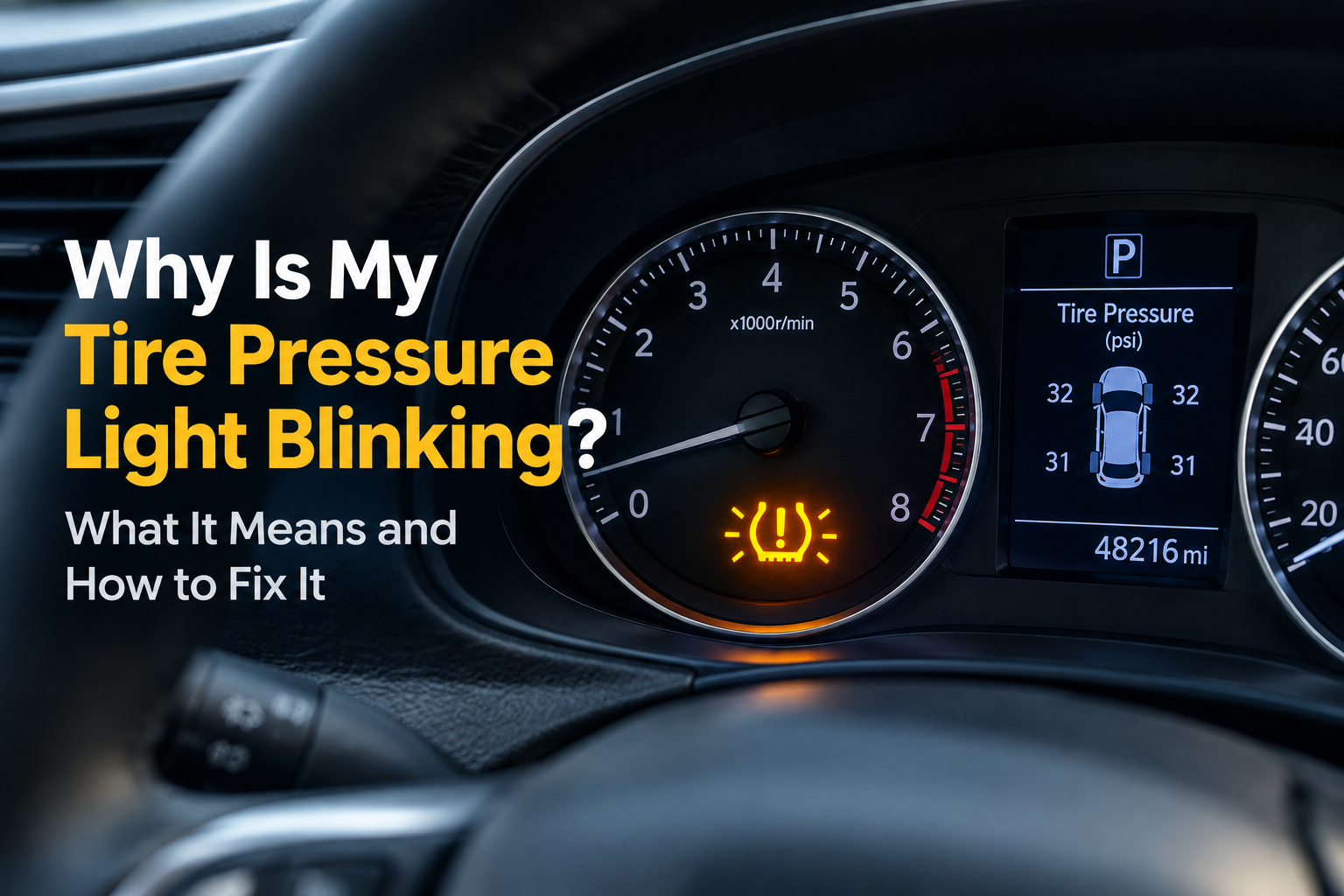
You glance at your dashboard and see that little horseshoe icon flashing at you. Not solid, blinking. Now you are wondering if it is safe to keep driving, whether a tire is about to go flat, or if something bigger is wrong with the car.
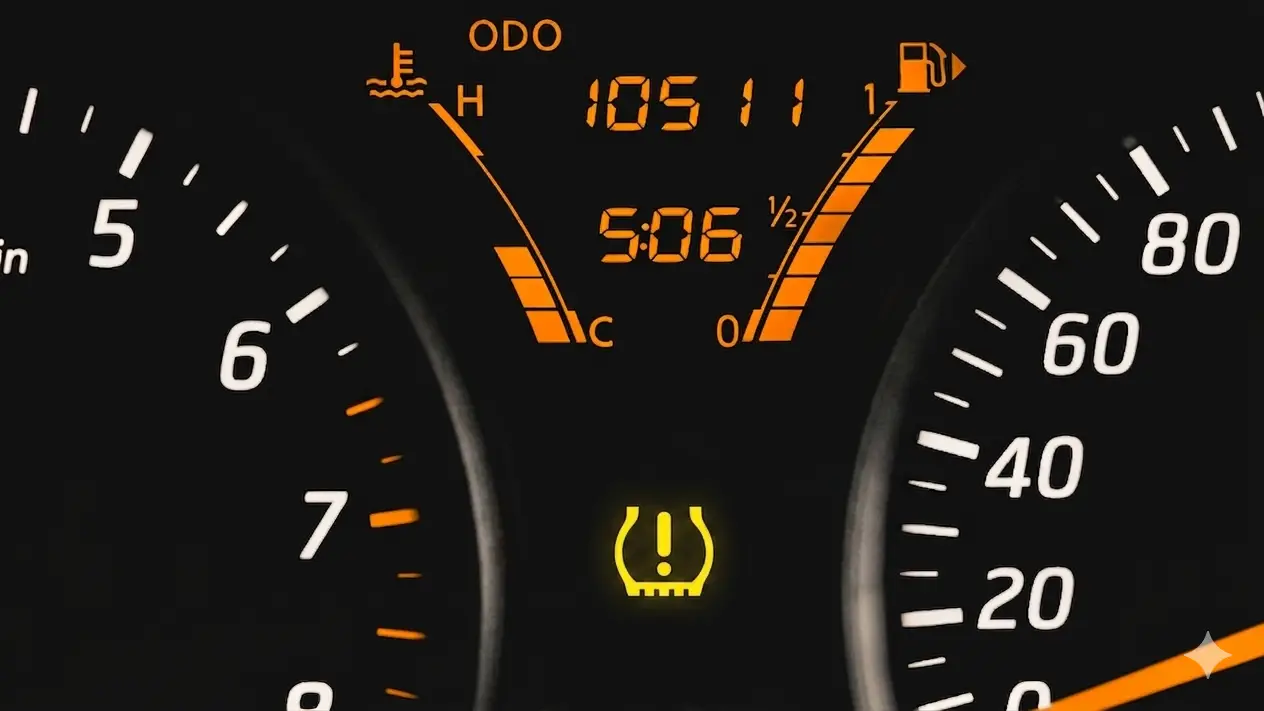
Here is the short answer. Your tire pressure light blinking is not the same warning as a solid one. A solid light means a tire is low on air. A blinking one means your Tire Pressure Monitoring System (TPMS) itself has a problem, usually a dead sensor battery, a damaged sensor, or a system that needs a reset. Your tires might actually be fine.
This is one of the most common dashboard warnings drivers deal with, and most people can fix it in their own driveway in under 20 minutes. Even when it needs a shop visit, it is almost always a quick, inexpensive fix. Below is exactly what is going on, why it happens, and what to do about it right now.
Blinking vs. Solid: Why the Difference Matters
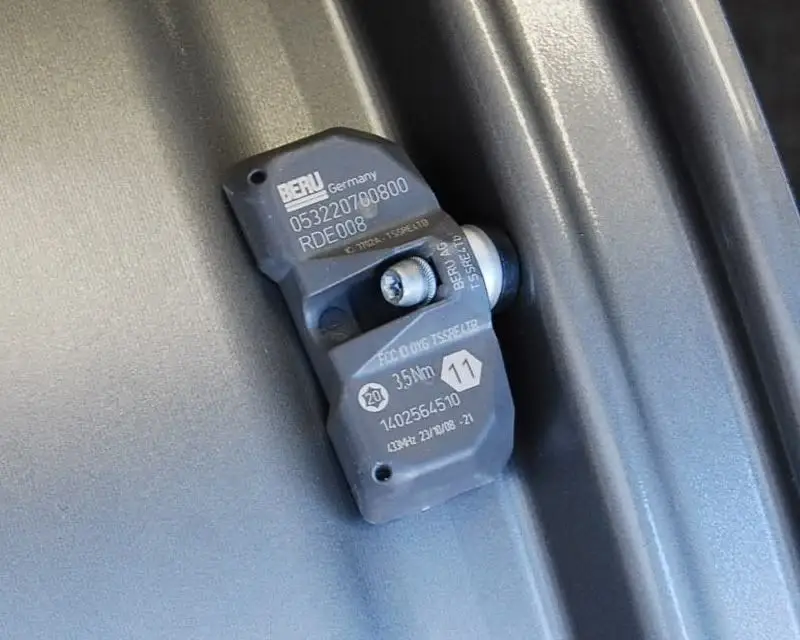
Your car uses small wireless sensors inside each wheel to measure air pressure and send that data to a receiver. When a tire actually loses pressure, the system reads it and turns the light on solid. That part is simple.
A blinking light means something different. It usually flashes for 60 to 90 seconds when you start the car, then either goes solid or keeps flashing. That pattern means the system itself has a fault. One or more sensors have stopped communicating properly. Your car is not saying “add air.” It is saying “I cannot monitor your tires right now.”
Engineers built it this way on purpose, so drivers would not just add air and assume the problem is solved. Federal rules require every TPMS to flag a tire that drops 25% or more below the recommended pressure, and a separate malfunction signal for when the system itself fails.1
That is actually why a blinking light deserves more attention than a solid one, not less. If a sensor has stopped working, your car cannot warn you when that tire really does start losing air. You lose that safety net until the sensor gets fixed.
Why Is My Tire Pressure Light Blinking? The Common Causes
A dead or dying sensor battery. This is the number one cause. Each TPMS sensor has a small battery built in that lasts roughly 5 to 10 years. As the battery weakens, the sensor struggles to send a signal, and the light starts blinking. Once it dies completely, the whole sensor needs to be replaced, since the battery is sealed inside and cannot be swapped separately. If your car is older than seven years and the sensors have never been changed, this is very likely your issue.
Cold weather. Tire pressure drops about 1 PSI for every 10°F the temperature falls. If it got noticeably colder overnight and the light came on this morning, your tires may just be a little low. Cold weather also makes a weak sensor battery communicate even less reliably, so you might see blinking in winter that clears up once the car warms up and the tires are filled.
The system needs a reset after tire work. If you recently got new tires, had a rotation, or had any wheel work done, this is a common cause. When wheels get moved around, the TPMS can lose track of which sensor belongs to which position and needs to be reprogrammed. If the shop skipped that step, the blinking light is the result.
A damaged sensor. Sensors sit on the valve stem inside the wheel. A hard pothole hit, a curb strike, or rough handling during a tire change can physically damage one. A damaged sensor stops communicating and triggers the warning.
A fault in the TPMS control module. Less common, but it happens. The module is the receiver that collects signals from every sensor. If it develops a fault, it can cause the light to blink even when all four sensors are working fine. A mechanic can confirm this with a scan tool.
What You Need Before You Start
You do not need much to work through the steps below:
- A tire pressure gauge (a digital one is under $15 and worth keeping in your glove box)
- Access to an air compressor or pump, most gas stations have one
- Your owner’s manual, to find the recommended PSI and the TPMS reset button location
That is really it. You do not need a mechanic for the first few steps.
How to Fix a Blinking Tire Pressure Light
Step 1: Check All Four Tires, and the Spare
Pull out your gauge and check every tire. Compare the reading to the number on the sticker inside your driver’s door jamb, not the number printed on the tire’s sidewall. That sidewall number is the maximum the tire can hold, not what your car actually needs.
Check the spare tire too. If your car carries a full-size spare, it almost always has its own TPMS sensor. A dead spare sensor triggers the same blinking light as any of the four main tires, and plenty of drivers spend money replacing a front or rear sensor only to find out later the spare was the real problem.
Step 2: Fill Any Low Tires to the Correct PSI
If a tire reads low, add air until it matches the door jamb number. Do this with cold tires, meaning the car has not been driven for at least an hour, since warm air expands and gives you a falsely high reading.
Once every tire is at the right pressure, drive at 50 mph or faster for about 10 minutes. Many vehicles reset the TPMS on their own once the sensors confirm correct pressure over a sustained drive. Restart the car and check the dash. If the light is now solid instead of blinking, keep an eye on it over the next day or two. If it is off completely, you are done.
Step 3: Try a Manual TPMS Reset
If your tires are correctly inflated but the light keeps blinking, try a manual reset:
- Park the car and turn the engine off.
- Turn the key to the “On” position without starting the engine (on a push-start car, press the start button once without touching the brake pedal).
- Find the TPMS reset button. On most cars it sits under the steering wheel, on the instrument panel, or inside the glove compartment. Your owner’s manual will show you exactly where.
- Press and hold the reset button until the tire pressure light blinks three times.
- Release the button, start the engine, and let the car run for about 20 minutes so the sensors can recalibrate.
Some newer vehicles skip the physical button and use the infotainment touchscreen instead. Search “TPMS” or “Tire Pressure” in your owner’s manual if you cannot find a button anywhere.
Step 4: Try the Full Deflate and Reinflate Method
If the manual reset does not clear the light, this forces a complete recalibration:
- Inflate every tire, spare included, to 3 PSI above the recommended amount.
- Fully deflate every tire down to 0 PSI, all of them.
- Reinflate each tire back to the correct PSI from your door jamb sticker.
This makes every sensor re-register with the system at the same time. Drive a few miles afterward, then restart the car to see if the blinking has stopped.
Step 5: See Where You Stand
At this point, one of two things is true. Either the light is off or solid, meaning the reset worked (a solid light just means a tire may need a small top-up, but the system itself is fine). Or the light is still blinking with every tire correctly inflated, which confirms a sensor fault that basic resets cannot fix. That means it is time for Step 6.
Step 6: Get the Sensor Diagnosed
If nothing above clears the blinking, a TPMS sensor has likely failed for good. Take the car to a tire shop, not necessarily the dealership. Most independent shops can identify which sensor failed in about 20 minutes with a TPMS diagnostic tool, then tell you exactly which wheel needs attention. You do not have to replace all four unless they are all aging or the shop specifically recommends it.
Expect to pay $30 to $100 per sensor, parts and labor included, or roughly $150 to $350 for all four depending on your vehicle. Dealerships tend to charge more than independent shops. If a bad sensor turns out to be the least of your worries and the tire itself is damaged, it helps to know what driving on a badly underinflated or flat tire actually does to your car before you decide whether it is safe to keep driving on it.
When to Go Straight to a Mechanic
You can handle most of this yourself, but go straight to a shop if:
- The light keeps blinking after every tire is correctly inflated and you have tried both reset methods
- You recently had tires installed, rotated, or any wheel work done, since the sensors likely were not reprogrammed
- The car pulls to one side, vibrates, or feels off while driving
- You can see something visibly wrong with a tire, like a bulge, a nail, or sidewall damage
- Your car is over seven to ten years old and the sensors have never been replaced
If you are also noticing thinning tread, cracking, or other signs your tires might be past their prime, it is worth running through the warning signs that mean you need new tires.
How to Stop This From Happening Again
- Check tire pressure once a month. Do not rely on the TPMS alone. A slow leak can drop pressure over weeks before it ever triggers a warning.
- Check it in the morning, before driving. Tires heat up as you drive, which pushes the reading higher. A cold, morning reading is the most accurate one you will get.
- Ask your tire shop to reprogram the sensors after any tire service. Rotations, new tires, and wheel swaps can all confuse the TPMS if the sensors are not reprogrammed afterward. Just ask them to confirm it was done.
- Track your sensor age. If your car is getting close to seven years old on its original sensors, ask a mechanic to check battery health at your next service.
- Keep the spare inflated. Check it every few months. A flat spare is useless in an emergency, and a dead spare sensor will keep triggering the same dashboard warning until you deal with it.
- Keep your tires properly maintained overall. Correct pressure also affects how much gas you burn, so if fuel costs are on your mind, the right tires can genuinely help your mileage.
Frequently Asked Questions
What is the difference between a blinking and a solid tire pressure light? A solid light means at least one tire is low on air and needs to be filled. A blinking tire pressure light means the TPMS system itself has a fault, usually a dead or dying sensor battery. Check your tire pressures either way, but if the light keeps blinking after you fill the tires, you are dealing with a sensor problem, not a pressure problem.
Can I keep driving with my tire pressure light blinking? For a short trip, yes, as long as the tires look normal and the car drives fine. But a blinking TPMS means the system is not reliably watching your tires anymore, so you could lose air without any warning. Get it checked as soon as you reasonably can instead of putting it off for weeks.
Why is my tire pressure light blinking but my tires look fine? This is almost always a dying TPMS sensor battery, a sensor that was not reprogrammed after a recent tire rotation or replacement, or a fault in the TPMS module. The blinking pattern is specifically built to flag a system problem, not a pressure problem. Try the manual reset steps above first. If the light stays on, a tire shop can find the exact faulty sensor in about 20 minutes.
How do I reset my tire pressure light after filling my tires? Drive at 50 mph for about 10 minutes and the system should reset on its own. If it does not, find the TPMS reset button, usually under the steering wheel, turn the ignition to “On” without starting the engine, and hold the button until the light blinks three times. Then start the car and let it run for 20 minutes.
How long do TPMS sensors actually last? Most sensors last between 5 and 10 years. The battery is sealed inside and cannot be replaced on its own, so when it dies, the whole sensor gets swapped. If your car is over seven years old and the sensors have never been touched, a dead battery is the most likely reason your tire pressure light is blinking right now.
Quick Recap
A blinking tire pressure light means your TPMS has a fault, not just low air. Check and fill all four tires and the spare first, then try the manual reset. If the light keeps blinking after that, a sensor battery has probably died, and a tire shop can usually replace it in about 30 minutes at a fair price. Do not ignore it. A broken sensor cannot protect you the next time a tire actually starts losing air.
Before you buy new tires or a full replacement set, our tire buying guide walks through what to check first so you do not overspend.