
Walking into a tire shop without knowing what you need is a little like walking into a pharmacy and asking a stranger to pick your medication. You might end up fine. But you also might leave with the wrong thing, having spent more than you needed to. This tire buying guide exists to fix that. It gives you the information you need before you talk to anyone, so you can make a confident decision instead of just trusting whoever is behind the counter.
Whether you drive a sedan, a pickup truck, an SUV, or a crossover, the process of buying tires follows the same path. You need to know your size, understand your options, and match the tire to how and where you actually drive. Everything below walks you through exactly that.
1. Start With Your Tire Size – Everything Else Follows
Before anything else in this tire buying guide, you need to know your tire size. Buying the wrong size is not just an inconvenience. It can affect your speedometer reading, your fuel economy, your braking performance, and in some cases your safety.
Your tire size is already stamped on the sidewall of every tire currently on your car. It looks something like this: 225/60R17. Here is what each part of that code means in plain terms:
- 225 – The width of the tire in millimeters, measured from sidewall to sidewall.
- 60 – The aspect ratio. This is the tire’s sidewall height expressed as a percentage of its width. A 60 here means the sidewall height is 60% of 225mm. Tires with a lower number (like 45 or 50) have a shorter, sportier sidewall. Higher numbers mean more cushion and a softer ride.
- R – Radial construction. Almost all passenger car tires made today are radial tires.
- 17 – The wheel diameter in inches. This must match your rim exactly.
You can also find the correct tire size on the placard inside your driver’s door jamb, or in your vehicle’s owner’s manual. If there are two sizes listed, the first one is your standard fitment.
Stick with the manufacturer’s recommended size unless you are intentionally upgrading. Going wider or taller might look appealing, but it can cause rubbing against the wheel well, throw off your vehicle’s handling balance, and affect the accuracy of your speedometer.
2. Know Which Type of Tire You Actually Need
Tire type is where most people get confused. Tire shops carry several categories, and salespeople do not always explain the differences clearly. Here is a straight breakdown.
All-Season Tires
This is the most common type on the road. All-season tires are designed to handle a wide range of conditions – dry roads, light rain, and mild cold temperatures. They are a solid choice for most drivers in moderate climates who want one tire to last the whole year. They are not built for deep snow or icy roads. The name is slightly misleading. Think of them as “most conditions” tires rather than tires for genuinely all weather.
All-Weather Tires
All-weather tires are different from all-season tires, though the names sound similar. All-weather tires carry the Three-Peak Mountain Snowflake symbol, which means they have been tested and certified for severe snow conditions. They perform better in cold temperatures and light-to-moderate snow than all-season tires, while still being comfortable on warm summer roads. If you live somewhere that gets real winters but you do not want to swap tires twice a year, all-weather is worth serious consideration.
Winter Tires
If you regularly drive in snow, ice, or freezing temperatures below 45°F (7°C), winter tires are the right tool for the job. The rubber compound used in winter tires stays flexible in cold temperatures, while all-season rubber hardens and loses grip. Winter tires are mounted on a separate set of wheels and swapped seasonally. They are not a luxury for northern drivers. They are a safety decision.
Summer Tires
Summer tires are built for warm, dry performance. You’ll find them on sports cars, performance sedans, and enthusiast vehicles. They grip extremely well on dry and wet warm roads, but their rubber hardens significantly below 45°F. Driving on summer tires in cold weather reduces their grip dramatically. These are not everyday commuter tires for most people.
All-Terrain and Highway Tires
If you drive a truck or SUV, you may be choosing between highway tires (smooth, quiet, fuel-efficient, designed for paved roads) and all-terrain tires (aggressive tread patterns, capable off-road, louder on highways). All-terrain tires wear faster on pavement, so if you spend most of your time on roads rather than dirt trails, highway tires are the more practical pick.
3. Understand the UTQG Rating Before You Compare Prices
Almost no one talks about the UTQG rating clearly, which is why it belongs in this tire buying guide as its own section. UTQG stands for Uniform Tire Quality Grading. It is a government-standardized rating system that gives you three numbers stamped on every tire’s sidewall. Understanding these three numbers can save you from buying a tire that sounds impressive but wears out fast.
- Treadwear rating – A number like 400, 600, or 800. This is a relative durability score. A tire rated 400 should last roughly twice as long as a tire rated 200 under standard test conditions. Higher is generally better for everyday drivers who want long-lasting tires. Performance and ultra-high-performance tires tend to have lower treadwear ratings (200 to 300) because their soft compounds grip harder but wear faster.
- Traction rating – Rated AA, A, B, or C. This measures wet braking distance on a test surface. AA is the best, C is the lowest. Most quality tires sit at A or AA. Anything rated B or C for traction deserves a closer look before buying.
- Temperature rating – Rated A, B, or C. This measures how well the tire resists heat buildup at sustained speeds. A is the best. Most highway tires are rated A or B. This matters especially if you do a lot of highway driving in hot climates.
A tire rated 700 AA A is going to last longer and stop better in the wet than a tire rated 300 A B, and now you know why at a glance.
4. Match the Tire to How You Actually Drive
The best tire for your neighbor’s car might be the wrong tire for yours, even if you drive the same vehicle. The right choice depends on your real driving habits, not just your vehicle type.
Ask yourself these questions before shopping:
- Do I mostly drive in the city, on highways, or a mix of both?
- How many miles do I put on per year? Under 10,000 or over 20,000?
- Do I carry heavy loads or tow anything regularly?
- Do I value a quiet, cushioned ride or do I want sharper, more responsive handling?
- What is the weather like where I live for most of the year?
A high-mileage highway commuter needs a touring tire with a high treadwear rating and low rolling resistance. A driver who wants a sharp, responsive feel on winding roads may prefer a performance tire with a lower aspect ratio and softer compound. Someone who hauls gear and drives mixed terrain needs a truck tire with an appropriate load rating. These are different products at different price points.
5. Check the Load Index and Speed Rating
After the tire size code on your sidewall, you will see two more characters. Something like 91H or 95V. These are the load index and speed rating, and they need to at least match what your vehicle requires.
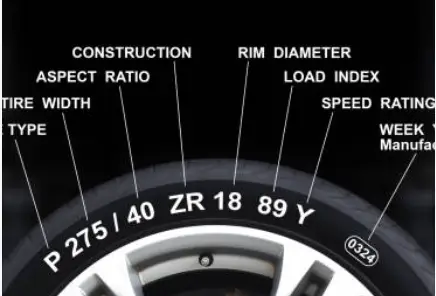
Load index is a number that corresponds to the maximum weight each tire can safely carry. A load index of 91 means the tire can handle up to 1,356 lbs per tire. Your owner’s manual or door jamb placard will tell you the required load index. Never go lower than what your vehicle requires.
Speed rating is a letter indicating the maximum sustained speed the tire is designed to handle safely. Common ratings include:
- H — up to 130 mph (most standard passenger car tires)
- V — up to 149 mph (sport sedans, performance vehicles)
- W and Y — 168 mph and above (high-performance sports cars)
You can go higher than the required speed rating without issue. Going lower is a problem. If your vehicle calls for an H-rated tire and you put on an S-rated tire (112 mph), you may be fine for daily driving, but the tire is not engineered to handle the heat and stress your vehicle can generate at speed. Stick at or above the original specification.
6. Should You Replace 2 Tires or All 4?
This is one of the most searched questions in any tire buying guide, and it deserves a direct answer.
If your tires have worn out evenly and all four are in similar condition, replace all four at the same time. This gives you consistent grip at every corner of the car and is the best outcome for handling and safety.
If only two tires need replacing because of damage or uneven wear, here is the rule: always put the new tires on the rear axle. Even if you drive a front-wheel drive car. The reason is simple. Losing traction at the rear causes the back of your car to swing out, which is extremely difficult to correct. Losing traction at the front reduces steering ability, which drivers can often manage more intuitively. New tires have better wet grip, so they belong where a loss of grip is hardest to handle.
Never mix significantly different tire types on the same axle. If you are putting two new all-season tires on the rear, the two remaining tires on the front should also be all-season tires of a similar tread pattern.
7. Read the Warranty Before You Buy
Tire warranties are not all the same, and this part of any tire buying guide is almost always skimmed over. There are two main types of coverage to look for.
Treadwear mileage warranty — This guarantees that the tire will last a certain number of miles. Common warranties range from 40,000 to 80,000 miles. If the tire wears out before that, the manufacturer provides a prorated credit toward a replacement. To keep this warranty valid, you typically need to keep records of regular tire rotations and maintain correct tire pressure. Do not assume the warranty applies automatically if you have not done routine maintenance.
Workmanship and materials warranty — This covers defects in how the tire was manufactured. It protects you if a tire fails not because of wear but because of a flaw in the rubber or construction. Most reputable brands offer this as standard.
Budget and off-brand tires often come with no mileage warranty at all, or a very short one. That is worth factoring into the price comparison. A tire that costs $30 less but carries no treadwear warranty may end up costing more in the long run if it wears out 15,000 miles sooner.
8. Budget vs Mid-Range vs Premium: What Are You Actually Paying For?
Most guides tell you to “buy from a reputable brand” without explaining what that actually means for your wallet. Here is the honest breakdown.
Budget tires (often $60 to $90 each) are made by lesser-known manufacturers and typically carry lower UTQG treadwear ratings, limited or no mileage warranty, and less rigorous wet braking performance. They are fine for a low-mileage vehicle, a spare set, or a car you are driving for a short period before selling. They are not the smart choice for a vehicle you drive daily in all weather conditions.
Mid-range tires ($90 to $150 each) from brands like Cooper, Falken, General, or Hankook offer a strong balance of performance and value. These are the sweet spot for most everyday drivers. You get solid treadwear ratings, decent wet braking performance, and mileage warranties in the 50,000 to 65,000 mile range.
Premium tires ($150 and up per tire) from brands like Michelin, Bridgestone, Goodyear, and Continental deliver measurably shorter stopping distances in wet conditions, quieter rides, and longer treadwear. Independent testing consistently shows a gap in wet braking performance between budget and premium tires. That gap represents real stopping distance. For families, high-mileage drivers, or anyone who drives in demanding conditions, the premium price is a legitimate safety investment.
9. The Best Time to Buy Tires (and What to Avoid)
Timing your tire purchase well can save you real money. Tire manufacturers typically run their biggest promotions from April through May (before summer road trip season) and again from October through November (before winter). During these windows, rebates of $50 to $100 per set are common from major brands. Many tire shops also offer free installation, road hazard protection, or free rotation packages during these periods.
Black Friday and end-of-year clearance events are also worth watching. Shops often discount previous-year inventory to make room for new stock.
What to avoid: do not buy tires that have been sitting in a shop or warehouse for years. Always check the DOT code on any tire you are buying to confirm its manufacture date. A brand-new-looking tire that was made 4 or 5 years ago has already lost some of its optimal rubber properties. If a shop is selling new tires at a steep discount, it is worth asking how old their inventory is.
Also avoid used tires unless you have no other option. You cannot see internal damage. You cannot verify the history. A used tire might have been run flat, overloaded, or repaired improperly. The small savings are not worth the risk.
Frequently Asked Questions
Can I put a different brand of tire on my car than what came with it originally?
Yes, as long as the size, load index, and speed rating match or exceed the original specifications. You are not locked into the brand your car came with from the factory. Original equipment tires are chosen partly for cost and supply agreements, not just performance. Many aftermarket tires perform equally well or better for your specific needs.
How long do tires typically last?
Most passenger tires last between 40,000 and 70,000 miles depending on the tire type, your driving habits, and how well you maintain them. Proper inflation, regular rotation every 5,000 to 7,500 miles, and correct wheel alignment can extend tire life significantly. Regardless of mileage or tread depth, most manufacturers recommend replacing tires at 6 years from the manufacture date and retiring them completely by 10 years.
Is it okay to mix tire brands on the same vehicle?
It is generally acceptable to have different brands on your car as long as the sizes and ratings match, and you do not mix tire types. For example, do not put all-terrain tires on the front and highway tires on the rear. Tires on the same axle should always be the same type and ideally the same model, because they work as a pair. Mixing very different tires can create unpredictable handling, especially in wet or emergency situations.
Should I buy tires online or at a shop?
Buying tires online often gives you access to a wider selection and better prices, especially during promotional periods. The tires are shipped to a local installer of your choice, who mounts and balances them for a fee, typically $15 to $25 per tire. The total cost is often lower than buying at a brick-and-mortar tire shop. The downside is that you need to do more of the research yourself upfront, which is exactly what this guide is designed to help you with.
What is the difference between all-season and all-weather tires?
All-season tires are designed for mild, year-round use in moderate climates. They handle light rain and cool temperatures but are not certified for severe snow. All-weather tires carry the Three-Peak Mountain Snowflake certification, meaning they have passed a test for severe snow traction. If you live somewhere with real winters but want to avoid seasonal tire swaps, all-weather is the better choice. If your winters are mild with little to no snow, all-season tires are perfectly sufficient.
Final Thoughts on This Tire Buying Guide
The goal of this tire buying guide is simple: to make sure you walk into any tire conversation knowing exactly what you need. You now know how to read your tire size, which tire type fits your climate and driving style, what the UTQG numbers actually mean, and how to think about price versus value without just picking the cheapest or the most expensive option on the shelf.
The right tires for your car are not necessarily the ones the salesperson recommends first. They are the ones that match your size requirements, your driving conditions, and your budget in a way that keeps you safe for as many miles as possible.
At AutoTireGuide.com, we review individual tire models so you can see exactly how specific tires perform in the real world before you buy. If you are ready to find the right set, browse our tire reviews and use this guide to help you make the final call with confidence.