
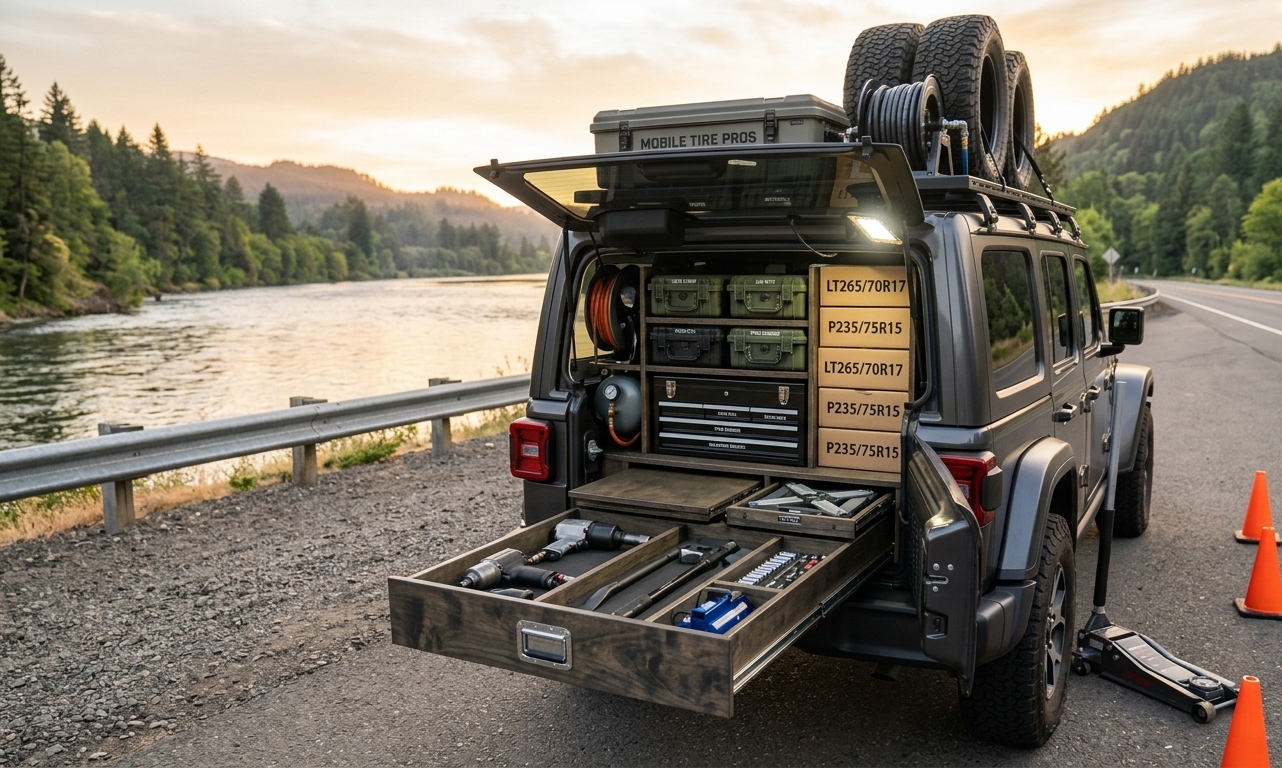
You are shopping for an SUV, or maybe already own one, and you keep seeing “conversion package” pop up. On a used-car listing. On a dealer add-on sheet. On an outdoor gear website. The term sounds self-explanatory but it actually covers very different things depending on who is using it.
This guide breaks it all down plainly: what a conversion package on an SUV actually is, the main types, what they cost, and whether spending money on one makes sense for you.
What Does “Conversion Package” Mean on an SUV?
A conversion package is a set of modifications added to a standard factory SUV to change how it functions, looks, or feels. The factory vehicle stays the same underneath. What changes is what you layer on top of it, either through a third-party shop or a kit you install yourself.
The word “conversion” has been around since full-size vans were being turned into mobile living rooms in the 1970s and 80s. Today it has moved into the SUV world, and it covers a much wider range of upgrades than it used to.
When you see “conversion package” on a used SUV listing, it usually means a previous owner or dealer added aftermarket modifications before the sale. That could be a camper setup in the cargo area, a lifted suspension with off-road gear, or luxury interior upgrades. The important thing to know: these are not factory options from the car brand. They are add-ons done separately.
The Three Main Types of SUV Conversion Packages
1. Camping and Overlanding Kits
This is the most talked-about type right now, and for good reason. Brands like Roadloft, Van Lab, and Goose Gear make modular setups that turn the back of your SUV into a mini camper.
A typical camping kit includes a foldable bed platform, under-bed storage, and often a slide-out kitchen module with a small stove and prep surface. The better kits use birch plywood or lightweight aluminum and are designed to come in and out without tools. You can have your SUV back to its normal form in under 15 minutes.
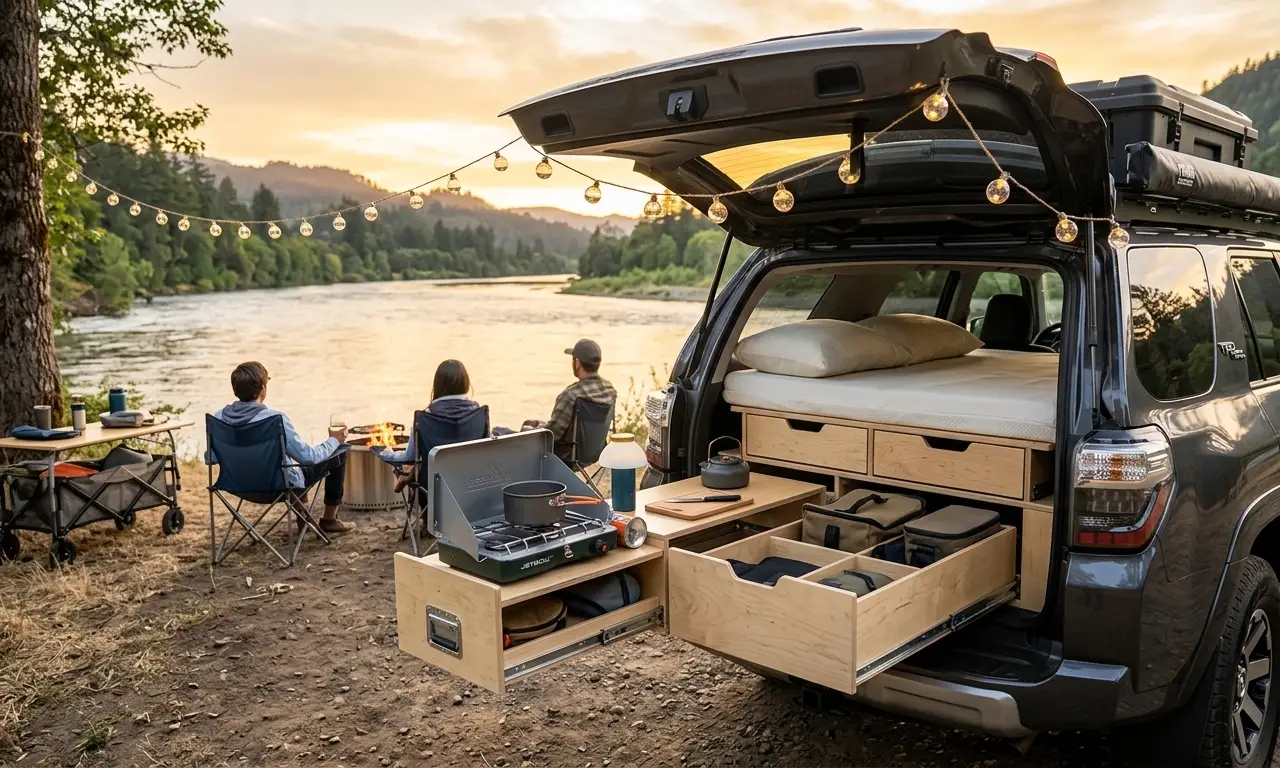
These kits work particularly well with popular models like the Toyota 4Runner, Honda CR-V, Subaru Outback, and Ford Bronco Sport. The setup removes the need for a tent, a trailer, or a separate camper van. You drive the same vehicle to work on Monday and sleep in it at a campsite on Saturday.
Entry-level platforms start around $400 to $600. A full kit with a mattress, kitchen module, and storage system runs $1,500 to $3,000 or more depending on the brand and your specific SUV model.
2. Off-Road Performance Packages
Off-road conversion packages focus on what the SUV can handle mechanically. These are popular with Jeep Wrangler, Toyota Land Cruiser, and Chevrolet Tahoe owners who want more capability than the factory setup provides.
A typical off-road package might combine a suspension lift of two to four inches, upgraded skid plates to protect the underbody, a roof rack, all-terrain or mud-terrain tires, and sometimes a winch or snorkel.
These are usually done by specialty shops rather than as a DIY project, since suspension work requires alignment and in some cases ECU calibration. Costs vary widely. A basic lift and skid plate package might cost $800 to $1,500. A full professional build with quality components can easily go past $5,000.
One thing to know: off-road packages affect your SUV permanently in ways that camping kits do not. A suspension lift changes handling on paved roads. Make sure you actually use the capability you are paying for before going that route.
3. Luxury and Interior Upgrade Packages
This type of conversion is common on high-trim SUVs that get customized further by third-party shops, often before being sold at dealerships. Think upgraded leather seating, captain’s chairs replacing a bench row, custom ambient lighting, rear-seat entertainment screens, and premium audio systems.
Companies like Executive Coach Builders, Lexani Motorcars, and various regional conversion shops specialize in this. You sometimes see these on Lincoln Navigators, Cadillac Escalades, and Chevrolet Suburbans marketed as “conversion vans” or “conversion SUVs” for hire or private use.
These packages are the most expensive of the three and the least reversible. A full luxury conversion can add $3,000 to $12,000 on top of the base vehicle price, and they are almost always dealer or shop-installed.
Conversion Package vs. Factory Option: What Is the Difference?
A factory option is something the car manufacturer offers at the time of purchase. Navigation, panoramic sunroof, towing packages. These are engineered and warrantied by the brand.
A conversion package comes from a third party. It is not part of the manufacturer’s warranty, though a reputable shop will offer its own guarantee on the work. This matters when you are buying a used SUV with a conversion package: always ask what was done, who did it, and whether any documentation exists. A lifted suspension from an unknown shop with no paperwork is a risk. A camping kit from a well-known brand installed with documentation is a relatively safe buy.
Is a Conversion Package Worth It?
The honest answer depends entirely on how you actually use your vehicle.
For camping and overlanding, the math works out well for frequent users. If you are spending $200 or more on hotel rooms every two or three months, a $2,000 camping kit can pay for itself within a year. You also skip the hassle of setting up and tearing down a tent. For weekend-only campers who go out five or six times a year, it is still worth considering, especially if you already own a compatible SUV.
For off-road packages, the value depends on how serious you are. If you are doing light trail driving, your factory SUV is probably fine as it is. If you are tackling serious terrain, rock crawling, or overlanding in remote areas, quality suspension and underbody protection pays back in avoided damage and actual capability. Do not buy an off-road conversion for looks. The weight and handling trade-offs are real.
For luxury packages, the calculus is personal. If you want the comfort of a high-end executive vehicle without buying a brand-new one at full price, a well-done luxury conversion on a slightly older Escalade or Navigator can make financial sense. If you are adding luxury features hoping to increase resale value, be careful. Conversion packages do not always translate to higher resale prices, and buyers may discount an unfamiliar third-party modification.
What to Check Before Buying an SUV Listed with a Conversion Package
If you are looking at a used SUV and the listing says “conversion package,” here is what to do before you pay.
First, find out the brand or shop that did the work. Reputable conversion companies have a paper trail and their kits are identifiable. Generic phrases like “custom work” or “aftermarket upgrades” with no specifics should raise a flag.
Second, check the suspension. If a lift was done, ask for alignment records and find out what hardware was used. A cheap lift kit on a high-mileage SUV creates handling and wear problems down the road.
Third, for camping kits, verify the kit is removable and in good condition. A kit that was poorly installed or has water damage to the plywood is not an asset. It is something you have to remove and replace.
Fourth, always get a pre-purchase inspection from a mechanic who is independent of the seller, especially on vehicles with off-road or suspension modifications.
Looking for an SUV with enough room to justify a conversion? See our picks for the top 10 most spacious 3rd row SUVs before you commit to a build.
Quick Summary
A conversion package on an SUV is a third-party set of modifications that changes the vehicle beyond its factory configuration. The three main types are camping kits, off-road performance packages, and luxury interior upgrades. They vary enormously in cost, reversibility, and real-world value. Whether one is worth paying for comes down to a simple question: does the modification match how you actually drive and use your vehicle? If yes, it can be genuinely useful. If you are adding it for novelty or resale value, you are likely to be disappointed.
At AutoTireGuide, we cover tires for every type of driving, including off-road builds and overlanding setups. If you are putting together an off-road conversion, check our guides on all-terrain and mud-terrain tires to make sure your rubber matches the rest of your build.