
Sumitomo tires often show up on shop price lists at around $90 each, and plenty of drivers have never heard the name. That makes people nervous. Is this a hidden bargain or a risk you should skip?
This Sumitomo tires review answers that question using real specs, independent testing data, and thousands of owner ratings. You will see who makes Sumitomo tires, how the main models perform, what they cost per mile, and who should buy them.
Quick Verdict
Sumitomo tires are worth buying if you want dependable everyday tires at a lower price and your winters are mild. They are not premium tires, and snow and ice grip is the brand’s weak point.
Best for: daily commuters, family cars and crossovers, and truck owners who mostly drive on pavement.
Skip if: you face hard winters, you drive hard on a track, or you want the quietest ride money can buy.
Who Makes Sumitomo Tires?
Sumitomo tires are made by Sumitomo Rubber Industries, a Japanese company based in Kobe. The official Sumitomo consumer site calls the brand the premium export brand of that company. The same company also owns Dunlop and Falken. In 2025 it took full control of the Dunlop brand worldwide after Goodyear sold its remaining rights.
Falken is the sister brand most U.S. drivers know. Owners on tire forums often point out that some Sumitomo and Falken tread patterns look alike. In simple terms, Sumitomo is the value-focused export brand, while Falken leans sporty and off-road. Falken describes itself as a subsidiary of Sumitomo Rubber Industries.
One common mix-up is worth clearing up. Sumitomo Corporation, the big trading company, is a different business from Sumitomo Rubber. In the U.S., the Sumitomo consumer site is run by TBC Corporation, a distributor owned by Sumitomo Corporation of America, not by the tire maker itself.
Where are Sumitomo tires built?
Sumitomo does not publish a full factory list for each model. The parent company runs plants in Japan, Thailand, and Indonesia, plus other factories in China, Brazil, Turkey, and South Africa. Check the sidewall for the “Made in” mark before you buy.
Also read the DOT date code, the last four digits of the DOT number on the sidewall. The first two show the week and the last two show the year. Tire Rack explains how to determine the age of your tires. A tire that has sat for years is not a bargain.
Where Sumitomo Fits in the Tire Market
Tire brands usually fall into three groups: premium, mid-range, and budget. Premium names charge the most. Budget names cost the least and often give up tread life or grip to get there.
Sumitomo sits at the value end of the mid-range. One independent review site, TyreReviews, labels it an economy brand, and prices agree. Most car sizes sell for roughly $75 to $245 per tire. Large all-terrain truck sizes cost more.
So is Sumitomo a premium tire? No. Its own site uses the word “premium,” but that is marketing, not a test result. Think of it as a good-value tire that handles everyday driving well. Prices can also move with import tariffs, so confirm the current price for your size.
Sumitomo Tires Review: What Tests and Owners Say
Sumitomo has appeared in eight independent tests tracked by TyreReviews. Owners there rate the brand 68% overall across 65 reviews. Tire Rack lists 1,487 Sumitomo reviews, and most of them are for one tire, the HTR A/S P03.
Here is how owners on TyreReviews score the brand on average:
| What owners rated | Average score (out of 10) |
|---|---|
| Dry grip | 7.5 |
| Comfort | 6.9 |
| Wet grip | 6.8 |
| Wear | 6.7 |
| Snow grip | 4.8 |
| Ice grip | 2.7 |
Test results and owner ratings do not always match
In Tire Rack’s 2025 ultra high performance summer test, the HTR Z5 placed ninth out of ten tires. In the 2025 all-terrain test, the Encounter AT2 placed fifth out of nine. In a 2026 all-terrain snow test, it placed 23rd out of 30. Those are middle-to-low finishes against some of the best tires in each class.
Owners tell a happier story. On SimpleTire, the older HTR A/S P02 holds 4.6 stars from 135 reviews, and 95% of reviewers say they would buy it again. Discount Tire also shows 4.6 stars for the HTR A/S P03.
Why the gap? Tests pit each tire against the class leaders. Owners compare it with the tire they had before and the price they paid. Both views matter. Lean on test data for safety items like wet braking and snow grip. Lean on owner data for noise, comfort, and wear.
Dry and wet grip
Dry grip is the brand’s best area in owner scores. Wet grip is decent but a step lower. The HTR A/S P03 uses a groove design meant to clear water and reduce hydroplaning. On SimpleTire, P02 owners scored dry grip 4.8 and wet grip 4.5 out of 5.
Snow and ice
This is the clear weak spot. Owners score snow grip 4.8 out of 10 and ice grip 2.7 out of 10 on average. Sumitomo lists the HTR A/S P03 and HTR Enhance LX2 as Mud+Snow rated, which is a basic mark, not the three-peak snowflake symbol that shows severe snow testing. The Encounter AT2 does carry the snowflake, according to its launch announcement, but even that is not a true winter tire.
Comfort and noise
Owners of the touring models usually call them quiet and smooth. The catch is that some reviewers report more road noise and uneven wear as the tires age. Rotating on schedule helps keep noise down.
Tread life
On paper, the numbers look strong: up to 70,000 miles on the HTR A/S P03 and up to 90,000 on the HTR Enhance LX2. Real results vary. One Infiniti QX50 owner reported the P02 wearing down near 30,000 miles despite regular rotation. Another owner said an Enhance LX2 set lasted about twice as long as their previous premium tires. One Tire Rack reviewer reported dry rot after 3.5 years.
Sumitomo’s warranty page says the seller may ask for rotation records, since passenger tires typically need rotating every 5,000 to 6,000 miles.
Sumitomo Tire Lineup: Which Model Is Right for You?
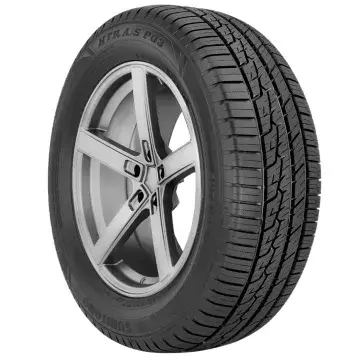
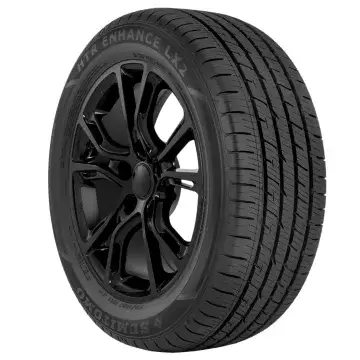
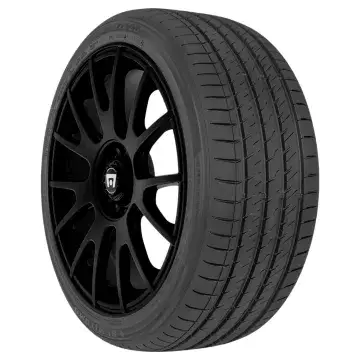
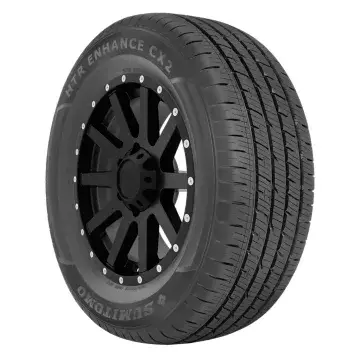
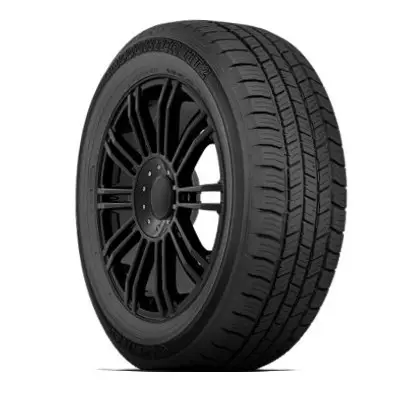
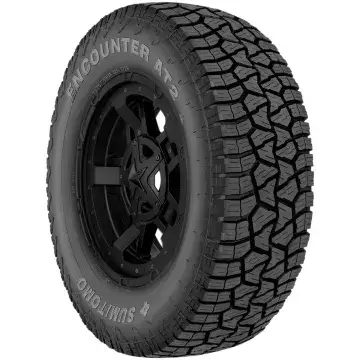
Sumitomo makes dozens of models, and owners rate them very differently. Pick by model, not by brand name. Here are the six that matter most. Warranty and price change by size, so check yours before you buy. You can look up your size with Sumitomo’s tire finder.
Sumitomo Tires Cost Per Mile (Estimate)
A low sticker price only helps if the tires last. This table divides a set’s price by its warranty miles. The last column shows what happens if you get about two-thirds of the warranty. These are estimates for tires only, before mounting and balancing.
| Model (example) | Set of 4 (est.) | Cost per mile on paper | If you get less |
|---|---|---|---|
| HTR A/S P03, small size (about $90 each) | $360 | 0.5 cents (70,000 miles) | 0.8 cents (47,000 miles) |
| HTR Enhance LX2 (about $150 each) | $600 | 0.8 cents (75,000 miles) | 1.2 cents (50,000 miles) |
| Encounter AT2 (about $240 each) | $960 | 1.5 cents (65,000 miles) | 2.2 cents (43,000 miles) |
Mileage warranties are limited, and you usually need proof of regular rotations to make a claim. Sumitomo also lists a 2-year roadside assistance plan and a 30-day test drive on its car tires. Prices come from major retailers in November 2026 and change often, so treat them as a guide.
Pros and Cons of Sumitomo Tires
What Sumitomo does well
- Low prices for tires from a large Japanese maker
- Long warranties on touring models, up to 90,000 miles
- Owners rate dry grip and comfort well
- Wide range, including 75 sizes of the HTR A/S P03 on Sumitomo’s site
- Snowflake-rated all-terrain option at a mid price
Where it falls short
- Weak snow and ice grip
- Mixed reports on tread life and aging
- Middle-to-low finishes in some independent tests
- Fewer reviews for newer and truck models
- Warranty drops on higher speed-rated sizes
Who Should Buy Sumitomo Tires (and Who Should Skip Them)
Buy Sumitomo if:
- You commute daily and live where winters are mild.
- You drive a family sedan, minivan, or crossover and want a quiet, low-cost replacement.
- You are replacing tires on an older car and want solid value.
- You own a truck or SUV and want a snowflake-rated all-terrain at a fair price.
Skip Sumitomo if:
- You see heavy snow and ice. A dedicated winter tire is the safer choice.
- You want track-day grip. Even a track-tested owner of the HTR Z5 said it is not made for track use.
- You want the quietest, most refined ride and are happy to pay more.
- You need proven high mileage on a tire you can count on.
Mistakes Buyers Make With Sumitomo Tires
- Buying the brand, not the model. Owner scores swing a lot between models, so read reviews for the exact tire.
- Using the HTR Z5 in the cold. Summer tires can crack in near-freezing weather. Tire Rack’s HTR Z5 page notes that this damage is not a warrantable condition.
- Treating Mud+Snow as winter-ready. It is a basic mark. Look for the three-peak snowflake instead.
- Ignoring the size-specific warranty. The same model can carry 55,000 miles in one size and 70,000 in another.
- Skipping the date code and rotation records. There is no federal rule on tire age, but many carmakers advise replacing tires at five to six years, as Edmunds explains. Missing rotation records can also sink a warranty claim.
Alternatives If Sumitomo Is Not the Right Fit
- You want a quieter, more refined ride and can spend more: a premium touring tire such as the Bridgestone Turanza Prestige shows what the extra money buys. See Bridgestone’s official Turanza Prestige page.
- You drive a truck or SUV and want a deeper off-road record: the Falken Wildpeak A/T4W comes from the same parent company and has a long list of owner reports. Read Falken’s official announcement.
- You live where winter is hard: choose a true winter tire with the snowflake symbol and a winter-specific tread, then keep your all-season set for spring.
Sumitomo Tires FAQ
Are Sumitomo tires good?
Yes, for the price. They handle everyday driving well, especially in dry and mild weather. Quality varies by model, so check the reviews for the exact tire you plan to buy.
Is Sumitomo a premium tire?
No. Sumitomo sits at the value end of the mid-range. Its own site uses the word “premium,” but prices and independent tests place it below the top-priced names.
Is Sumitomo better than Michelin or Goodyear?
They are built for different budgets, so “better” depends on what you need. Premium brands usually cost more. Sumitomo’s pitch is solid everyday performance for less money. Judge each tire by its own test data and owner ratings.
Which is better, Toyo or Sumitomo?
Both sit in a similar price range, so the answer comes down to the model. Compare the exact tires for your car by warranty, test results, and owner ratings for your size.
Where are Sumitomo tires made?
Sumitomo tires can be built in several countries, including Japan, Thailand, and Indonesia. Check the “Made in” mark on the sidewall before you buy.
How long do Sumitomo tires last?
Warranties run from 55,000 to 90,000 miles depending on model and size, and real results vary. Rotate about every 5,000 to 6,000 miles, as Sumitomo advises for passenger tires, keep your records, and check tire age after about five years.
Final Verdict: Are Sumitomo Tires Worth Buying?
After weighing the test data, owner ratings, warranties, and prices, this Sumitomo tires review lands in a clear place. Sumitomo is a good-value brand that does everyday driving well. It is not a premium tire, and it is not built for snow, ice, or the track.
Buy it if you want a low-cost, comfortable tire for a commuter, family car, or pavement-focused truck in a mild climate. Choose the HTR Enhance LX2 for comfort and mileage, the HTR A/S P03 for sportier all-season grip, and the Encounter AT2 for mixed truck use.
Look elsewhere if you face harsh winters, want track grip, or want the quietest ride available. Before you order, read the reviews for your exact size, check the warranty, and confirm the date code.
Sources and Official Pages
- Sumitomo Tires official consumer site and its warranty information page
- Tire Rack Sumitomo tires and Sumitomo owner reviews
- TyreReviews Sumitomo brand page, with test records and owner scores
- Tire Review: Sumitomo Encounter AT2 launch
- Tire Rack: how to determine tire age
- SimpleTire: HTR A/S P02 reviews
More Value-Tire Reviews
Other value brands have their own stories. Our Road Hugger tires review explains who builds that store brand, and our Sailun tires review covers a real manufacturer rather than a private label.