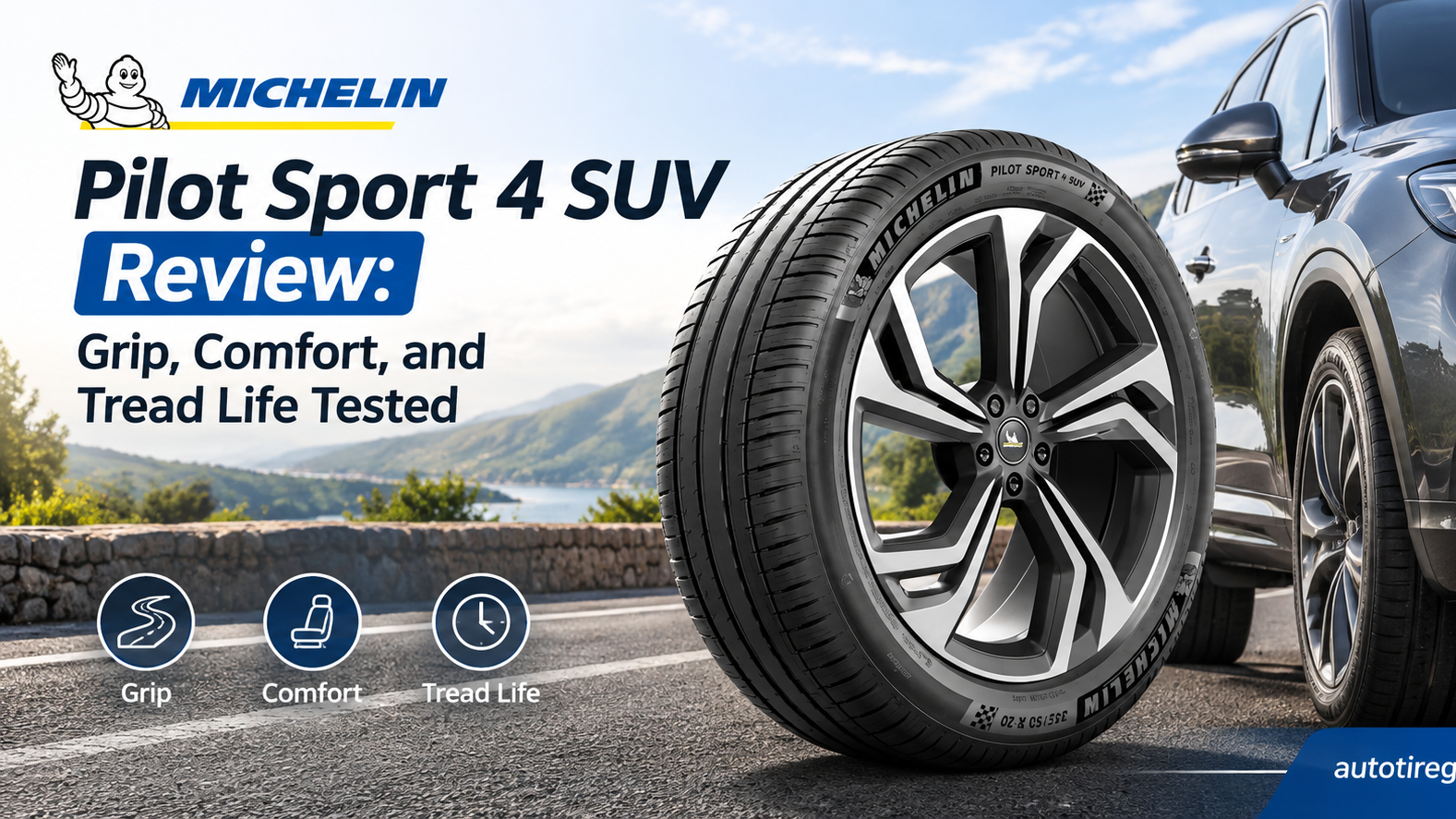
Quick Verdict
One of the sharpest-gripping summer tires you can put on a performance SUV, with wet-weather grip that beats most of the field. The catch is tread life. Best for performance SUV owners who want race-bred handling and don't mind a shorter-than-average set.
Advantages
- Some of the best wet-weather grip in the performance SUV class
- Sharp, confident dry cornering with fast steering response
- Comfortable, well-controlled ride when the tire is new
- Over 80 size options, so it fits nearly every performance SUV on the road
- A run-flat (ZP) version is available if you want that added security
Disadvantages
- Short tread life, around 20,000 miles on most sizes
- Road noise picks up noticeably as the tire wears down
- Not safe in cold weather, snow, or ice, no exceptions
- Premium price that adds up fast if you drive hard
- A small number of owners report vibration right after installation
-
Dry Performance
-
Wet Performance
-
Steering Response
-
Ride Comfort and Noise
-
Tread Life
-
Fuel Efficiency
-
Value for Money
Grip is the entire reason the Michelin Pilot Sport 4 SUV exists. Michelin took the track-tuned engineering behind its sedan performance tires and rebuilt it to carry the extra weight of an SUV without losing the sharp, connected feel that made those tires great in the first place.
This review is built on real specs straight from Michelin, independent lab testing data, and owner feedback from drivers who have put real miles on this tire. Here’s the honest, detailed picture of where it earns its reputation and where it comes up short.
Michelin Pilot Sport 4 SUV Key Specs
| Spec | Detail |
|---|---|
| Size range | 225 to 335mm widths, 17 to 23 inch rims (80+ size options) |
| Tire type | Max performance summer tire for SUVs and crossovers |
| Season | Summer only, not rated for near freezing temps, snow, or ice |
| UTQG rating | Treadwear 220 to 500 depending on size, Traction A to AA, Temperature A |
| Mileage warranty | Roughly 20,000 miles on most sizes, short for the category |
| Price range | Around $220 to $800 per tire depending on size. Run-flat (ZP) sizes cost more |
| Vehicle fitment | Performance SUVs and crossovers: BMW X5/X6, Mercedes GLC/GLE, Porsche Cayenne/Macan, Audi Q5/Q7, Volvo XC60/XC90, Land Rover, Genesis, Lexus RX/NX |
What Makes This Tire Different
Michelin builds the Pilot Sport 4 SUV around what it calls a Dual Sport tread design. The outer half of the tread uses stiffer rubber blocks tuned for dry cornering grip. The inner half uses wider grooves that push water out from under the tire when it rains. In simple terms, one side is built for hard cornering on a dry road, and the other side is built to keep you safe the moment it starts pouring. You get both without switching tires.
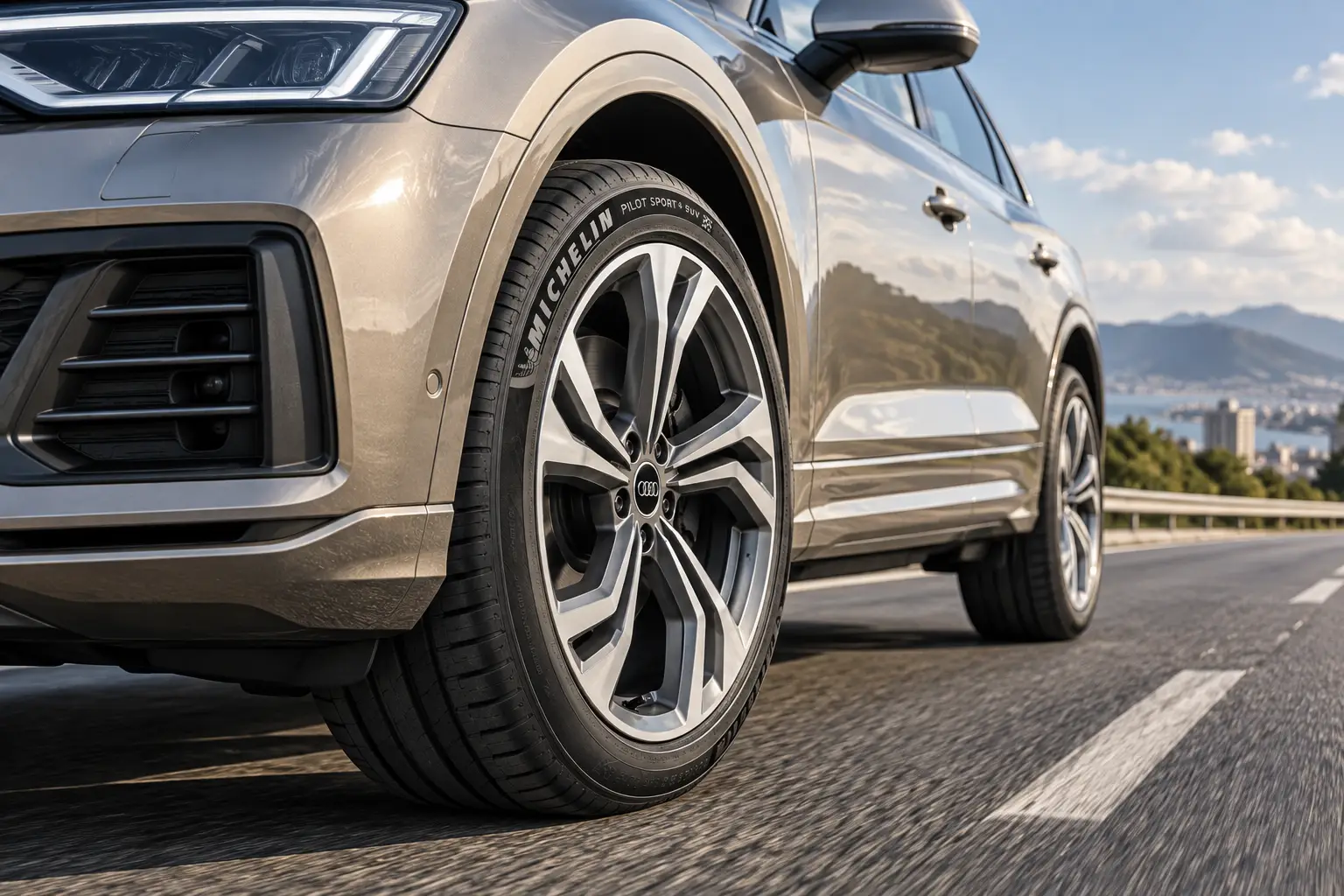
Under the tread, the casing uses a dense polyester body, two steel belts, and a hybrid nylon and aramid reinforcement layer. That combination keeps the tire’s shape stable at higher speeds instead of squirming under load, which is exactly why owners on forums describe the steering feel as connected rather than vague.
How the Michelin Pilot Sport 4 SUV Actually Performs
Dry Grip
This is where the tire earns its price tag. TyreReviews’ independent testing has it scoring in the 90s out of 100 for dry grip, and it has taken outright first place in several SUV tire group tests. Owner surveys on TireRack back this up, with dry traction scores consistently landing in the 9 to 10 range. If your SUV sees any spirited driving at all, this tire keeps up.
Wet Grip
Wet performance is arguably the standout category. Independent testing found the Pilot Sport 4 SUV posting some of the largest aquaplaning reserves in its class, along with strong wet braking and confident handling in standing water. Several owners specifically mention never feeling caught out on a flooded highway or in a sudden downpour. If you live somewhere with unpredictable rain, this is a genuine strength, not just a marketing claim.
Snow and Ice
Michelin is upfront here. This tire should not be driven, stored, or serviced anywhere the temperature approaches freezing. Cold temperatures can crack the rubber compound, and that kind of damage is not covered under warranty. If you get real winters, plan on a second set of dedicated winter tires for the cold months. Our Michelin Pilot Alpin 5 SUV review covers the winter counterpart built for the same class of large SUVs. Pushing this tire through winter is one of the most common, and most avoidable, owner complaints.
Ride Comfort and Noise
Feedback here is genuinely mixed, and that’s worth being honest about. Many owners describe the ride as smooth and the cabin as quiet, especially compared to the factory tires they replaced. But a meaningful number of drivers report road noise that gets more noticeable as the tire wears, and one European test flagged it as one of the noisier tires in its class for pass-by noise. One fix that comes up again and again in owner threads: set your tire pressure to your vehicle’s recommended PSI, not the number a tire shop defaults to. It measurably helps both noise and comfort.
Tread Life
This is the tire’s weakest category, and owners are not shy about saying so. Michelin’s own mileage warranty sits around 20,000 miles for most sizes, short even by performance-tire standards. Real-world reports vary widely. Some drivers report needing replacements between 22,000 and 35,000 miles, while others stretch a set further with careful driving and regular rotations. If tread life is your top priority, this is not the tire that wins that fight.
Fuel Efficiency
Results are mixed but generally acceptable. One recent test praised the tire’s rolling resistance and called it efficient for its class, while an older test placed it closer to the middle of the pack. It won’t be the most fuel-efficient tire on the market, but it isn’t a fuel hog either. If fuel economy is actually your top priority, it’s worth reading our best tires for fuel economy guide, since a performance tire like this will never compete with a touring tire built specifically for low rolling resistance.
Value for Money
You’re paying a premium price for a premium name, and most owners accept that trade willingly. The performance genuinely justifies the cost for drivers who use it, but the shorter tread life does chip away at long-term value. If you drive gently and get full mileage out of a set, the value holds up well. If you drive hard and burn through tread quickly, the cost per mile adds up fast, so budget for that before you buy.
Common Complaints Owners Report
No tire is perfect, and a useful review tells you where people actually run into trouble, not just where the tire shines.
- Short tread life relative to price. The most repeated complaint, especially from drivers who expected touring-tire mileage from a performance tire.
- Noise increasing with wear. Several owners note the tire is quiet when new but gets louder in the last third of its life.
- Getting caught out by cold weather. Some owners in mixed-climate regions admit to pushing the tire into fall and early spring temperatures it wasn’t designed for, then get surprised by reduced grip.
- Installation and balancing. A small number of reports mention mild vibration right after mounting, usually resolved with a rebalance.
None of these are dealbreakers on their own, but they’re worth knowing before you buy, especially the tread life and cold-weather points, since both come down to setting expectations correctly.
Who Should Buy This Tire
- The performance SUV owner. If you drive a Macan, X5, or GLC and want the tire to match the vehicle’s sporty character, this delivers.
- The wet-weather driver. Anyone dealing with frequent rain who wants real confidence in braking and aquaplaning resistance will appreciate this tire’s strongest category.
- The driver who replaces tires often anyway. If you already swap tires every couple of years regardless of remaining tread, the shorter lifespan matters far less and you get to enjoy the performance without the downside.
Who Should Look Elsewhere
- Drivers who see real winters. This tire is not safe below freezing. You’ll need a dedicated winter set for the cold months regardless.
- High-mileage commuters. If you put on 15,000+ miles a year and want one set of tires to last several years, the short tread life will frustrate you.
- Budget-focused buyers. The price-per-mile math only works out if you’re driving the tire the way it’s designed to be driven.
Alternatives Worth Considering
Pirelli Scorpion
A common cross-shop against the Pilot Sport 4 SUV, with a similar sporty focus but a reputation for a slightly more comfortable ride at the cost of a touch of outright grip. See Pirelli’s official Scorpion Verde page for current sizes and pricing. If you want a little more everyday comfort without giving up much performance, this is the closer alternative.
Goodyear Eagle F1 Asymmetric 6
A close competitor in the same performance SUV category, often praised for balanced all-around performance and, in some sizes, a longer tread life than the Pilot Sport 4 SUV. Check Goodyear’s official product page for full specs. Worth considering if you want to close the tread-life gap without giving up much dry or wet grip.
Continental ExtremeContact Sport 02
Several owners who’ve run both brands mention preferring Continental’s steering feel right at the limit, and Continental’s summer performance tires are typically priced lower per tire than Michelin’s equivalent. Continental’s official ExtremeContact Sport 02 page has current sizing. If budget is a bigger factor for you than brand loyalty, it’s worth cross-shopping.
Michelin Latitude Sport 3
If you’d rather stay inside the Michelin lineup, our Michelin Latitude Sport 3 review covers Michelin’s other high-performance SUV tire, and Michelin’s official Latitude Sport 3 page lists sizing. It’s worth comparing against the Pilot Sport 4 SUV for your specific vehicle, since the two overlap on a lot of luxury SUV fitments.
Each of these makes sense in a different situation. Pick the Pirelli if comfort matters more to you, the Goodyear if you want to close the tread-life gap, and the Continental if price is the deciding factor. If you live somewhere with real winters, none of these solve that problem on their own. Plan for a dedicated cold-weather set no matter which summer tire you choose.
Frequently Asked Questions
Is it good for daily driving?
Yes, it works fine as a daily driver, though it’s tuned for spirited driving rather than plush comfort. Expect a firmer, sportier ride than you’d get from a comfort-focused touring tire.
How long do these tires actually last?
Most owners report somewhere between 20,000 and 35,000 miles, with Michelin’s own treadwear warranty covering around 20,000 miles on most sizes. Driving style and tire pressure both make a noticeable difference here.
Can I drive on it in winter or snow?
No. This is strictly a summer tire. Michelin warns against using it near freezing temperatures, in snow, or on ice, since the rubber compound can crack in the cold.
Is it available as a run-flat tire?
Yes. Michelin offers a Zero Pressure (ZP) run-flat version alongside the standard tire. The ZP version costs more and comes in a smaller selection of sizes.
What’s the difference between the Pilot Sport 4 SUV and the Pilot Sport 4 S?
The Pilot Sport 4 S is built primarily for track use on sports cars and sedans, and we cover it in our separate Michelin Pilot Sport 4S review. The Pilot Sport 4 SUV is tuned specifically for the weight and ride characteristics of heavier SUVs, so don’t mix the two up when you’re searching for your size.
Michelin Pilot Sport 4 SUV: Final Verdict
The Michelin Pilot Sport 4 SUV earns its spot among the best performance tires for SUVs mostly on the strength of its dry and, especially, wet grip. It is not the tire to buy if tread life or a whisper-quiet cabin is your top priority.
But if you bought a performance SUV because you actually enjoy driving it, this tire lets the vehicle live up to that promise. Just budget for a replacement set sooner than you might with a more mileage-focused tire, and plan on a separate winter set if you get real cold weather.