
If you have been shopping for tires and keep seeing the word “touring” without a clear explanation of what it actually means, you are not alone. It is one of the most searched questions in the tire category.
The short answer: touring tires are designed to give everyday drivers the best all-around package. They combine a comfortable ride, low road noise, long tread life and reliable traction in wet and dry conditions. They are not built for a racetrack. They are built to make the miles you drive every year feel smooth, safe and quiet.
That said, there is a lot worth understanding before you spend several hundred dollars on a set. This guide covers every type of touring tire, how they are constructed, real benefits and limitations, the best models available today, and what to look for before you buy.
What Are Touring Tires?
What are touring tires, exactly? The term refers to a design philosophy, not a single feature. A touring tire is engineered around three priorities: ride comfort, tread longevity and all-season capability. Everything about its design, from the rubber compound to the tread pattern to the internal belt structure, is shaped by those goals.
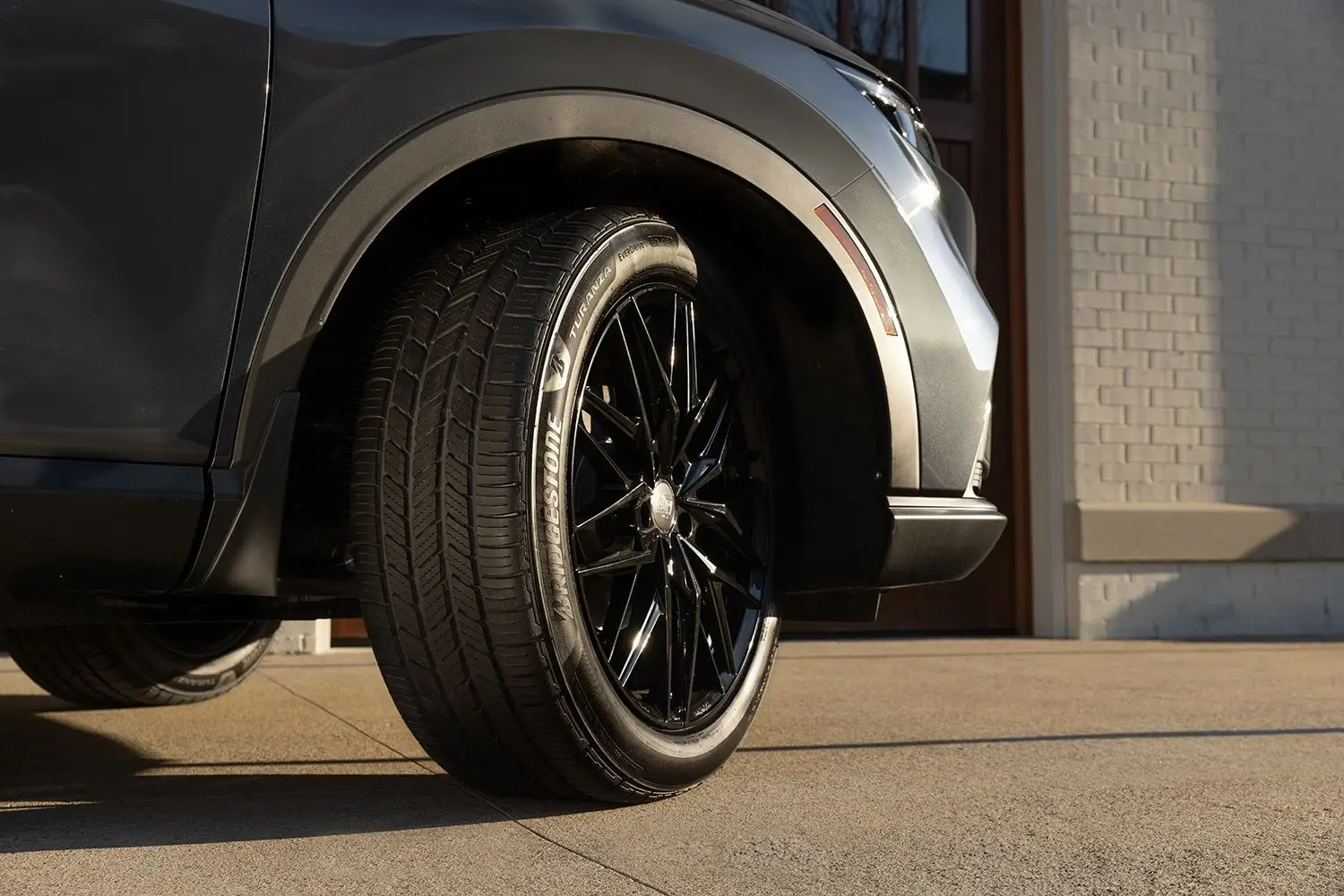
Compared to a performance tire, a touring tire uses a softer and more flexible sidewall to absorb road imperfections rather than transfer them into the cabin. The tread compound is formulated to last tens of thousands of miles rather than sacrifice longevity for maximum grip. The tread pattern is tuned for quiet running and efficient water evacuation rather than high-speed cornering stability.
This design philosophy explains why touring tires dominate the passenger car market. The vast majority of sedans, minivans, crossovers and family SUVs leave the factory on some version of a touring tire. If you drive a Toyota Camry, Honda CR-V, Subaru Outback or Chrysler Pacifica, there is a very good chance touring tires are already on your wheels.
The Four Types of Touring Tires
Most searches for this topic return a single definition, as if touring is one category. It is not. There are four distinct subtypes. Understanding which one matches your vehicle and driving habits makes a meaningful difference in what you should buy.
Standard Touring All-Season
This is the most common type. These tires handle dry roads, wet roads and light snow. They typically carry a speed rating of T (118 mph) or H (130 mph) and suit sedans, minivans and smaller crossovers. Tread life warranties run from 60,000 to 80,000 miles on most models. These are the tires the majority of cars leave the showroom on.
Grand Touring All-Season
Grand touring tires step up in both performance and price. They use sportier tread designs, higher-grade rubber compounds and typically carry H or V (149 mph) speed ratings. The ride remains smooth and quiet, but steering response is noticeably sharper and wet-weather braking is improved over the standard touring category. They suit sport sedans, performance-oriented crossovers and drivers who want more engagement without sacrificing daily comfort.
Performance Touring
Performance touring tires sit at the boundary between the touring and performance categories. They carry W (168 mph) or Y (186 mph) speed ratings and use aggressive asymmetric tread patterns designed for cornering grip. They suit sports cars, performance sedans and luxury vehicles. The trade-off is shorter tread life (typically 40,000 to 50,000 miles) and a firmer, louder ride than grand touring alternatives.
Highway All-Season
These are the touring-category equivalent for pickup trucks, full-size SUVs and light commercial vehicles. They carry higher load ratings to support extra vehicle weight and are optimized for highway stability and tread durability over long distances. If you drive a Ford F-150 or Chevrolet Tahoe primarily on paved roads, a highway all-season touring tire will deliver a more comfortable and fuel-efficient experience than an aggressive all-terrain tread.
How Touring Tires Are Built
Understanding construction explains why touring tires perform the way they do.
Tread compound: Touring tires use a silica-enriched rubber compound. Silica increases flexibility at lower temperatures, which is why all-season touring tires maintain grip in cold weather when a summer performance tire would stiffen and lose traction. The compound is also formulated to wear slowly and evenly, which accounts for their significantly longer service life.
Tread pattern: Most touring tires feature wide circumferential grooves and lateral channels that route water away from the contact patch efficiently. Tread blocks are engineered with variable-pitch sequencing, where blocks vary slightly in size so they do not all strike the road at the same frequency. This is what eliminates the droning noise characteristic of less refined tires at highway speeds.
Internal structure: Touring tires typically use two steel belts under the tread, reinforced with a nylon cap ply for high-speed stability. The sidewalls are engineered to flex and absorb road impacts rather than transmit them directly to the vehicle, which is the primary source of their smooth ride quality.
Speed ratings: Every tire carries a speed rating letter on its sidewall. Standard touring tires are usually T-rated (118 mph) or H-rated (130 mph). Grand touring tires are typically H or V-rated (149 mph). If your car came with H-rated tires, replacing them with T-rated tires is a mistake. The rating affects structural integrity at normal highway speeds, not just theoretical maximum capability.
The Real Benefits of Touring Tires
Long Tread Life
A quality standard touring tire typically lasts between 60,000 and 90,000 miles with proper inflation and rotation. A comparable high-performance summer tire may last 20,000 to 40,000 miles. For a driver covering 15,000 miles per year, that is potentially six years on one set. The cost per mile is significantly lower, which matters more than the upfront price of the tire.
Quiet, Comfortable Ride
The variable-pitch tread blocks, optimized groove geometry and softer sidewalls work together to reduce road noise and vibration. If you have ever switched from worn performance tires to a fresh set of grand touring tires, the difference in cabin comfort at highway speed is dramatic. This is one of the most noticeable improvements any everyday driver can make to their driving experience.
All-Season Reliability
Most touring tires sold in North America carry the M+S (Mud and Snow) marking, indicating they meet a minimum standard for light snow traction. Higher-end models also carry the Three-Peak Mountain Snowflake (3PMSF) symbol, which means they have passed a more rigorous snow traction test. This does not make them winter tires, but it does make them a genuine year-round option in moderate climates.
Fuel Economy
Touring tires generally have lower rolling resistance than performance tires, which means the engine does less work to maintain speed. The fuel economy gain is real but modest. Depending on the tire and driving conditions, you may see a one to three percent improvement over a performance tire. Over 60,000 miles of driving, that difference is measurable.
Where Touring Tires Fall Short
Not for Spirited Driving
If you enjoy pushing your car through corners or want precise and immediate steering feedback, touring tires will feel soft and imprecise compared to performance alternatives. The softer sidewalls that produce a comfortable ride also allow more flex during hard cornering, which reduces handling precision. For most drivers this is irrelevant. For enthusiasts, it is a genuine limitation.
They Are Not Winter Tires
This is the most important limitation. Touring all-season tires handle light snow and cold, dry pavement adequately. In genuine winter conditions, including packed snow, ice or sustained heavy snowfall, they are outclassed by dedicated winter tires. The “all-season” label means capable across a range of conditions, not optimal in all of them. If you live somewhere with real winters, a separate set of winter tires is the correct solution.
Not Suitable for Track Use
Even a grand touring tire will overheat quickly on a track. The compound is not designed to handle the sustained heat generated by repeated high-speed cornering. Accelerated and uneven wear will follow. If you attend any track events, even occasionally, you need a different tire for those days.
Top Touring Tires for 2026
These models consistently rank at the top of their respective categories based on independent testing, long-term wear data and verified owner feedback.
Michelin CrossClimate 2
The CrossClimate 2 is the standout all-around performer in the touring category. In independent long-term testing it projects to approximately 75,000 miles of tread life, leads its class in snow traction (it carries the 3PMSF symbol), delivers excellent dry braking and records low rolling resistance for better fuel economy. Its one trade-off is wet performance, which trails a small number of rivals but remains solid for everyday use. It is the strongest single-tire solution for drivers who encounter all four seasons.
Continental TrueContact Tour
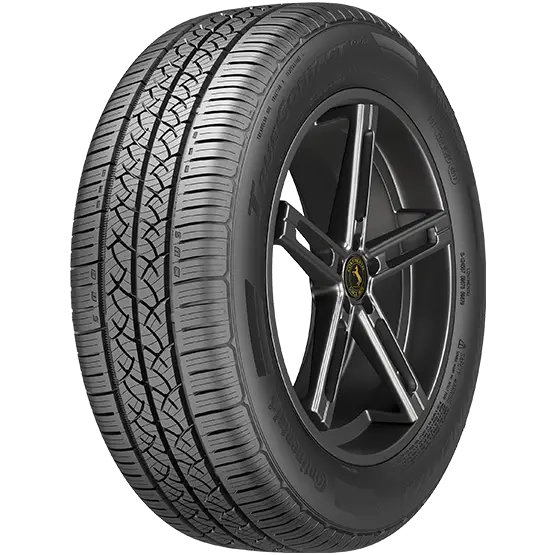
The TrueContact Tour consistently benchmarks at the top of the standard touring all-season category. Continental’s EcoPlus Technology improves fuel efficiency, shortens wet stopping distances and extends tread life. It is the benchmark choice for family sedans, coupes, minivans and small crossovers where balance across all conditions matters most.
Bridgestone Turanza QuietTrack
As the name indicates, the Turanza QuietTrack is engineered with low cabin noise as a primary objective. It combines long tread life with reliable wet and dry traction. It is the right pick for high-mileage commuters and highway drivers who prioritize a refined interior experience above all else.
Michelin Defender 2
The Defender 2 carries an 80,000-mile treadwear warranty, one of the highest in the category, and is known for exceptional durability and quiet running. It suits drivers of cars and sedans who want to maximize the number of miles between tire purchases and are less focused on dynamic performance.
Goodyear Assurance WeatherReady 2
The updated WeatherReady 2 brings an improved tread design with noticeably better snow capability alongside strong wet and dry performance. It is a reliable choice for drivers who want genuine all-season versatility with confidence in unpredictable weather. It earns high marks across all conditions except severe winter.
Pirelli Cinturato P7 All Season Plus 3
The P7 All Season Plus 3 is the pick for sport sedans and performance-oriented vehicles that need a more responsive feel at the wheel. It delivers strong wet and dry handling alongside good fuel efficiency, and fits cleanly into the grand touring category for drivers who want a little more engagement from their tires without stepping into a pure performance tire.
Touring Tires vs. Performance Tires
| Category | Touring Tires | Performance Tires |
|---|---|---|
| Tread Life | 60,000 to 90,000 miles | 20,000 to 50,000 miles |
| Ride Comfort | Excellent: soft sidewalls absorb road imperfections | Firmer: stiffer sidewalls for cornering precision |
| Road Noise | Low: variable-pitch tread reduces cabin noise | Moderate to high: aggressive tread generates more noise |
| Wet Traction | Good: reliable in rain and light standing water | Very good: stickier compound, shorter wet stopping distances |
| Snow Performance | Light snow capable on most models | Poor: many performance tires are summer-only |
| Cornering Grip | Adequate for normal driving | Superior for spirited or track driving |
| Fuel Economy | Better: lower rolling resistance | Slightly worse: higher rolling resistance |
| Typical Speed Rating | T, H or V | V, W or Y |
| Best For | Daily drivers, family vehicles, highway commuters | Sports cars, enthusiasts, spirited drivers |
How to Read the UTQG Rating
Every tire sold in the United States carries a UTQG (Uniform Tire Quality Grading) rating on the sidewall. It gives you three pieces of information: a treadwear grade, a traction grade and a temperature grade.
The treadwear number is the most useful. It is a comparative index where 100 represents a baseline. A tire rated 500 should theoretically last five times longer than the baseline tire. Most touring tires carry ratings between 400 and 700. Performance tires typically fall between 200 and 400. When comparing two touring tires, the UTQG treadwear figure gives you a reliable relative indicator of longevity.
The traction grade (AA, A, B or C) reflects wet braking performance. Most quality touring tires are rated A or AA. A B-rated tire on a vehicle used regularly in the rain is worth questioning before purchase.
The temperature grade (A, B or C) indicates the tire’s ability to dissipate heat. For any highway driving, an A-rated tire is the correct choice.
What to Look for When Buying Touring Tires
Check your speed rating first. Your vehicle’s owner manual specifies a minimum speed rating. Never go below it. Going above it is fine.
Match the load index. The load index indicates the maximum weight each tire can safely support. For SUVs and trucks, fitting a tire with an insufficient load index creates a genuine safety risk.
Look for the 3PMSF symbol. If you live somewhere with occasional snow, this symbol is a meaningfully higher bar than the basic M+S marking. It confirms the tire has passed a standardized snow traction test.
Compare treadwear warranties carefully. A 70,000-mile warranty from a reputable manufacturer means more than an 80,000-mile claim with loose conditions attached. Read the warranty terms. Most require documented tire rotation every 5,000 to 7,500 miles to remain valid.
Factor in rolling resistance. If you drive frequently, a touring tire with genuinely low rolling resistance pays back over its service life through fuel savings. Some manufacturers publish rolling resistance data directly.
Frequently Asked Questions
What are touring tires and who are they for?
Touring tires are tires engineered for everyday driving, prioritizing ride comfort, long tread life and reliable all-season traction over raw performance. They suit drivers of sedans, minivans, crossovers and family SUVs who want a quiet, comfortable and durable tire for daily use on paved roads. If your vehicle came from the factory on touring tires and you drive primarily on pavement, a touring tire is almost certainly the right replacement.
Are touring tires good in snow?
Most touring all-season tires handle light snow adequately, particularly models carrying the Three-Peak Mountain Snowflake (3PMSF) symbol. However, they are not a substitute for dedicated winter tires in areas with regular snowfall, packed snow or icy roads. The all-season designation is accurate in mild climates but misleading if you interpret it as optimal in all conditions. If your winters regularly involve ice or heavy snow, a dedicated winter tire on a separate set of wheels is the safer and more effective solution.
How long do touring tires last?
Quality touring tires typically last between 60,000 and 90,000 miles, with most manufacturers offering warranties in the 60,000 to 80,000-mile range. Longevity depends heavily on maintaining correct inflation pressure, rotating tires every 5,000 to 7,500 miles and keeping proper wheel alignment. A misaligned vehicle will wear through even the most durable touring tire prematurely.
What is the difference between touring tires and all-season tires?
Most touring tires are all-season tires, which is why the distinction confuses people. The two terms describe different things. All-season describes the weather range: dry, wet and light snow. Touring describes the design priority: comfort, low noise and long tread life. A tire labeled touring all-season signals that the engineers optimized for everyday comfort and longevity within an all-season framework. An all-season tire without the touring designation may be an all-terrain design or a budget product that does not prioritize ride quality.
Are grand touring tires worth the extra cost?
For most drivers who value a better driving experience, yes. Grand touring tires use higher-grade compounds, carry higher speed ratings and deliver sharper steering response and better wet braking performance than standard touring alternatives. The premium over a standard touring tire is typically $20 to $50 per tire. Spread across the service life of the tire, that works out to a small fraction of the total cost. For vehicles with active suspension systems tuned for driver feedback, a grand touring tire will work in better harmony with the chassis than a basic standard touring model.
The Bottom Line
Touring tires are the most practical choice for the majority of drivers on the road today, and they earn that position by doing many things well at once. Long tread life, low road noise, reliable all-season traction and genuine ride comfort in a single package is a combination that serves most drivers far better than any specialized alternative.
What they are not: a substitute for dedicated winter tires in a real winter climate, or a replacement for performance tires if handling and grip are your actual priority. Knowing what type of touring tire fits your vehicle, understanding the speed rating and UTQG numbers, and matching the tire to how you actually drive will lead you to a better purchase than simply taking the first recommendation at the tire shop.
The best tire is the one engineered for how you actually use your car. For most drivers, that means a touring tire. Understanding precisely what that means is how you choose a good one.