
Quick Verdict
A supremely durable, wet-weather-confident van tire that earns its premium price tag over the long haul. Best for fleet operators, delivery drivers and tradespeople running light commercial vehicles.
The Good
- Exceptional tread life. Real owners are reporting 120,000 km and beyond on delivery vehicles
- Outstanding wet braking that holds up even as the tire wears, thanks to EverGrip Technology
- Noticeably quieter and more comfortable than most budget and mid-range van tires
- B-rated rolling resistance means genuine fuel savings over the life of the tire
- Kerbing shields offer serious sidewall protection on rough urban roads and loading docks
- Wide range of 28+ sizes covering most popular commercial vans
The Bad
- Not a winter tire. Poor performance in snow and ice makes it unsuitable for cold-climate year-round use
- Premium price requires a larger upfront investment compared to budget alternatives
- Tread life can vary with payload weight. Heavier loads will accelerate wear
- Limited availability in some markets compared to more widely distributed rivals
-
Dry Performance8.5
-
Wet Performance9.0
-
Snow and Ice5.0
-
Ride Comfort and Noise8.0
-
Tread Life9.5
-
Fuel Efficiency8.0
-
Value for Money8.0
If your van is your livelihood, the tires underneath it matter more than almost anything else. You need grip you can trust when it is raining on a busy delivery route. You need tread that does not wear out in six months when you are clocking 80,000 kilometers a year. And you need the confidence that comes from knowing your vehicle will stop when you ask it to, even with a full load on board.
The Michelin Agilis 3 was built for exactly that kind of driver. Launched in 2020, it is a summer-focused light commercial vehicle tire engineered around three pillars: safety, longevity and fuel efficiency. After digging through hundreds of real owner reviews, independent lab tests and head-to-head comparisons, the verdict is clear. This is one of the best van tires money can buy, especially if you spend serious time on the road.
That said, it is a summer tire with a premium price. There are a few things to understand before you buy. This Michelin Agilis 3 review covers everything.
Michelin Agilis 3: Key Specs at a Glance
| Spec | Details |
|---|---|
| Tire Type | Summer / Light Commercial Vehicle (LCV) |
| Season | Summer (3-season capable in mild climates) |
| Available Rim Sizes | 14″, 15″, 16″, 17″ |
| Size Range | 185R14 to 235/60R17 |
| Total Sizes Available | 28+ sizes |
| Wet Grip EU Label | A-rated |
| Rolling Resistance EU Label | B-rated |
| Load Index Range | Up to 121/120R (depending on size) |
| Speed Rating | R, S, T, H (varies by size) |
| Key Technology | EverGrip Technology, Kerbing Shields, Stone Ejectors, Full Depth Sipes |
| Mileage vs. Previous Generation | Up to 25% more mileage |
| Rolling Resistance vs. Previous Generation | 12% better (improved from C-rating to B-rating) |
| Price Range | ~$180 to $325 per tire (fitted, varies by region and size) |
| Common Fitment Vehicles | Toyota HiAce, Hyundai iLoad, Mercedes-Benz Sprinter, Volkswagen Transporter, Ford Transit, Renault Master, and more |
Note: The Agilis 3 is a summer tire and is not rated for serious winter driving. If you operate in a cold climate, look at the Michelin Agilis CrossClimate instead.
Tire Technology and Construction
The Michelin Agilis 3 is not just an incremental refresh. Michelin redesigned it from the ground up and the technology choices explain exactly why it performs the way it does in independent tests.
EverGrip Technology
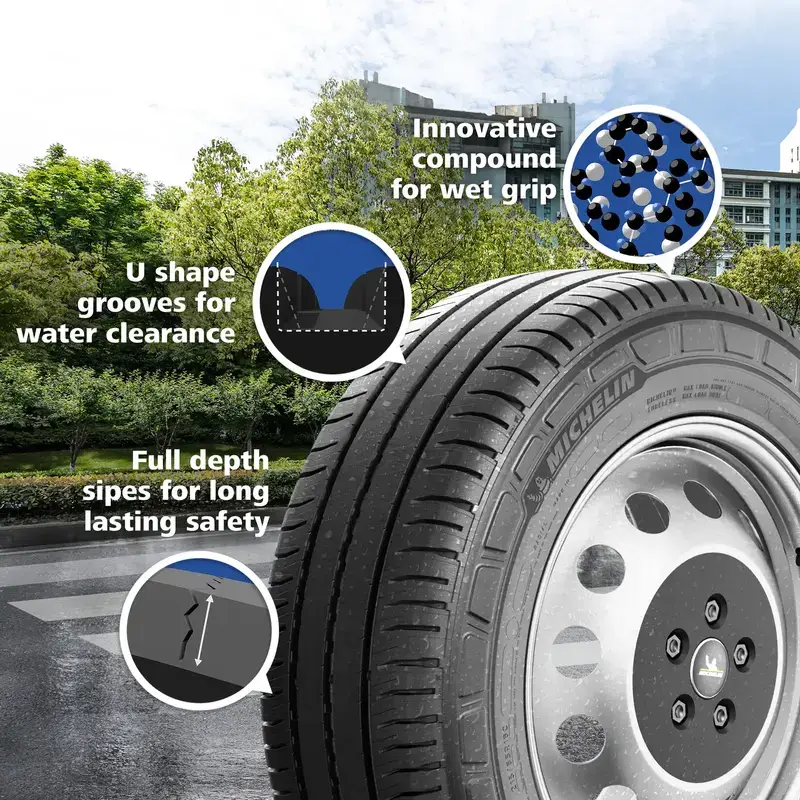
U-shaped grooves are built into the base of the tread and only open up as the tire wears down. This means wet grip and aquaplaning resistance remain consistent from the first mile all the way to the legal wear limit not just when the tire is brand new.
Symmetric Non-Directional Tread Pattern
Unlike directional tires, the Agilis 3’s tread pattern is identical on both sides of the tire. This allows full rotation in any configuration, distributing wear evenly and maximising overall tread life.
Low-Resistance Tread Compound
A denser purpose-built compound delivers the EU B rolling resistance rating, one grade better than the predecessor Agilis+. It also stays stable under heavy cargo loads without cracking or uneven shoulder wear.
Reinforced Sidewall Construction
Built to commercial-grade standards, the sidewall resists kerbing damage and withstands the lateral stress of frequent loading and unloading. Michelin specifically recommends this construction for drivers on potholed or rough-surfaced roads.
Lightweight Eco-Design
Each Agilis 3 unit weighs approximately 1.6 kg less than the Agilis+ it replaced. Less material means less waste at end of life and a small but real reduction in unsprung weight which improves handling response and slightly reduces rolling inertia.
EV-Compatible Casing
The Agilis 3 is built to handle the higher torque and instant acceleration of electric vans. The reinforced casing absorbs the additional stress electric powertrains place on tires during hard acceleration from a standstill.
Together, these construction choices explain why the Michelin Agilis 3 leads its category on tread life and fuel efficiency while maintaining strong A-rated wet grip from new all the way to worn.
Michelin Agilis 3 Performance Breakdown
This is where it matters most. Here is every performance category based on what real operators, fleet managers and everyday van drivers have reported.
Dry Performance
On dry roads, the Michelin Agilis 3 behaves exactly as you would hope from a premium commercial tire. The symmetric non-directional tread pattern gives you confident, predictable handling whether you are navigating tight city streets or running on the open highway.
One verified buyer who had covered around 4,000 miles noted that traction and braking improved noticeably after switching to these from a set of Continental tires. Traction control triggering, which had been a recurring issue on the previous tires, practically disappeared on the Agilis 3.
It is not a sports car tire. You are not going to get knife-edge steering precision on a loaded van regardless of what rubber you fit. But for the job it is designed to do, the dry performance is solid and confidence-inspiring.
Wet Performance
This is where the Michelin Agilis 3 genuinely stands out. Michelin built this tire around EverGrip Technology, which is designed specifically to maintain wet braking performance throughout the entire lifespan of the tire, not just when it is new.
The numbers back that up. The Agilis 3 stops 5% shorter than key competitors when new. More impressively, even when the tire is worn down, it still stops 11% shorter than leading rivals in the same condition. That is a big deal for a commercial vehicle that spends years on the road before replacement.
The U-shaped grooves in the tread design are deeper than standard, which helps evacuate water more efficiently and reduces aquaplaning risk. Real owners consistently call out the wet handling as a major reason they keep coming back to this tire. One Toyota HiAce owner in Australia said that after running Hankook and Bridgestone tires, the Michelin Agilis 3 makes every other brand look average when roads are wet.
Snow and Ice Performance
Here is the important caveat. The Michelin Agilis 3 is a summer tire. It is not rated for serious winter conditions and you should not rely on it if you regularly drive in snow or on icy roads. A few owners noted it performed reasonably in light cold conditions and showed some tolerance for lower temperatures but this is not a selling point and should not influence your decision if you live somewhere that gets proper winters.
If you need year-round performance in cold climates, Michelin makes the Agilis CrossClimate, which is the all-season version of this tire and a much better fit for mixed climates. The Agilis 3 is a summer tire first and last.
Ride Comfort and Noise
For a commercial van tire, the Agilis 3 is remarkably quiet and comfortable. More than one owner mentioned being surprised by how much road noise dropped after switching from budget or OEM tires. A verified buyer noted that the tire reduced vibration and road noise significantly after fitting.
Full-depth sipes help keep the tread blocks flexible at all times which contributes to a smoother, less jarring ride. The sidewall design also plays a role here. The Kerbing Shields are reinforced with abrasion-resistant rubber compounds borrowed from Michelin’s truck tire range, but they do not sacrifice ride flexibility to achieve that protection.
On a daily delivery van doing long highway stints, that kind of comfort adds up meaningfully over the course of a working week.
Tread Life
This might be the strongest argument for buying the Michelin Agilis 3. The tread life is exceptional and real-world evidence proves it repeatedly.
One owner running a 2015 Hyundai iLoad, covering around 80,000 kilometers a year on delivery routes through remote Queensland got through 140,000 kilometers on a single set of Agilis 3 tires and had not even hit the wear indicators. Another van operator running 3,500 kg GVM light commercial vehicles clocked 70,000 km with 10 to 15 percent of tread still remaining at 60 psi. A separate Hiace Commuter owner reported reaching 61,000 km with decent tread left and planned to fit the Agilis 3 across their entire commercial fleet.
Michelin claims up to 25% more mileage versus the previous generation of this tire and based on what real operators are reporting, that claim holds up comfortably.
Fuel Efficiency
The Agilis 3 carries a B-rating for rolling resistance on the EU tire label, a meaningful improvement over the C-rating on the previous generation. Michelin puts the rolling resistance improvement at around 12% better than its predecessor.
In practice, Michelin says each tire can reduce your carbon footprint by around 100 kg per year, roughly equivalent to planting three trees. The tire is also 1.6 kg lighter per unit than its predecessor which reduces rotational mass and contributes to lower fuel consumption across the life of the tire. For fleet operators running multiple vehicles, these gains add up quickly over a full year.
Value for Money
At around $180 to $325 per tire depending on size and region, the Michelin Agilis 3 is not the cheapest van tire you can buy. But the value calculation changes dramatically when you factor in how long these tires last.
If a budget tire costs $120 and lasts 60,000 km, while the Agilis 3 costs $280 and lasts 130,000 km or more, you are actually spending less per kilometer on the Michelin. Add in the fuel savings from better rolling resistance and the reduced downtime from fewer tire changes, and the premium price starts to look like a smart investment rather than an extravagance.
One fleet operator who reviewed the tire summed it up clearly: a little expensive but worth every cent.
Who Should Buy the Michelin Agilis 3?
1. The High-Mileage Delivery Driver
If you are running 60,000 to 100,000 km a year on a delivery route, the Agilis 3 is one of very few tires that can keep up with that kind of demand without needing replacement mid-year. The total cost of ownership over 12 months will almost certainly be lower than cheaper alternatives, even at a higher per-tire price.
2. The Fleet Manager Running Multiple Vans
Commercial fleet operators benefit the most from this tire. Longer tread life means fewer scheduled downtime events for tire changes. Better fuel efficiency across five or ten vehicles adds up to real money saved annually. Consistent wet-weather safety across your entire fleet also reduces operational risk.
3. The Tradesperson Who Carries Heavy Loads Daily
Plumbers, electricians, builders, and anyone else who regularly runs their van near or at its payload limit will appreciate the reinforced construction. The abrasion-resistant rubber and Kerbing Shields handle the daily punishment of job sites, loaded vehicles and rough suburban roads better than most commercial tires at this price point.
Alternatives to the Michelin Agilis 3
If you are on the fence, here are three tires worth comparing before you decide.
1. Bridgestone Duravis Van (~$160 to $290 per tire)
In an independent TÜV SÜD test, the Duravis Van ranked slightly ahead of the Agilis 3 in wet braking and mileage in the 205/65 R16C size. If you want a second premium option and your local dealer stocks Bridgestone, this is a legitimate alternative worth pricing up. Rolling resistance is also B-rated on most sizes, putting it in the same efficiency class as the Michelin.
2. Continental VanContact Ultra (~$150 to $270 per tire)
Continental is a strong performer in the commercial van space. The VanContact Ultra offers A-rated wet grip and is well-reviewed across European fleet markets. In the same TÜV test, it ranked third in wet braking and slightly behind the Agilis 3 on mileage. It is a solid choice if Michelin pricing is out of budget in your region.
3. Goodyear EfficientGrip Cargo 2 (~$130 to $240 per tire)
A strong mid-range alternative with good wet braking scores, ranking second only to Bridgestone in the TÜV SÜD test. If you are managing costs and still want reliable wet performance, this is worth a look. Tread life is the area where it falls most clearly short of the Michelin Agilis 3 over the long term.
Michelin Agilis 3: Final Rating and Verdict
The Michelin Agilis 3 is one of the best summer van tires on the market for drivers who prioritize long-term durability and wet-weather safety. It is not the tire for you if you drive in genuine winter conditions. But if your van is your livelihood and you need a tire that will go the distance, stop confidently in the rain, and save you money on fuel and replacement cycles, the Agilis 3 makes a very compelling case.
Real-world owners are not just satisfied. They are fitting these to their entire fleets after experiencing the results first-hand. That kind of feedback does not happen by accident.
Buy it if: your van is on the road daily, you carry heavy loads regularly, and you want a tire that genuinely lasts. Look elsewhere if: you drive in serious winter conditions or need an all-season tire that handles snow and ice.
Frequently Asked Questions: Michelin Agilis 3
Is the Michelin Agilis 3 a good tire?
Yes, it is one of the best commercial van tires available for summer and mild-weather use. It delivers outstanding tread life, market-leading wet braking performance and genuine fuel savings from its B-rated rolling resistance. It sits at the premium end of its category but real-world results from fleet operators justify the price for drivers who clock serious kilometers.
How many kilometers does the Michelin Agilis 3 last?
Real-world results are impressive. Multiple commercial operators have reported 100,000 to 140,000 km or more before needing replacement, with some tires still having tread remaining at those distances. Michelin claims up to 25% more mileage than the previous generation Agilis and the owner evidence consistently supports that claim. Actual life depends on load weight, driving style and inflation pressure.
Is the Michelin Agilis 3 suitable for winter driving?
No. The Agilis 3 is a summer tire and is not designed for snowy or icy roads. It can handle mild cold and occasional light frost but it is not rated or recommended for serious winter conditions. If you regularly drive in snow or ice, the Michelin Agilis CrossClimate is the correct choice. It is the all-season version of this tire, purpose-built for year-round use including winter.
What vans does the Michelin Agilis 3 fit?
The Agilis 3 is available in over 28 sizes, covering the most popular light commercial vehicles on the market. These include the Toyota HiAce, Hyundai iLoad, Mercedes-Benz Sprinter, Volkswagen Transporter, Ford Transit and Renault Master, among many others. Check your vehicle’s door jamb placard or owner’s manual for the correct size before purchasing.
How does the Michelin Agilis 3 compare to the Bridgestone Duravis Van?
Both are premium commercial van tires and very closely matched. In an independent TÜV SÜD test commissioned by Bridgestone, the Duravis Van edged ahead on wet braking and mileage in the size tested. However, the Michelin Agilis 3 remains highly competitive, with real-world durability results from fleet operators that are outstanding. Pricing and local availability will often be the deciding factor between the two for most buyers.