
Quick Verdict
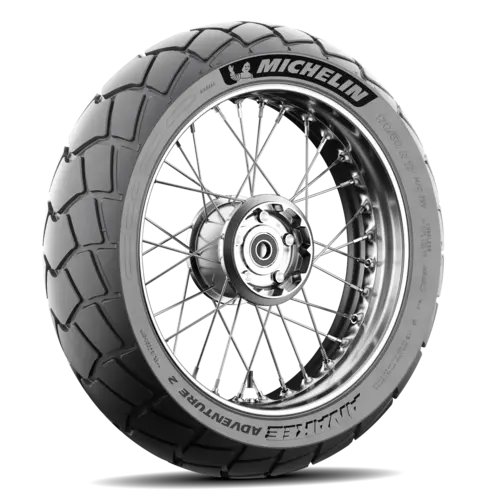
The Michelin Anakee Adventure 2 is a quieter, longer-wearing, more confident version of an already popular 80/20 adventure tire and it is one of the best choices right now for riders who spend most of their time on pavement. Best for Adventure touring riders on big-bore GS, Multistrada, Africa Twin and Tiger-class bikes who ride mostly highway and twisty roads with occasional gravel
The Good
- Noticeably quieter than the original Anakee Adventure especially on the highway
- Strong wet-weather grip thanks to the new silica compounds
- Improved rear tread life addresses the original tire's biggest weakness
- Confident, stable handling on pavement even when the bike is fully loaded
- Wide size range covering most popular adventure touring motorcycles
The Bad
- Premium price compared to some competing 80/20 tires
- Not designed for serious off-road use like mud, sand or technical trails
- Only an M+S rating not a true winter or ice tire
- Still a new tire as of mid-2026 so long-term, high-mileage owner data is limited
-
Dry Performance9.0
-
Wet Performance9.0
-
Snow and Ice5.0
-
Ride Comfort and Noise8.0
-
Tread Life8.0
-
Fuel Efficiency7.0
-
Value for Money7.0
If you have been searching for an honest Michelin Anakee Adventure 2 review here is the short version. This is Michelin’s replacement for the original Anakee Adventure and it fixes the two biggest complaints riders had with that tire: noise and tread life.
It launched worldwide in January 2026 and it is now the flagship of Michelin’s Trail tire lineup, alongside the Road 6, Anakee Road and Anakee Wild. This Michelin Anakee Adventure 2 review covers everything you need to know before you buy a set.
Key Specs
| Spec | Detail |
|---|---|
| Tire type | 80/20 adventure touring, dual-sport radial |
| Season | All-season, M+S rated |
| Front sizes | 90/90-21, 110/80R18, 110/80R19, 120/70R17, 120/70R19 |
| Rear sizes | 150/70R17, 150/70R18, 170/60R17, 180/55R17 |
| Construction | Radial, tubeless (TL) and tube-type (TT) compatible |
| Price range | $171 to $303 per tire |
| Vehicle fitment | BMW R1250GS/R1300GS, Honda Africa Twin, Yamaha Ténéré, Ducati Multistrada, Triumph Tiger, KTM Super Adventure, Suzuki V-Strom, and similar big-bore adventure bikes |
Full size and load index details are on Michelin’s official Anakee Adventure 2 page.
Tire Technology and Construction
Michelin built the Anakee Adventure 2 around four upgrades and each one solves a real problem riders had with the original tire.
The tread uses Michelin 2CT dual-compound technology. A harder compound sits in the center of the tread for long even wear on the highway while a softer compound on the shoulders bites harder when you lean into a corner. In plain terms you get a tire that lasts on the interstate but still grips when the road gets twisty.
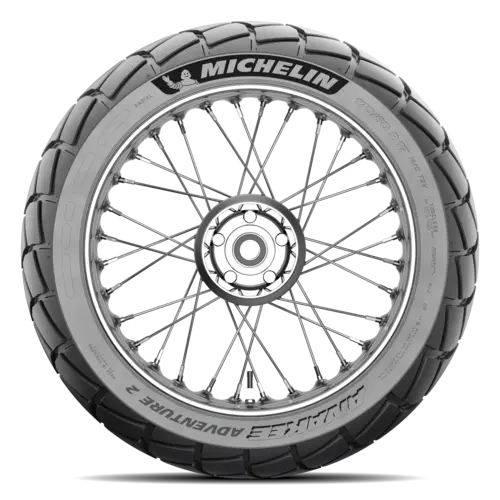
New silica-based compounds handle wet grip. This is not just a marketing line. Silica stays pliable in cold, wet conditions in a way that older carbon-black compounds do not, so the tire keeps biting into the road when it rains instead of going numb.
Reinforced Radial-X Evo casing and Aramid Shield technology make up the internal structure. Aramid is the same fiber family used in body armor and here it stiffens the casing so the tire resists squirming under a fully loaded adventure bike, panniers and all without turning harsh on rough pavement.
Michelin also reworked the tread pattern and rubber compounding specifically to cut noise. The company claims roughly a 30 percent drop in perceived highway drone and a 2 dB reduction in trackside noise compared to the original Anakee Adventure. That may sound like a small number but a 2 dB cut is a noticeable difference to your ears on a four-hour highway stretch.
If you rode the original Anakee Adventure and are wondering exactly what changed, the short answer is compound casing and tread pattern all got reworked not just one small tweak.
Performance Breakdown
Dry Performance:
Riders and test reviewers who have put the Anakee Adventure 2 through twisty paved roads describe confident, predictable steering with strong side grip at lean. RevZilla’s press test in Tuscany found the tire behaved almost like a dedicated street tire on tight, technical roads with no vagueness or squirm from the tread pattern.
Braking on dry tarmac is equally solid. That kind of stability matters most when you are carrying luggage or a passenger on a loaded adventure bike.
Wet Performance:
This is where the new silica compound earns its keep. Owners of the original Anakee Adventure already rated wet grip as one of its strongest points and Michelin carried that strength into the Adventure 2 while improving it further.
Early UK owner reports on forums describe confident grip through rain and standing water with no surprises when the road suddenly turns wet mid-ride.
Snow and Ice:
The Anakee Adventure 2 carries an M+S rating which means it is built to handle light snow and cold-weather commuting in a pinch. It is not a dedicated winter tire though and you should not expect confident traction on ice or deep snow.
If you regularly ride in genuine winter conditions, plan on a dedicated winter or studded tire instead.
Ride Comfort and Noise:
Noise was the single biggest complaint about the original Anakee Adventure especially from the rear tire on longer rides. Michelin targeted this directly with the Adventure 2 and the claimed 30 percent reduction in perceived highway drone lines up with early owner impressions.
One RevZilla tester specifically noted the near-total absence of vibration at highway speed which adds up to a noticeably calmer less fatiguing ride on long tours.
Tread Life:
Michelin’s own testing claims a 7 percent increase in front tread life and a 21 percent increase in rear tread life compared to the original Anakee Adventure. The rear tire wore out fastest on the previous generation so that improvement targets the exact spot riders complained about most.
Owners of the original Anakee Adventure reported anywhere from about 8,000 to 13,000 miles depending on bike weight and riding style with heavier bikes and more aggressive riders wearing through tires faster. Expect the Adventure 2 to land noticeably ahead of that range particularly at the rear.
Fuel Efficiency:
Michelin has not published specific rolling resistance numbers for the Anakee Adventure 2. That said, the reinforced casing and dual-compound tread are built primarily for stability and wear rather than ultra-low rolling resistance so expect fuel economy in line with other tires in this touring-focused category rather than a standout efficiency gain.
Value for Money:
At $171 to $303 per tire, the Anakee Adventure 2 sits at a premium price point in line with other flagship adventure touring tires from Michelin, Metzeler and Pirelli. Given the tread life and noise improvements over the outgoing model, most riders will find the extra cost justified over the life of the tire even if it is not the budget option in this category.
Who Should Buy It
The long-distance touring rider: If you rack up highway miles on a BMW R1250GS, Multistrada or Africa Twin and only leave pavement for the occasional gravel forest road or campsite access road, this tire is built for exactly that riding pattern.
The rider upgrading from the original Anakee Adventure: If noise or short rear tire life pushed you away from the first-generation tire, the Adventure 2 was designed specifically to fix both complaints.
The new adventure bike owner riding 80 percent pavement: if your riding is mostly commuting and weekend twisty roads with rain in the forecast more often than dirt, this tire gives you confidence in the wet without sacrificing on-road manners.
Alternatives to Consider
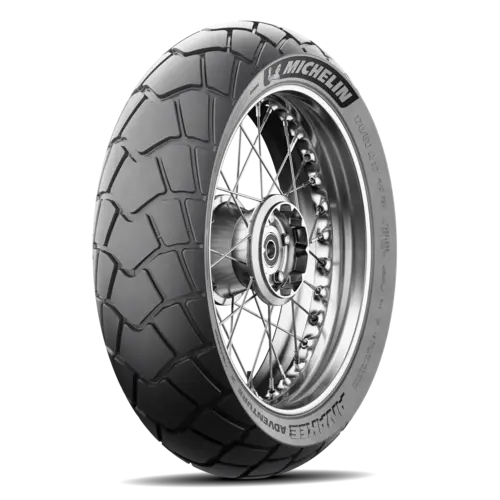
- Metzeler Karoo 4: A strong direct rival in the same 80/20 category often praised for slightly better dirt manners at some cost to on-road refinement.
- Michelin Road 6: More street-biased and less aggressive off-road, a good pick if your riding is closer to 95 percent pavement and you rarely leave the tarmac.
- Continental TKC 70: A lighter-weight option that some riders find tracks less predictably on rough pavement compared to the Anakee Adventure line but it remains popular among smaller adventure bikes.
Final Rating and Verdict
The Michelin Anakee Adventure 2 takes a tire that was already a solid seller and quietly fixes the two things riders complained about most. If you are cross-shopping the original Anakee Adventure and this one, the Adventure 2 is the tire to buy today since Michelin has moved its adventure touring flagship forward rather than keeping both in production long-term.
For most riders splitting their time between highway miles and light gravel, this is one of the best 80/20 adventure tires on the market right now.
FAQ
Is the Michelin Anakee Adventure 2 good for off-road riding?
It handles gravel, packed dirt and light trails with confidence but it is not built for mud, sand or technical off-road terrain. If that is your priority, look at a more aggressive 50/50 tire like the Anakee Wild instead.
How long do Michelin Anakee Adventure 2 tires last?
Michelin claims a 7 percent improvement in front tread life and a 21 percent improvement in rear tread life over the original Anakee Adventure which itself averaged roughly 8,000 to 13,000 miles depending on bike weight and riding style.
Is the Anakee Adventure 2 quieter than the original Anakee Adventure?
Yes. Michelin redesigned the tread pattern and compound specifically to cut noise, claiming about a 30 percent reduction in perceived highway drone and a 2 dB drop in trackside noise.
What motorcycles fit the Michelin Anakee Adventure 2?
It is designed for large adventure touring bikes including the BMW R1250GS and R1300GS, Honda Africa Twin, Yamaha Ténéré, Ducati Multistrada, Triumph Tiger, KTM Super Adventure and Suzuki V-Strom.
How much does the Michelin Anakee Adventure 2 cost?
Expect to pay roughly $171 to $303 per tire depending on size with rear tires generally priced higher than fronts.