You’ve probably seen Sailun tires on the shelf next to big names like Michelin and Bridgestone, priced at almost half the cost, and wondered what the catch is. That’s the whole point of this Sailun tires review: to find out if the low price means low quality, or if you’re actually getting a smart deal.
We looked at what Sailun actually builds, how each tire line performs on real roads, what owners say after a few thousand miles, and where the brand falls short. By the end, you’ll know exactly whether Sailun tires belong on your car.
Who Makes Sailun Tires?
Sailun is not a private label brand hiding behind a bigger company. It’s a real tire manufacturer. Sailun Group was founded in 2002 in Qingdao, China, and grew out of Qingdao University of Science and Technology, a school known for rubber and tire research. The company is publicly listed on the Shanghai Stock Exchange and now sits among the top 20 tire makers in the world by volume.
Sailun runs manufacturing plants in Qingdao, Dongying, and Shenyang in China, plus a large factory in Vietnam that produces truck and off-road tires. Combined, these plants can turn out well over 100 million tires a year. Sailun sells in more than 150 countries and has a dedicated U.S. arm, Sailun Tire Americas, based in Chattanooga, Tennessee, which handles product development for North American roads.
Here’s the thing that surprises most people: Sailun isn’t just a budget import brand anymore. The company builds tires for OEM fitment on some new vehicles and runs its own research and testing programs in the U.S., not just overseas. That doesn’t automatically make every tire great, but it does mean the quality control behind them is closer to a mainstream brand than a bargain-bin one.
Sailun Tire Models: Which One Fits Your Car?
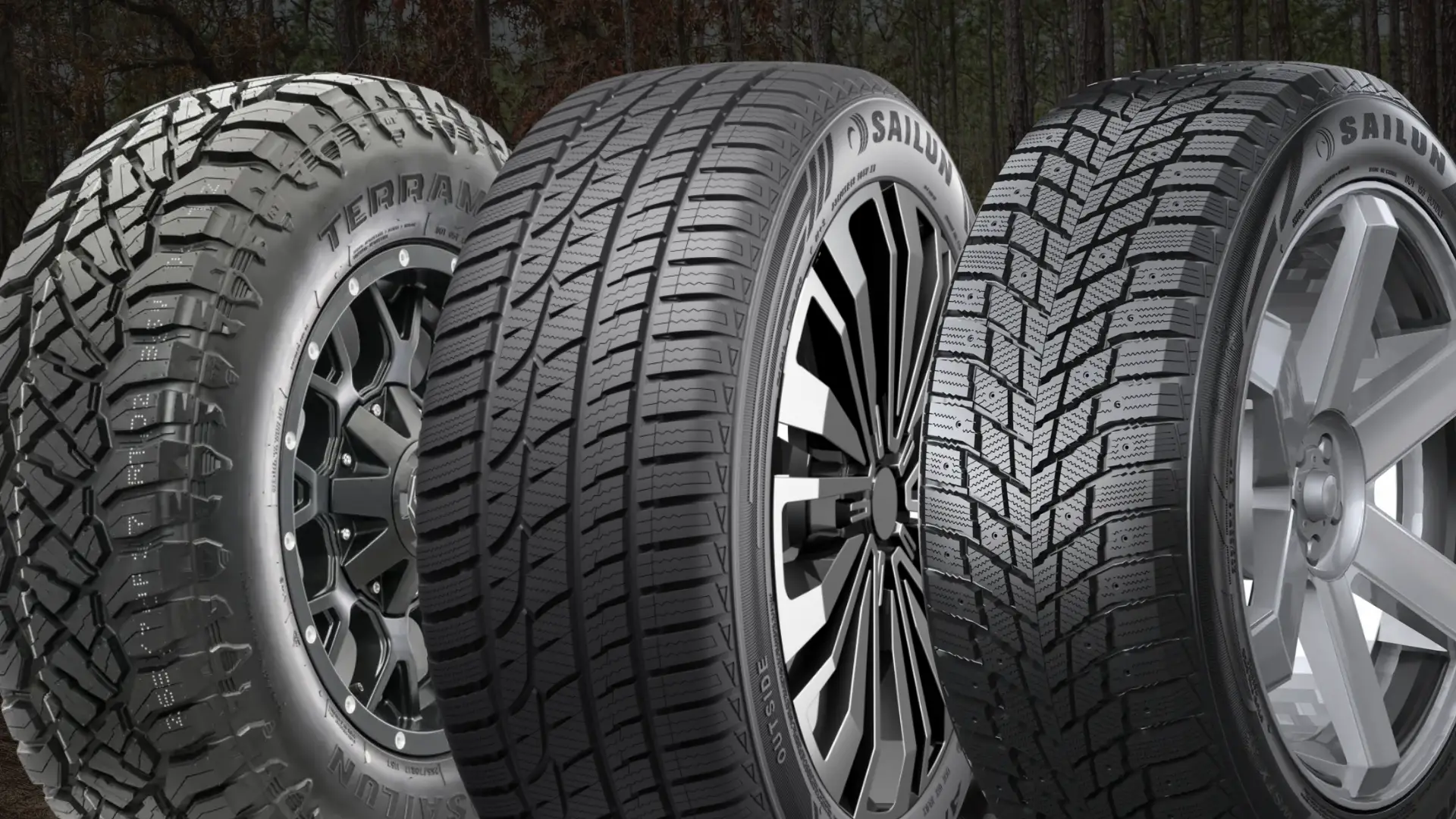
Sailun’s catalog is bigger than most people expect. It covers everyday sedans, SUVs, trucks, EVs, and winter driving. Picking the right model matters a lot more than picking the brand.
Sailun Atrezzo Line (Passenger Cars and Crossovers)
The Atrezzo family is Sailun’s bread and butter for sedans, coupes, and crossovers. The Atrezzo SH408 is the budget touring option, a quiet, all-season tire built for daily commuting with treadwear warranties around 55,000 miles. Step up to the Atrezzo SVA1 or newer SVA2 and you get an ultra-high-performance all-season tire with a stiffer sidewall and sportier cornering, aimed at drivers who want a bit more grip out of a Camry, Accord, or crossover without paying performance-tire prices. The Atrezzo Tcon sits in between, a comfort-focused touring tire for SUVs and larger sedans.
Sailun TerraMax Line (SUVs, Light Trucks, Off-Road)
For trucks and SUVs, Sailun’s TerraMax lineup covers everything from daily highway driving to genuine off-road use. The TerraMax HT2 is a highway all-season tire built for smooth, quiet street miles. The TerraMax AT2 is the all-terrain option, 3-Peak Mountain Snowflake rated, with sidewall biters and a tougher casing for gravel and light trails. At the aggressive end sits the TerraMax RT, Sailun’s rugged-terrain tire, sitting between an all-terrain and a mud-terrain with a squared profile and stone ejectors for real off-road grip.
Sailun Ice Blazer Line (Winter Tires)
Sailun also makes dedicated winter tires under the Ice Blazer name, including the WSTX. These carry the 3-Peak Mountain Snowflake certification and use a softer compound built to stay flexible in freezing temperatures, unlike the all-season Atrezzo and TerraMax models.
Sailun Erange EV (Electric Vehicles)
Newer to the lineup, the Erange EV Ecosphere is built specifically for electric and hybrid vehicles. It’s tuned for lower rolling resistance to help preserve range, reinforced to handle the extra weight of an EV battery pack, and designed to hold up against the instant torque electric motors put down.
How Sailun Tires Actually Perform
Dry Road Performance
This is where Sailun earns most of its praise. Owners consistently describe dry handling as confident and predictable, especially on the Atrezzo SVA1 and SVA2. Sailun’s own R&D team in Tennessee tested the SVA2 alongside the TerraMax AT2 and RT at a closed test track in Salt Lake City, and reviewers came away impressed by how composed the SVA2 felt at highway speeds, thanks to its asymmetrical tread design. For everyday driving, braking distances and cornering grip on dry pavement are on par with tires that cost noticeably more.
Wet Road Performance
Wet grip is solid but not class-leading. The circumferential grooves on the Atrezzo and TerraMax lines do a good job funneling water away from the contact patch, which keeps hydroplaning risk low in normal rain. Braking distances on wet roads are reasonable for the price point. You won’t get the same wet confidence as a Michelin CrossClimate or Continental TrueContact, but for regular rain driving, Sailun tires are safe and dependable.
Ride Comfort and Road Noise
This is genuinely a strength. Sailun’s SilentTread technology, used across several Atrezzo and Erange EV models, cuts down on the drone that cheaper tires often produce on the highway. Multiple owners on tire retailer review pages specifically call out lower-than-expected road noise compared to their old tires. Some drivers do notice a bit of hum in the first few hundred miles as the tread wears in, but it settles down.
Snow and Ice Performance
Here’s where you need to pay close attention to which model you buy. The TerraMax AT2 and the Ice Blazer WSTX both carry the 3-Peak Mountain Snowflake symbol, meaning they’re certified for real winter traction. The standard Atrezzo touring tires, however, are only rated M+S (Mud and Snow), which means they can handle light dustings but shouldn’t be trusted through a real winter. If you live somewhere with serious snow and ice, either step up to the AT2 or TerraMax RT, or better yet, run a dedicated set of Ice Blazer winter tires.
Off-Road Traction (TerraMax AT2 and RT)
For drivers who actually leave the pavement, the TerraMax AT2 and RT hold their own against better-known all-terrain tires. Sidewall biters resist cuts from rocks and roots, and the RT’s staggered shoulder lugs and stone ejectors give it real bite on gravel and loose dirt, while staying reasonably quiet and stable back on the highway.
Sailun Tires: Pros and Cons
Advantages
- Made by a genuine tire manufacturer, not a private-label reseller
- Strong dry-road grip and predictable handling
- Quieter ride than most tires in this price range
- Treadwear warranties ranging from 45,000 to 70,000 miles depending on model
- Wide lineup covering sedans, SUVs, trucks, EVs, and winter driving
- Prices roughly 30 to 50 percent below comparable premium tires
Disadvantages
- Base Atrezzo models are not built for serious winter driving
- Wet grip trails premium all-season tires like Michelin and Continental
- Fewer specialty sizes than the biggest global brands
- Resale and trade-in value on used vehicles can be slightly lower with budget-brand tires fitted
- Brand awareness is still building in the U.S., so some shops carry a limited selection
Sailun vs. Premium Brands: Is the Price Difference Worth It?
A full set of Sailun Atrezzo tires for a sedan typically runs $320 to $500 installed. A comparable set of Michelin or Bridgestone tires in the same size can easily run $600 to $900. That’s a real gap, and for most everyday drivers it’s hard to justify closing it.
If you drive a normal amount of miles a year, stick to paved roads, and live somewhere without brutal winters, a Sailun Atrezzo or TerraMax HT2 will do the job without drama, and the money you save is real money. Where premium tires earn their price is in extreme winter conditions, high-speed performance driving, or if you specifically want the last bit of wet-weather grip a top-tier compound can offer. If none of that applies to you, you’re not sacrificing much by going with Sailun.
Who Should Buy Sailun Tires?
Sailun tires make the most sense if you’re driving a sedan, crossover, SUV, or light truck, you put in a normal 10,000 to 15,000 miles a year, and you want dependable performance without paying premium-brand prices. They’re also a smart pick if you’re outfitting an EV and want a tire built specifically to protect range, or if you need a genuinely capable all-terrain tire without spending BFGoodrich money.
If you live somewhere with heavy, consistent snowfall, don’t rely on the standard Atrezzo or TerraMax HT2 as your only tire. Either move up to the AT2, the RT, or the dedicated Ice Blazer winter line, or budget for a separate winter tire set the way you would with almost any all-season tire.
Sailun Tire Models and Specs
| Model | Best For | Tread Type | Treadwear Warranty | 3PMS Rated | Approx. Starting Price |
|---|---|---|---|---|---|
| Atrezzo SH408 | Sedans, daily commuting | Touring all-season | Up to 55,000 miles | No | $75 – $105 |
| Atrezzo SVA1 / SVA2 | Sedans, crossovers wanting sportier handling | Ultra-high-performance all-season | 40,000 – 45,000 miles | No | $70 – $140 |
| Atrezzo Tcon | SUVs, larger sedans | Comfort touring all-season | Up to 60,000 miles | No | $105 – $145 |
| TerraMax HT2 | SUVs, light trucks, highway driving | Highway all-season | Up to 60,000 miles | No | $125 – $220 |
| TerraMax AT2 | SUVs, trucks that go off-road sometimes | All-terrain | 50,000 miles | Yes | $140 – $215 |
| TerraMax RT | Trucks and SUVs wanting aggressive off-road grip | Rugged-terrain | 45,000 miles | Yes | $180 – $200 |
| Ice Blazer WSTX | Dedicated winter driving | Performance winter | Not applicable (winter tire) | Yes | $110 – $185 |
| Erange EV Ecosphere | Electric and hybrid vehicles | Low rolling resistance all-season | Up to 60,000 miles / 80,000 km | No | $105 – $160 |
Final Verdict: Sailun Tires Review Wrap-Up
So, are Sailun tires good? Based on everything in this Sailun tires review, yes, for the driver they’re actually built for. Sailun is a real manufacturer with its own factories, its own U.S. testing program, and a lineup that genuinely covers sedans, SUVs, trucks, EVs, and winter driving instead of just chasing the cheapest possible price point.
Dry handling is confident, ride comfort beats most tires in this price bracket, and the treadwear warranties are honest numbers backed by real testing. The trade-offs are real too: wet grip doesn’t quite match the top premium brands, and you need to pick the right model, not just the right brand, if you’re driving through real winters. For most everyday drivers who want dependable tires without paying Michelin or Bridgestone prices, Sailun is a smart, low-risk buy.
Frequently Asked Questions
Are Sailun tires made in China?
Yes, most Sailun tires are manufactured in China, at plants in Qingdao, Dongying, and Shenyang, with additional production out of a large factory in Vietnam. Sailun also runs a research and development center in Chattanooga, Tennessee, that develops tires specifically for North American roads.
How long do Sailun tires last?
It depends on the model. The Atrezzo SH408 and Atrezzo Tcon carry treadwear warranties up to 55,000 and 60,000 miles. The sportier Atrezzo SVA1 and SVA2 are rated closer to 40,000 to 45,000 miles. TerraMax HT2 goes up to 60,000 miles, while the more aggressive AT2 and RT off-road tires carry 45,000 to 50,000-mile warranties. Real-world mileage will vary based on driving habits, rotation, and inflation maintenance.
Are Sailun tires good in the rain?
Sailun tires handle wet roads reasonably well for their price. Deep circumferential grooves on the Atrezzo and TerraMax lines evacuate water effectively and keep hydroplaning risk low. They’re not quite in the same league as premium wet-weather tires like the Michelin CrossClimate, but they’re safe and predictable in normal rain conditions.
Can Sailun tires handle snow?
Only certain models. The TerraMax AT2 and the Ice Blazer WSTX carry the 3-Peak Mountain Snowflake certification, meaning they’re rated for genuine winter traction. The standard Atrezzo touring tires are only M+S rated, which covers light snow at best. If you deal with real winters, choose the AT2, the TerraMax RT, or a dedicated Ice Blazer winter set instead of relying on a basic all-season Sailun tire.
Where can I buy Sailun tires?
Sailun tires are sold through a wide network of independent tire dealers, several major online tire retailers, and select big-box retailers, unlike private-label brands that are locked to one store chain. Availability by model and size varies by retailer, so it’s worth checking a couple of sources before you buy.
If you’re cross-shopping other budget-friendly options, our Road Hugger tires review is a good next read, and if you want to see how a premium all-terrain tire stacks up against Sailun’s TerraMax line, check out our Falken Wildpeak AT3W review. For a look at what you get once you move up to a top-tier highway tire, see our Michelin Defender LTX M/S2 review.