
Finding the best RV tires is not like picking tires for your car. Your rig weighs a lot more, sits parked for months at a time, and a bad tire choice can end a trip fast. Below, we rank the top 8 RV tires for 2026, broken down by RV type, plus the buying details most guides skip entirely.
We checked the top-ranking guides already covering this topic, dug through RV forums like Forest River Forums and TractorByNet, and looked at what owners actually argue about on Reddit and YouTube. The same questions keep coming up: should I use ST or LT tires, how do I know if my tires are too old to trust, and how much can they really carry. Most articles gloss over these. We answer all three in detail below, then get into the picks.
Quick Answer: Best RV Tires by Category
- Best overall for travel trailers & 5th wheels: Goodyear Endurance
- Best budget ST tire: Carlisle Radial Trail HD
- Best for even wear on trailers: Maxxis M8008
- Best for Class B & C motorhomes: Michelin Agilis
- Best wet-weather grip for Class B & C: Continental VanContact
- Best for Class A diesel pushers: Michelin XZE
- Best value commercial tire: Toyo M143
- Best for elite highway stability: Goodyear G670 RV
Do RVs Need Special Tires?
Yes, and it is not a minor difference. A car tire only needs to carry a couple thousand pounds and gets replaced every few years without much thought. An RV can weigh anywhere from 6,000 pounds for a small camper van to over 30,000 pounds for a fully loaded Class A motorhome. Regular passenger tires are not rated to carry that kind of weight safely, no matter how good the brand is.
On top of the weight, most RVs sit parked for months between trips, baking in the sun in a driveway or storage lot. That combination of heavy loads and long periods of sitting still is why RV tires fail differently than car tires. Most blowouts are not from worn tread. They come from tires that are simply too old, or tires that were underinflated for the weight they were actually carrying. Keep that in mind before you shop, because it changes what actually matters more than brand name.
ST vs. LT Tires: The Debate You Need to Understand First
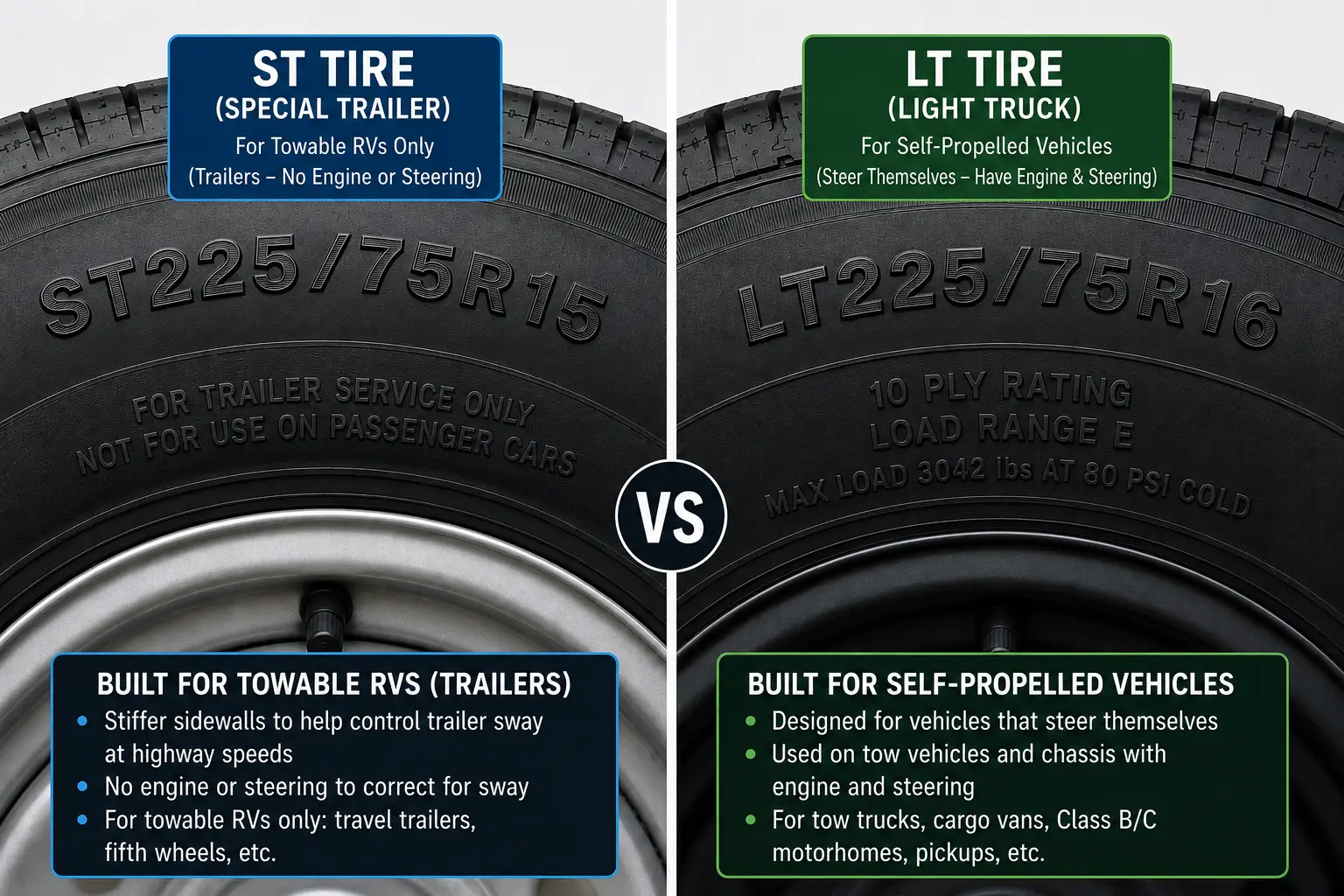
This trips up more RV owners than anything else, so get this right before you look at brands or reviews.
- ST (Special Trailer) tires are built for towable RVs only, like travel trailers and fifth wheels. Stiffer sidewalls fight the side-to-side sway a trailer gets at highway speed, since a trailer has no engine or steering of its own to correct for it.
- LT (Light Truck) tires go on vehicles that steer themselves, like your tow truck, a cargo van, or a Class B/C motorhome built on a van or truck chassis.
- Commercial truck tires go on big Class A motorhomes, since these are true drivable, steerable rigs built on a bus chassis that need a tire rated for constant highway loads.
RV forums are full of owners on both sides of this. Some have swapped ST tires on their trailer for LT tires and report longer life and better heat resistance over the years. Others insist ST tires are the only safe choice, since they were engineered specifically for the sideways stress a trailer puts on a tire, and most tire shops will not even install LT tires on a trailer because of liability concerns.
Our take: stick with ST tires on a towable RV unless you have already upgraded your wheels and axles to properly fit LT tires with a matching or higher load rating. Swapping tire types on a trailer without changing the rest of the setup is where people get into trouble. If you drive a motorhome, this is not really your choice to make. Follow what the chassis manufacturer specifies, which is almost always LT or commercial truck tires depending on the class.
How to Tell If RV Tires Are Good (Before You Buy or Trust the Ones You Have)
Good tread is not the whole story, and this is the biggest gap we found in other guides on this topic. Here is what actually matters, in order of importance.
- Check the DOT date code. Every tire has a code stamped on the sidewall. The last four digits tell you the week and year it was made. A code ending in 2321 means it was made in week 23 of 2021. Most tire makers and RV manufacturers recommend replacing RV tires at 5 to 7 years old, no matter how much tread is left.
- Look for sidewall cracking. Small surface cracks, sometimes called weather checking, are a sign the rubber is drying out from age and UV exposure, even if the tread still looks deep.
- Match the load index and load range. Never replace a tire with a lower load index or load range than what came on the RV originally. It is printed right on the sidewall alongside the tire size.
- Feel for flat spots. RVs that sit parked for months can develop flat spots where the tire has been sitting under the vehicle’s full weight in one spot.
Sun exposure speeds up aging a lot. If your RV sits outside uncovered for most of the year, expect your tires to age faster than the 5 to 7 year rule suggests. A set of tire covers costs very little compared to a blown tire on the highway, and it is one of the easiest ways to protect your investment.
Best RV Tires: Top 8 Picks
Here are the tires that consistently earn strong marks from RV owners, tire shops, and the manufacturers themselves, grouped by the type of RV you drive.
Best RV Tires for Travel Trailers & Fifth Wheels (ST Tires)
1. Goodyear Endurance – Best Overall

The Goodyear Endurance is the tire most RVers land on after trying a couple of other brands and getting burned. Goodyear built this specifically to fix the two biggest complaints owners have had with older ST tires: heat buildup on long tows and cracking after a season or two of sitting outside. It uses a compound designed to resist both, along with Durawall Technology in the sidewall to protect against curb scuffs and road debris on the way to and from the campground.
On forums, this is the tire that comes up over and over as the safe, proven choice, even from owners who switched away from cheaper ST brands after a scare. It is not the cheapest option in this category, but the track record for going the full 5 to 7 years without issues is hard to find elsewhere.
- Heat and crack resistant compound built for trailer use
- Durawall technology for cut and scuff protection
- Radial construction runs cooler than older bias-ply designs
- Best for: owners who want the most trusted ST tire on the market and are willing to pay a little more for peace of mind
2. Carlisle Radial Trail HD – Best Budget Pick

The Carlisle Radial Trail HD is the tire to look at if you tow a few times a year and do not want to pay premium prices for a tire that will still get replaced on the same 5 to 7 year schedule anyway. It will not outlast a Goodyear Endurance mile for mile, but for weekend and seasonal RVers, owners consistently report solid, trouble-free performance at a noticeably lower price point.
It uses a full radial construction, which runs cooler than the older bias-ply trailer tires that gave the whole ST category a bad reputation years ago. As long as you stay on top of pressure checks and do not push it much past its recommended lifespan, it is a dependable choice for lighter-duty use.
- Lower cost than premium ST brands
- Reliable for seasonal and weekend RVers
- Full radial construction for cooler running temperatures
- Best for: budget-conscious trailer owners who tow occasionally rather than full-time
3. Maxxis M8008 – Best for Even Wear
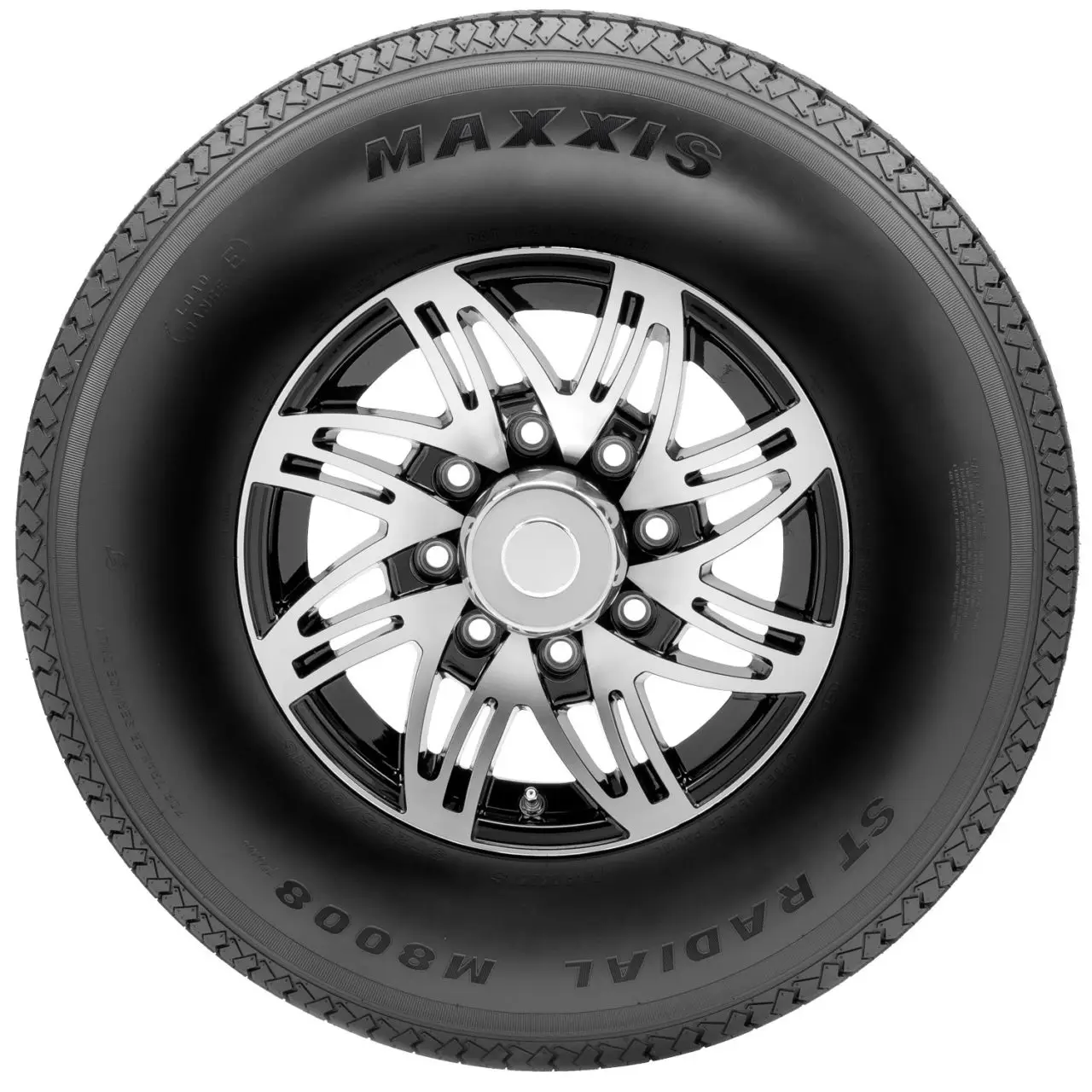
The Maxxis M8008 carries a strong reputation among full-time and frequent travelers for even tread wear and holding air pressure well over time, which matters a lot more than most owners realize. A tire that slowly loses pressure between checks is one of the most common paths to a blowout, so a tire that holds its air well is doing quiet, unglamorous work that pays off on every trip.
It also tends to wear evenly across the tread face rather than cupping or wearing unevenly on the shoulders, which is a common complaint with cheaper ST tires once they start aging. Owners who tow frequently, rather than just a couple times a season, tend to prefer this one.
- Strong air retention between pressure checks
- Even wear across the tread face
- Reinforced sidewall construction
- Best for: owners who tow often and want a tire that ages predictably
Best RV Tires for Class B & C Motorhomes (LT Tires)
4. Michelin Agilis – Best for Mileage & Ride
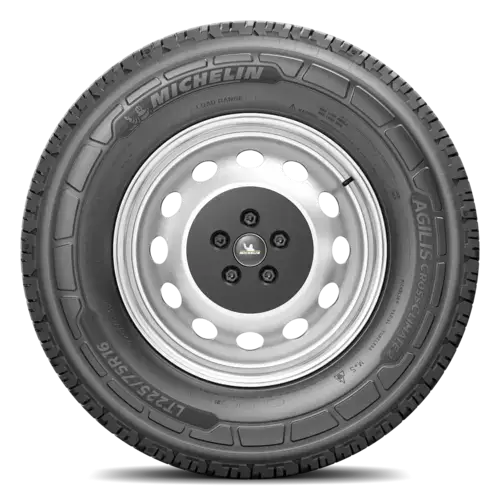
Class B and C motorhomes run on van or truck chassis, so they need Light Truck tires built for sustained highway use rather than ST tires. The Michelin Agilis line is a favorite in this category for two reasons: it holds up to high mileage without losing its shape, and it keeps road noise down inside the cabin, which matters a lot when you are living in the vehicle for days at a time.
Michelin’s reputation for tread life carries over here, and owners who put serious highway miles on their camper vans and Class C rigs each year tend to get a long, predictable service life out of this tire. It is not the cheapest LT option, but the ride quality difference is noticeable compared to budget alternatives.
- Long tread life even under sustained highway use
- Quiet, comfortable ride for full-time living
- Strong reputation for even wear over the tire’s lifespan
- Best for: full-time or frequent highway travel in a Class B or C rig
5. Continental VanContact – Best Wet-Weather Grip

If your routes take you through rainy climates or coastal regions, the Continental VanContact is worth a close look. Continental built this tire around confident wet braking and handling, which is exactly what you want when you are piloting a top-heavy Class B or C motorhome through a downpour on the interstate.
It also holds up well to the stop-and-go weight shifting that comes with campground driving, tight turns into a site, and the general abuse a van chassis takes when it is loaded down with gear, water, and passengers. Owners in the Pacific Northwest and along the Gulf Coast mention this tire often when wet grip comes up in forum threads.
- Strong wet braking and handling
- Built specifically for van and light truck chassis
- Holds up well to loaded, stop-and-go campground driving
- Best for: rainy climates and coastal or mountain routes
Best RV Tires for Class A Motorhomes (Commercial Tires)
6. Michelin XZE – Best for Diesel Pushers
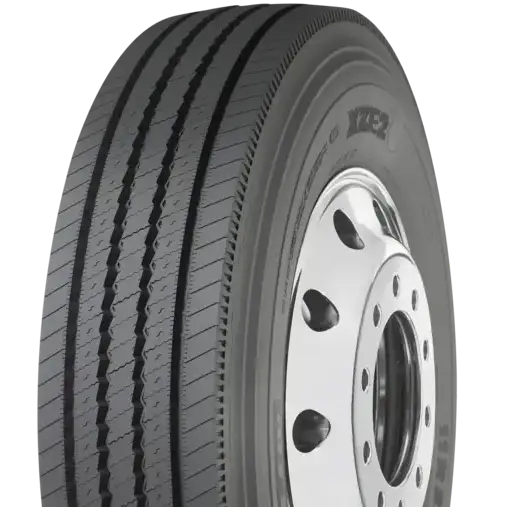
The Michelin XZE is a favorite among diesel pusher owners who log serious cross-country mileage. Its main strength is stability at highway speed on a rig that can weigh 30,000 pounds or more fully loaded, which is exactly the situation where a lesser tire starts to feel vague or squirmy in crosswinds.
Tread life is another reason it shows up so often in full-timer recommendations. A commercial-grade tire like this costs significantly more per tire than an LT or ST option, but when you are covering tens of thousands of miles a year, the cost per mile actually works out favorably compared to replacing a cheaper tire more often.
- Excellent highway stability at full load
- Long tread life built for high annual mileage
- Resists irregular wear common on steer axles
- Best for: full-time travelers logging serious highway miles in a diesel pusher
7. Toyo M143 – Best Value Commercial Tire
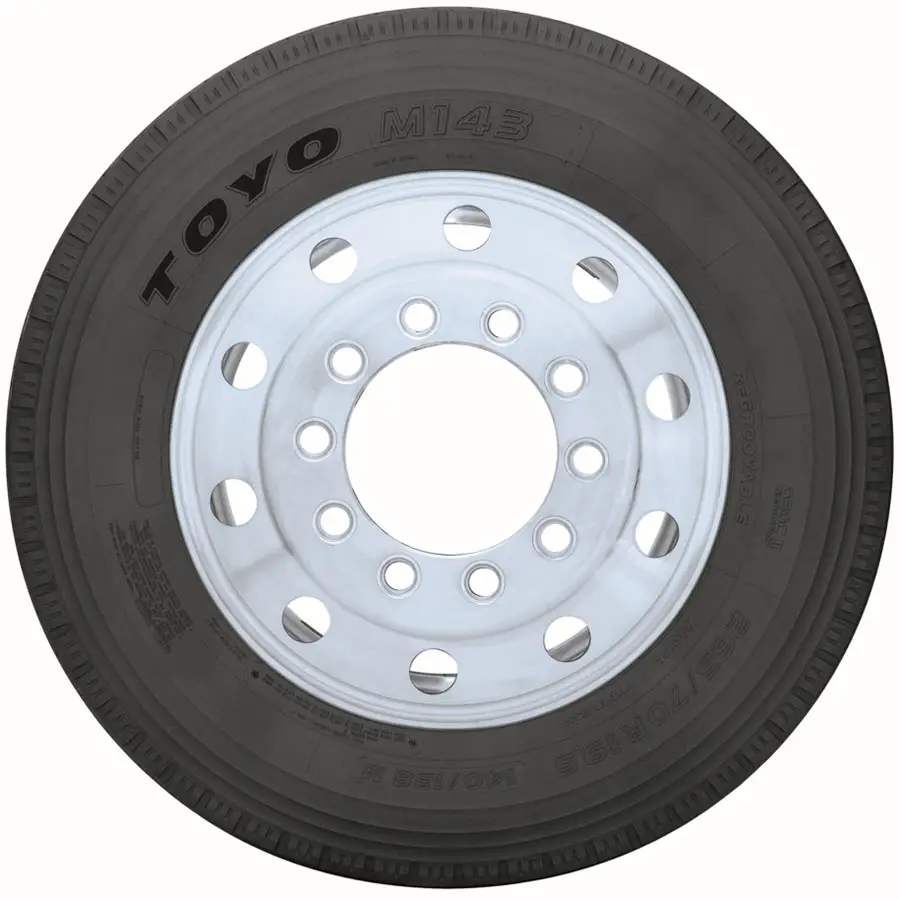
The Toyo M143 is built to handle the heat and steady loads of a bus-chassis motorhome running for hours at a time, without the price tag that comes with the top-tier commercial brands. It is a common pick for Class A owners who want a reliable, well-reviewed tire without paying Michelin or Goodyear pricing across a full set of six or more tires.
It performs well in the heat management department specifically, which is the number one enemy of any tire carrying a heavy, steady load for hours on end. Owners running warmer climates or long desert stretches mention this tire favorably for staying composed under those conditions.
- Handles heat well on long, steady highway hauls
- Lower cost than top-tier commercial brands
- Solid reputation for the price point
- Best for: budget-minded Class A owners who still want a dependable commercial tire
8. Goodyear G670 RV – Best for Elite Stability
The Goodyear G670 RV uses a high-tech belt system rated Load Range G, which translates into some of the best highway stability you can get on a large motorhome. Owners consistently mention reduced sway on long hauls, which is a real comfort and safety upgrade when you are driving a 40-foot rig for eight hours at a stretch.
It also uses a rubber compound designed to resist the cracking and heat damage that shortens the life of lesser tires in this category. This is a premium option, priced accordingly, but for large Class A RVs and diesel pushers that spend a lot of time on the road, it is one of the most highly regarded commercial RV tires available right now.
- Load Range G construction for maximum stability
- Reduced sway on long highway drives
- Rubber compound built to resist cracking and heat damage
- Best for: large Class A RVs and diesel pushers that log heavy annual mileage
How to Choose the Best RV Tires for Your Rig
With 8 solid options above, here is how to narrow it down based on what you actually drive and how you use it.
If you tow a travel trailer or 5th wheel
Stick with ST tires like the Goodyear Endurance or Maxxis M8008 unless you have already upgraded your wheels and axles to properly fit LT tires. Do not mix tire types without checking that your entire setup, not just the tire, supports the switch.
If you drive a Class B or C motorhome
Go with an LT tire rated for your GVWR, like the Michelin Agilis or Continental VanContact. Never drop below the load index already on your rig, even if a cheaper tire is tempting.
If you drive a Class A motorhome
Use the commercial tire your chassis maker specifies. The Michelin XZE and Goodyear G670 RV are strong picks for full-time travel, while the Toyo M143 is a solid value option if you want to keep costs down across a full set.
If your current tires are over 5 years old
Replace them regardless of tread depth. Check the DOT date code on the sidewall to confirm the actual age before you decide, since tread alone will not tell you the full story.
How Much Do Good RV Tires Cost?
Prices vary a lot by RV type and tire size. Here is a rough guide to what you should expect to pay per tire, before installation:
- ST trailer tires: $120 to $250 per tire
- LT tires for Class B/C motorhomes: $180 to $350 per tire
- Commercial tires for Class A motorhomes: $400 to $800 or more per tire
Buying a full set at once, rather than replacing one tire at a time as it wears out, usually gets you a better per-tire price and keeps wear even across the whole RV. It also means all your tires age out around the same time, which makes it easier to plan ahead instead of getting caught off guard by one old tire on an otherwise newer set.
Best RV Tires Comparison Table
| Tire | Type | Best For | Standout Feature |
|---|---|---|---|
| Goodyear Endurance | ST | Travel trailers & 5th wheels | Heat and crack resistant compound |
| Carlisle Radial Trail HD | ST | Budget trailer tire | Reliable at a lower price |
| Maxxis M8008 | ST | Frequent towing | Even wear, strong air retention |
| Michelin Agilis | LT | Class B & C motorhomes | Long mileage, quiet ride |
| Continental VanContact | LT | Class B & C motorhomes | Strong wet weather grip |
| Michelin XZE | Commercial | Class A diesel pushers | Stability on long highway hauls |
| Toyo M143 | Commercial | Budget Class A motorhomes | Handles heat and steady loads |
| Goodyear G670 RV | Commercial | Class A & buses | Load Range G, reduced sway |
Frequently Asked Questions
How to tell if RV tires are good?
Check the DOT date code first, since age matters more than tread depth for RV tires. Then look for sidewall cracking, confirm the load index matches or beats the original, and check for flat spots caused by long periods parked in one spot.
How to choose RV tires?
Start with your RV type. Trailers need ST tires, Class B and C motorhomes need LT tires, and Class A motorhomes need commercial tires. From there, match or exceed your current load index and load range, and buy the newest production date you can find.
Do RVs need special tires?
Yes. RVs carry far more weight than a passenger car and often sit parked for long stretches, which ages tires faster than mileage alone would suggest. Regular passenger tires are not built to handle either of those conditions safely.
How much are good RV tires?
ST trailer tires run $120 to $250 each, LT tires for Class B/C motorhomes run $180 to $350 each, and commercial tires for Class A motorhomes run $400 to $800 or more each, not including installation.
How long do RV tires last?
Most manufacturers recommend replacing RV tires every 5 to 7 years regardless of tread depth, since the rubber breaks down with age and sun exposure even on RVs that are barely driven.