Most drivers only think about their tires after something goes wrong. A flat on the highway. A skid in the rain. A blowout at 60 mph. The truth is, knowing how to know if you need new tires before any of that happens is one of the simplest things you can do to stay safe on the road. Your tires are the only part of your car that actually touches the ground. Everything else, like your brakes, your steering, and your suspension depends on them doing their job.
This guide walks you through 7 clear warning signs that your tires may need replacing. Some you can spot with your eyes. Others you will feel when you drive. All of them matter.
1. Your Tread Depth Is Too Low
Tire tread is what keeps your car connected to the road. Those grooves and channels you see on the rubber are designed to grip the pavement and push water out from under the tire. When the tread wears down, that ability disappears fast.
The legal minimum tread depth in the United States is 2/32 of an inch. But here is the deal: by the time you hit 2/32, your stopping distance in wet conditions has already gotten significantly worse. Many tire experts now recommend replacing tires at 4/32 of an inch if you drive in rain regularly, and some performance tire manufacturers suggest 5/32 for wet road safety.
How to Check Your Tire Tread at Home
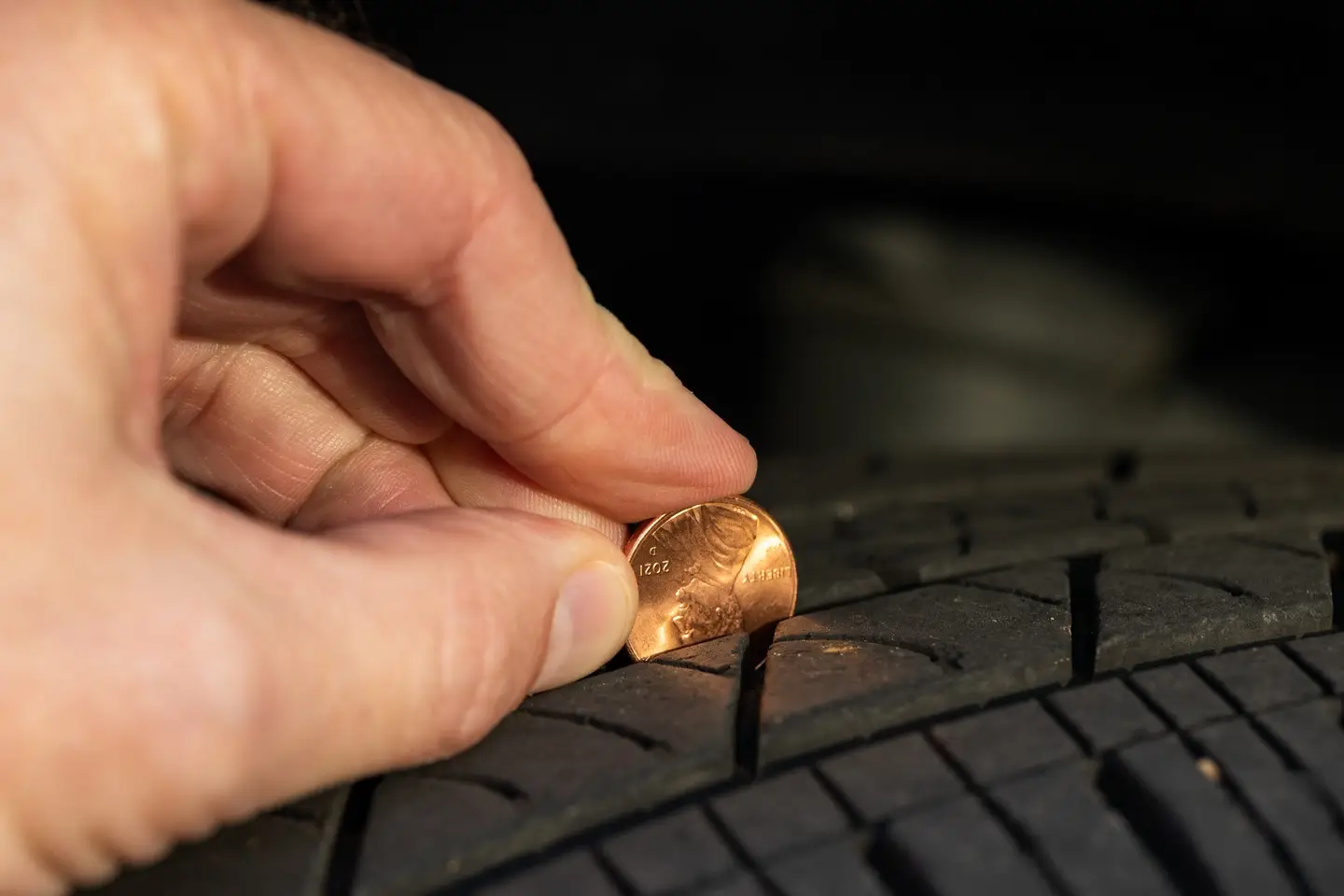
The Penny Test: Take a penny and push Lincoln’s head down into a tread groove. If you can see the top of his head, your tread is at or below 2/32 of an inch. That means it is time for new tires right away.
The Quarter Test: This is the better test most people skip. Use a quarter instead of a penny and put Washington’s head into the groove. If you can see the top of his head, you are at or below 4/32 of an inch. This is the point where your wet weather braking starts to suffer. If your area gets rain, this is your real warning threshold.
Tread Wear Indicator Bars: All tires sold in the U.S. have small raised rubber bars sitting inside the grooves between the tread blocks. When the surface of your tread is level with those bars, your tires are worn out. You should not wait until you reach this point before taking action.
Check all four tires, not just one. Different positions on your car wear tires at different rates, so you may find one tire is fine and another is nearly bald.
2. Cracks, Cuts, or Dry Rot on the Sidewall
Run your eyes along the sidewall of each tire, the flat vertical area between the tread and the wheel. Look for any cracking, splitting, or small cuts in the rubber.
This kind of damage is called dry rot, and it happens when rubber loses its natural oils over time. Heat, sunlight, ozone exposure, and road chemicals all speed up this process. A tire can develop dry rot even if it has barely been driven on. You might see tires parked in someone’s garage for years that look almost new from a distance, but up close the sidewall is cracked all over. That tire is dangerous.
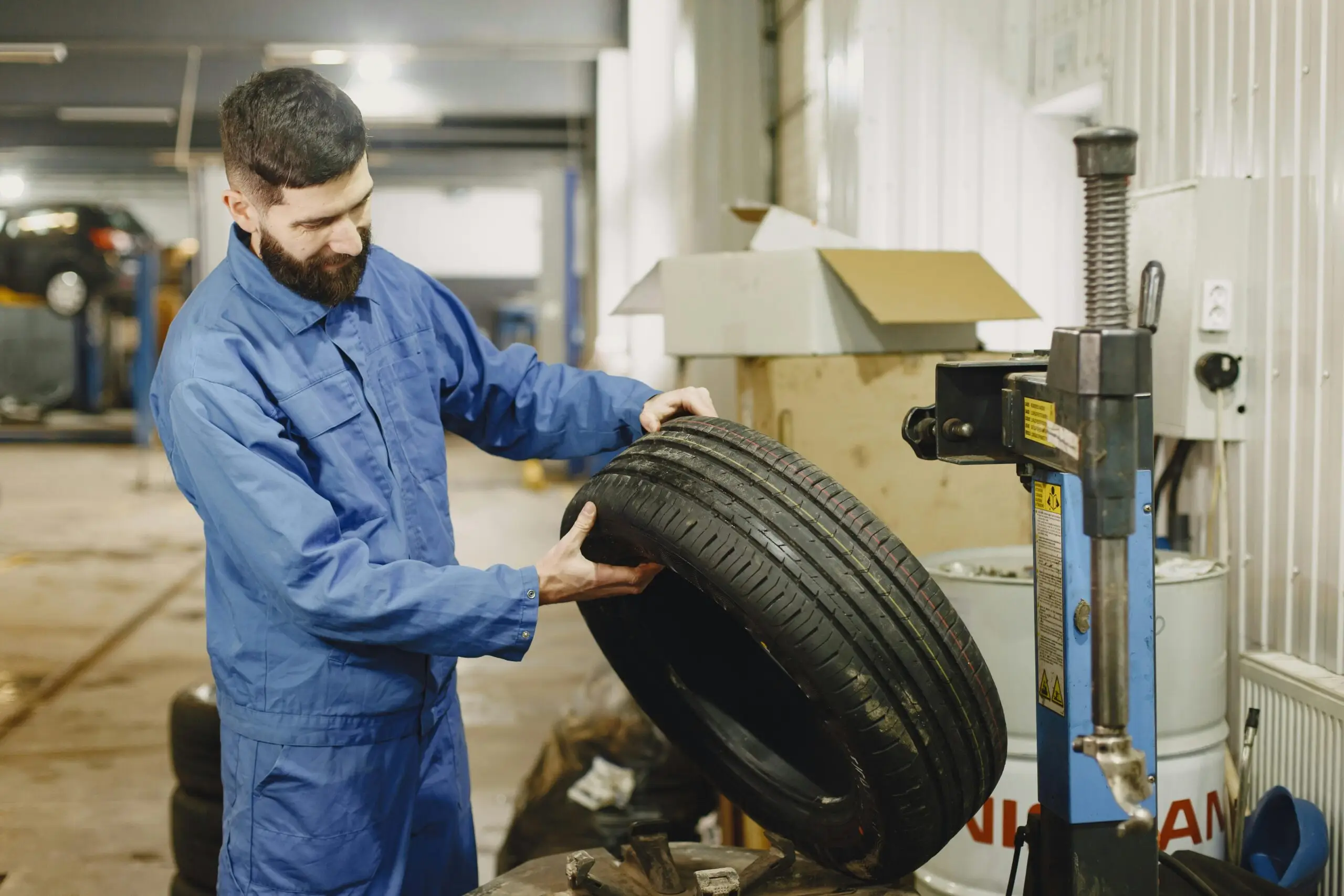
Cracks weaken the internal structure of the tire. They can allow air to slowly leak out or cause a sudden blowout when the rubber finally splits under pressure. Even small cracks that do not look serious can become a problem at highway speeds where the heat and flex of the tire increase dramatically.
If you see visible cracking along the sidewall, have the tire inspected by a professional. If the cracking is deep or widespread, replacement is the right call.
3. Bulges or Blisters on the Tire
A bulge on the side of your tire is one of the most urgent warning signs you will ever see. Do not drive on a tire that has a visible bulge or blister.
Inside every tire, there is a layer called the inner liner. This liner holds air and keeps the tire structure intact. When you hit a pothole, a curb, or a sharp bump at speed, the liner can tear. Air then pushes through the damaged spot and creates a visible bubble or bulge on the outside of the tire. The rubber on the outside may still look intact, but the structural damage is already done.
A tire with a sidewall bulge can fail without warning. It is not a slow leak situation. It is a ticking clock. If your tire is bulging, keep your speed low, avoid highways, and get to a tire shop as soon as possible.
4. Uneven Tread Wear
When you check your tires, pay attention to how the tread is wearing across the width of the tire. Ideally, the wear should look even from edge to edge. When it does not, something else is wrong.
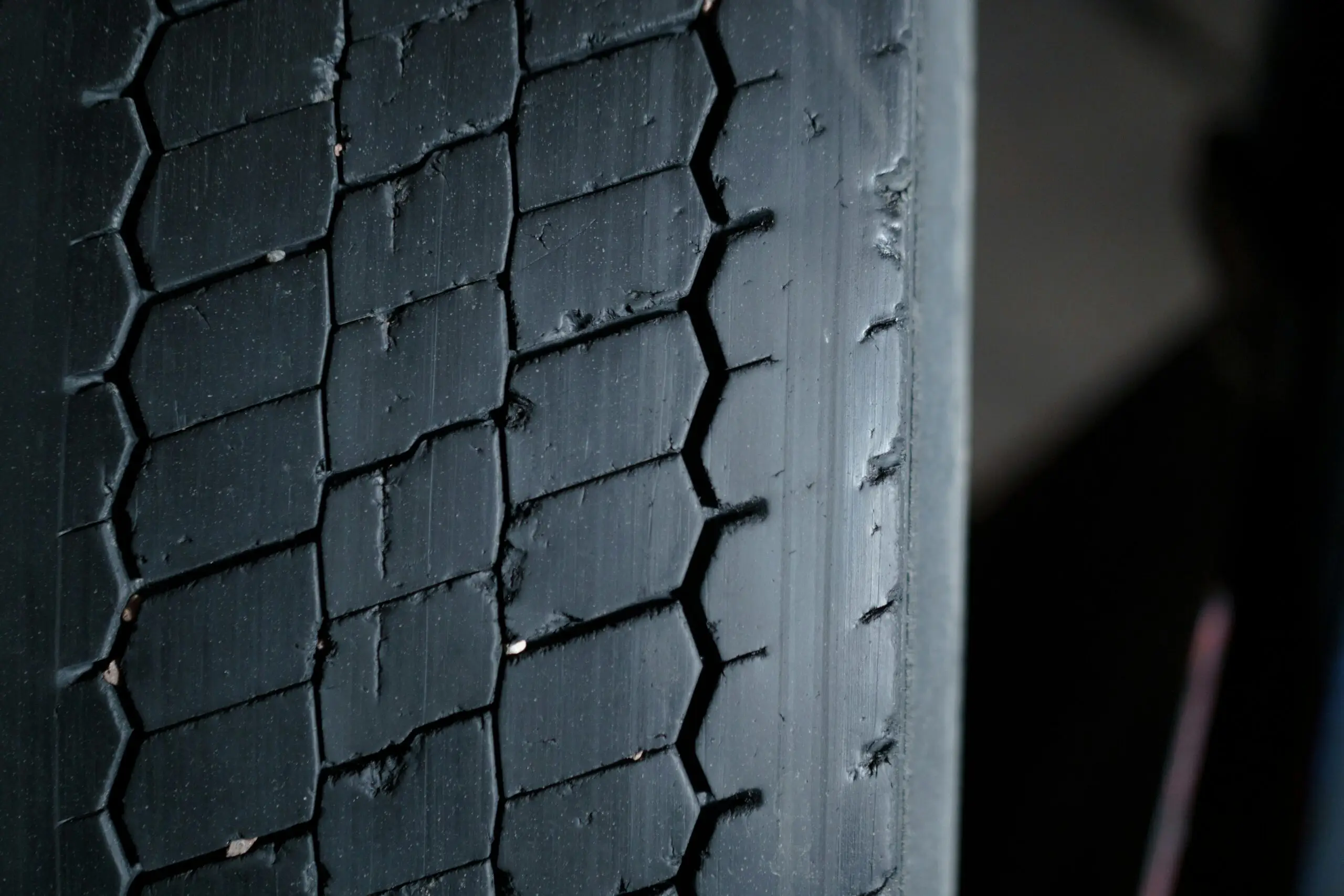
- Wear on both outer edges, with the center still thick: Your tires have been running underinflated. Low tire pressure causes the edges to carry more of the load.
- Wear in the center, with both edges still raised: Your tires have been overinflated. Too much air pressure makes the center of the tread push harder into the road.
- Wear only on one side of the tread: Your wheels are out of alignment. This is the most common cause of one-sided wear on front tires in sedans, SUVs, and trucks alike.
- Patchy or cupped wear (uneven spots around the circumference): This often points to worn shocks or struts, or a tire that is out of balance.
Uneven wear shortens the life of a tire fast. Even more importantly, it is a sign that something mechanical needs attention. Replacing tires without fixing the underlying cause means your new tires will wear out unevenly too. Always rotate your tires every 5,000 to 7,500 miles to help them wear evenly across all four positions.
5. Vibration or Thumping While Driving
Some vibration is normal on rough roads. But if you feel a constant shimmy through the steering wheel, seat, or floor when driving on smooth pavement, that is your car telling you something is off.
Tire-related vibration usually comes from one of these sources:
- A tire that is out of balance
- A tire with a flat spot from hard braking or sitting stationary for a long time
- Internal damage inside the tire from an impact (the belts inside may have shifted)
- A bent wheel or rim
A thumping or rhythmic beating sound that gets faster as you speed up is often a sign of a flat spot or a separated belt inside the tire. This kind of internal damage is invisible from the outside, which makes it easy to ignore. Do not ignore it. A separated belt can lead to a sudden blowout, especially at higher speeds when the tire heats up.
If the vibration started after hitting a pothole or a large bump, get your tires inspected as soon as you can.
6. Your Tires Are More Than 6 Years Old
Here is a warning sign that is easy to miss because it has nothing to do with how the tire looks or feels. Rubber degrades with age, regardless of how much tread is left. UV exposure, heat cycles, and oxidation all break down the compounds inside the rubber over time. An older tire may look fine on the outside while the internal structure has already weakened significantly.
Most major tire manufacturers recommend replacing tires at 6 years from the date of manufacture. The absolute maximum, even for tires that look perfect, is typically 8 years. After that point, no tire should still be in service.
How to Find Out How Old Your Tires Are
Every tire has a DOT code stamped on the sidewall. Look for the letters “DOT” followed by a series of characters. The last four digits at the end of that code tell you the tire’s birthday. The first two digits are the week, and the last two are the year.
For example, if you see “2419” at the end of the DOT code, your tire was made in the 24th week of 2019. That tire is now over 6 years old and should be replaced even if the tread looks good.
This is especially important for spare tires, which often sit in the trunk for years without anyone checking them. A spare that is 8 or 9 years old will not save you in an emergency the way a newer tire will.
7. Your TPMS Warning Light Keeps Coming On
Most vehicles made after 2008 have a Tire Pressure Monitoring System, or TPMS. It is the small light on your dashboard that looks like a cross-section of a tire with an exclamation mark inside it. When this light turns on, it means at least one of your tires has dropped significantly below its recommended pressure.
A one-time alert on a cold morning is often just the result of air contracting in cooler temperatures. Refill your tires to the correct PSI and see if the light goes off. The correct pressure for your car is listed inside the driver’s door jamb or in your owner’s manual. Do not use the number on the tire itself. That is the maximum pressure, not the recommended operating pressure.
But if your TPMS light keeps coming back, or if one tire consistently loses pressure faster than the others, you likely have a slow leak. This can be caused by a nail or screw embedded in the tread, a damaged valve stem, or a rim that is no longer sealing properly. In some cases, a tire that loses air repeatedly has internal damage that makes repair impossible. Replacement is the only safe option at that point.
Never ignore a recurring TPMS warning. Driving on underinflated tires increases heat buildup inside the tire and dramatically raises the risk of a blowout.
Bonus: What Happens When You Drive on Worn Tires
Most people know worn tires are “bad.” But understanding exactly what happens can make the decision to replace them feel a lot more urgent.
When it rains and your tread depth is low, your tires can no longer channel water out from under the contact patch fast enough. The tire starts to ride on top of a thin film of water instead of gripping the road. This is hydroplaning, and when it happens, you have almost no steering or braking control. It can happen at speeds as low as 35 mph on a wet road with tires that are even slightly worn.
Worn tires also increase your braking distance significantly. A vehicle traveling at 60 mph with tires at 2/32 of an inch tread can take up to 100 feet longer to stop compared to the same car with tires at 10/32, a massive difference when something unexpected happens in front of you.
Quick Summary: When to Replace Your Tires
You likely need new tires if any of the following apply:
- Tread depth is at or below 4/32 of an inch (especially if you drive in wet conditions)
- Tread depth is at or below 2/32 of an inch for any reason
- Visible cracks, cuts, or dry rot on the sidewall
- A bulge or blister anywhere on the tire
- Noticeably uneven tread wear across the tire surface
- Persistent vibration or thumping that started recently
- Tires are 6 or more years old from their manufacture date
- TPMS warning light that keeps returning after you refill to the correct pressure
If you are replacing two tires instead of all four, always put the newer tires on the rear axle. Rear tires provide stability, and losing grip at the back of the car is harder to correct than losing grip at the front. This applies to front-wheel drive, rear-wheel drive, and all-wheel drive vehicles.
Final Thoughts on How to Know If You Need New Tires
The good news is that checking your tires takes about five minutes. A quick walk around your car, a penny or quarter in the tread, a look at the sidewalls, and a glance at the DOT code can tell you most of what you need to know. Knowing how to know if you need new tires is not complicated. The hard part is making the habit of actually doing it.
Set a reminder to check your tires once a month. Do it when you check your oil or top up your washer fluid. A few minutes of attention now is a lot cheaper and a lot safer than a blowout at highway speed.
If you are not sure what you are looking at, or if something does not look right, take your car to a trusted tire shop for a free inspection. Most shops will look at your tires at no charge. There is no reason to guess when the information is that easy to get.
At AutoTireGuide.com, we review tires and break down everything you need to know about buying, maintaining, and replacing them. If you want to know which tires work best for your vehicle and driving conditions, browse our tire reviews or check out our buying guides.