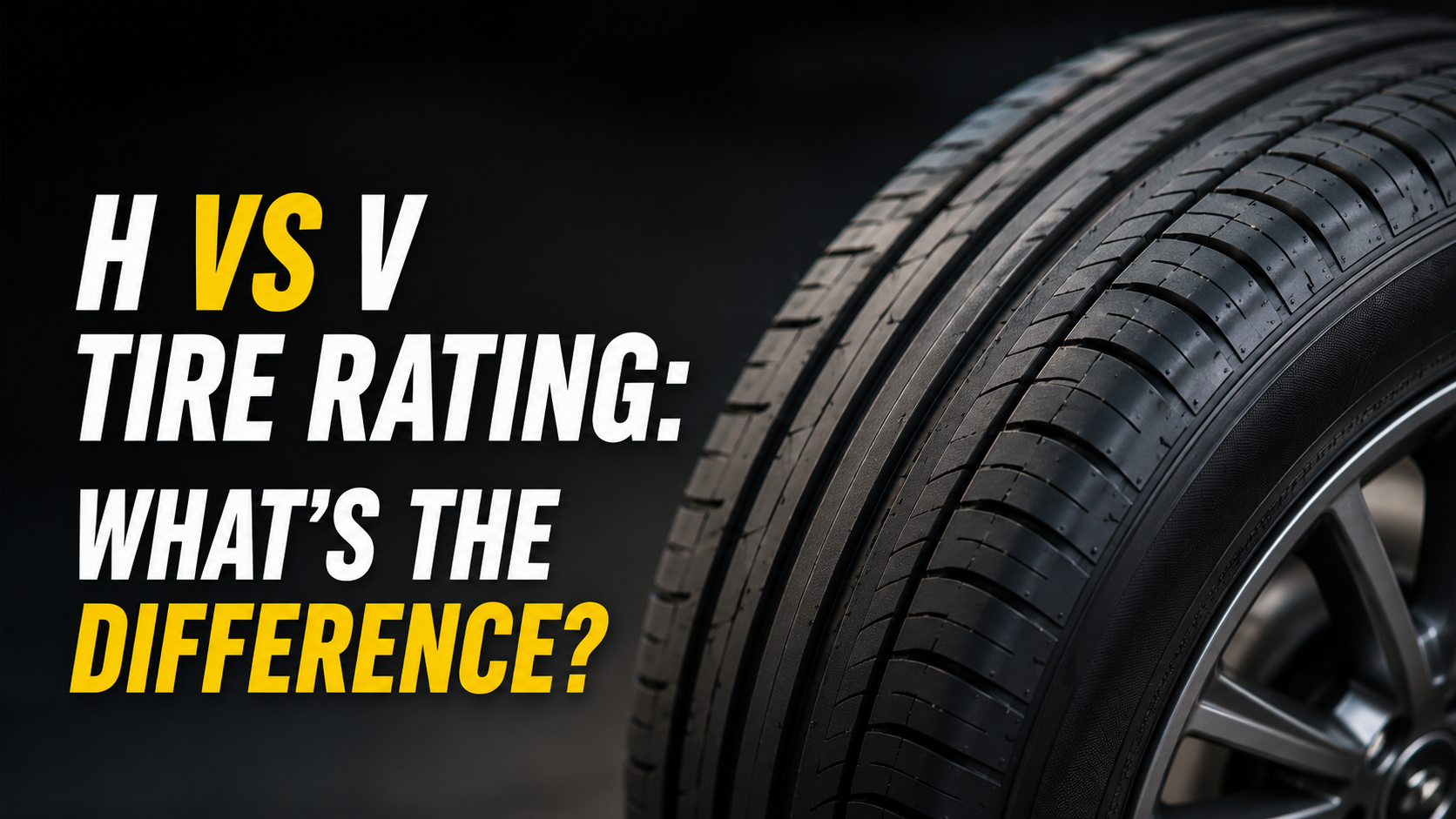
Neither H nor V is “better” on its own. In the H vs V tire rating comparison, V handles higher sustained speeds (149 mph vs 130 mph) and usually grips and corners a bit better, while H tends to ride softer and last longer on the tread. The right one for you is whatever your car came with from the factory. Let’s get into why, and when it actually makes sense to go one way or the other.
The Quick Answer
- H-rated tires: handle sustained speeds up to 130 mph. Common on family sedans, crossovers, and everyday commuter cars. Softer ride, usually longer tread life.
- V-rated tires: handle sustained speeds up to 149 mph. Common on performance sedans, sportier trims, and some luxury cars. Stiffer construction, sharper handling, usually shorter tread life.
You’ll almost never touch either top speed on public roads. But the rating isn’t just about top speed. It’s a stand in for how the whole tire was engineered, its stiffness, its heat handling, and how it grips in corners.
H vs V Tire Rating: The Core Differences
| Category | H Rating | V Rating |
|---|---|---|
| Max sustained speed | 130 mph (210 km/h) | 149 mph (240 km/h) |
| Sidewall construction | Softer, more flex | Stiffer, less flex |
| Ride comfort | Smoother over bumps | Firmer, more road feel |
| Cornering and handling | Good, everyday driving | Sharper, more responsive |
| Tread life | Usually longer | Usually shorter |
| Price | Generally lower | Generally a bit higher |
| Typical vehicles | Sedans, minivans, crossovers, SUVs | Performance sedans, sport trims, coupes, some luxury SUVs |
Which Vehicles Use H-Rated Tires?
You’ll find H-rated tires as the factory setup on most family sedans, minivans, crossovers, and mainstream SUVs. Think Toyota Camry, Honda CR-V, or a base trim Accord. These cars aren’t chasing top speed. The automaker picked H because it’s the right balance of comfort, tread life, and cost for how most people actually drive.
Which Vehicles Use V-Rated Tires?
V-rated tires show up on sport trims, performance sedans, coupes, and some higher trim crossovers and luxury cars. A Camry SE or a BMW 3 Series often rides on V-rated rubber, even though the driver isn’t going anywhere near 149 mph. The automaker wants the stiffer sidewall for sharper steering feel and better grip during hard cornering or braking, not just for top speed bragging rights.

Does the Higher Rating Actually Matter If You Never Drive That Fast?
Yes, and this is the part most guides skip. The speed rating isn’t only about top speed. It’s tied to how the tire handles heat buildup, how stiff the sidewall is, and how it responds when you brake hard or take a corner fast. A V-rated tire on a car built for V-rated tires will generally out-corner and out-brake an H-rated tire in the same size, even at 40 mph in a parking lot emergency stop.
That’s why the rule from every automaker and tire engineer is the same: never drop below the rating your car came with from the factory. Going up is fine. Going down trades away some of the grip and stability your car was actually tuned for.
Can You Put V-Rated Tires on a Car That Came With H?
Yes. Going from H up to V is always safe, since V meets and exceeds everything H offers. You might notice a slightly firmer ride and a little more road noise, and you’ll likely pay a bit more per tire. Just make sure all four tires match in speed rating. Mixing ratings across the axle throws off handling balance, especially in the wet.
Tread Life: The Real Tradeoff Between H and V
This is where H usually wins. The stiffer rubber compounds and sidewall construction that give V-rated tires their sharper handling also tend to wear down a bit faster. If you’re a daily commuter who wants max miles per tire and doesn’t care about cornering grip, H-rated tires in a comfort or touring line will often out-last a V-rated performance tire by several thousand miles. If your priority is handling and you don’t mind replacing tires a bit sooner, V is worth it.
So, H vs V Tire Rating: Which Should You Buy?
Match what your car came with. Check the tire placard on your driver’s door jamb or your owner’s manual, it lists the exact size and speed rating your manufacturer engineered the car around. If you’re replacing worn tires, staying at the same rating (or going up) keeps your car handling the way it was designed to. If you’re cross-shopping and comfort or tread life matters more to you than sharp cornering, and your car allows it, a well reviewed H-rated tire is a completely reasonable choice too.
Not sure what code your current tires carry, or what the numbers next to the letter mean? Check out our breakdown of what a code like 97V actually means, and our full tire buying guide for everything else to check before you buy. If you want to understand the number that comes before the letter, our load index guide covers that in full.