
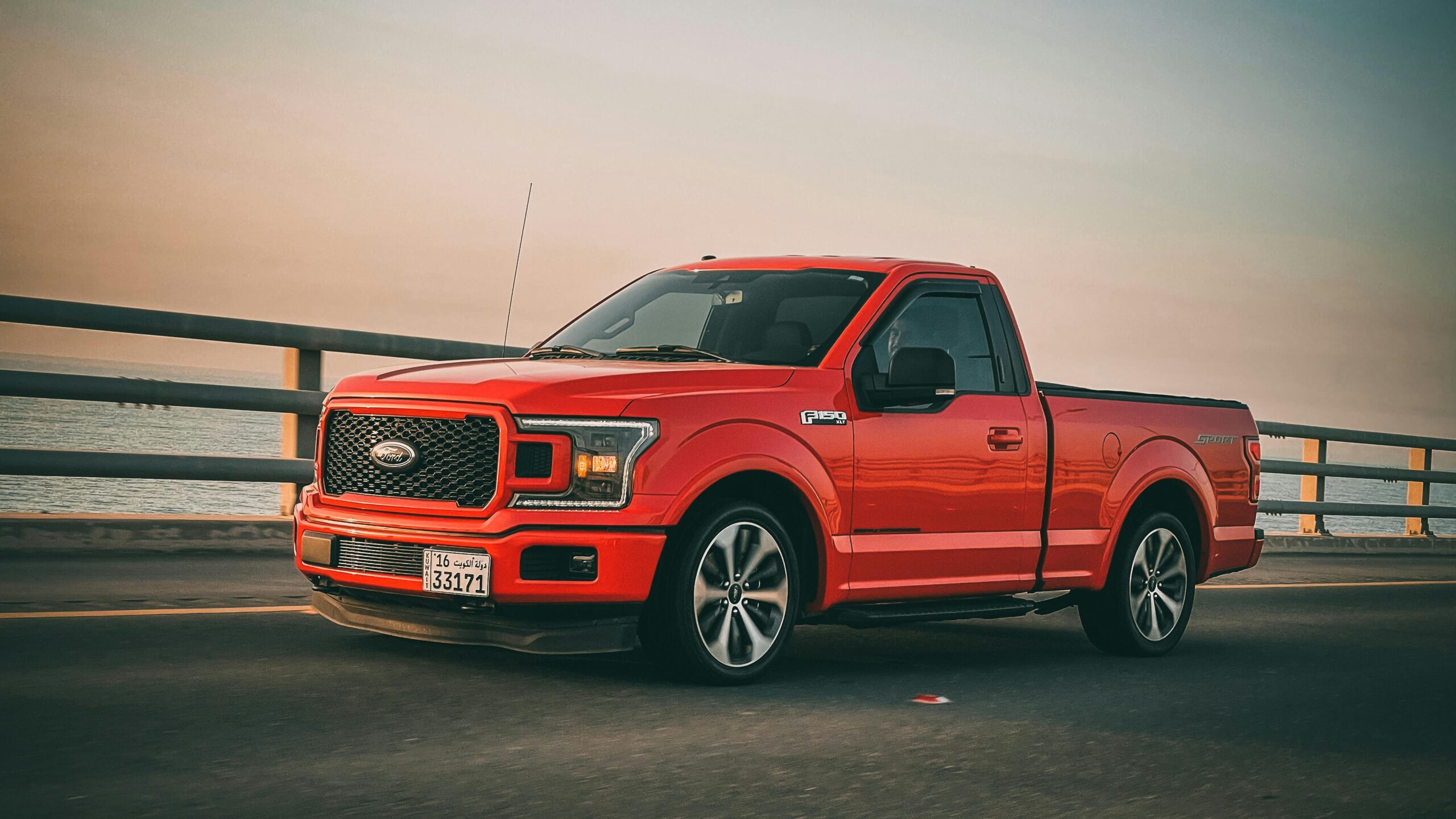
The Ford F150 has been America’s best-selling truck for over four decades. That kind of staying power earns respect, but it also means there are a lot of model years on the used market, and not all of them deserve your money. Some years are genuine workhorses that hold up past 200,000 miles. Others will have you at the dealership service bay more than you’d like.
At AutoTireGuide, we dig into owner feedback, NHTSA complaint data, and reliability reports before making any recommendation. This guide is built on that research. Whether you’re buying your first truck or replacing an old one, we’ll tell you which F150 model years earned their reputation, which ones looked good on paper but disappointed in the driveway, and what you should look for before signing anything.
A Quick Look at F150 Generations
Understanding F150 generations helps you shop smarter. Ford redesigns the F150 every several years, and within each generation, early model years tend to carry more bugs than later ones. Here’s a simple breakdown:
- 11th Gen (2004–2008): Avoid 2004–2007. The 2008 is the exception worth considering
- 12th Gen (2009–2014): The sweet spot for used truck buyers
- 13th Gen (2015–2020): Aluminum-body era, mixed years within
- 14th Gen (2021–present): More technology, but early years had recall issues
The Best Years for the Ford F150
1. 2008 Ford F150: The Last of the Old Guard, Done Right
The 2008 F150 closes out the 11th generation, and it does so cleanly. Ford had spent four years fixing the problems that made 2004 through 2007 so difficult, and by 2008, most of those issues were behind them. The spark plug ejection problem that plagued the 5.4L Triton V8 in earlier years was addressed, build quality improved, and owner satisfaction climbed noticeably. RealTruck and several other reliability trackers list the 2008 as one of the better years in the truck’s history.
It is not a modern truck by any measure. The interior is dated, technology is basic, and fuel economy is nothing impressive. But if you need a rugged workhorse on a tight budget and you are comfortable wrenching on older vehicles, the 2008 is a capable, proven option. Just avoid the 5.4L Triton entirely and go with the 4.6L V8 instead.
- Pros: Most 11th gen issues resolved, strong reputation, low entry price
- Cons: Aging interior, dated tech, avoid the 5.4L Triton engine on this year
2. 2009 Ford F150: Solid Value, Proven Reliability
The 2009 F150 sits near the top of almost every reliability discussion. It was the first year of the 12th generation, bringing a refreshed body, improved safety features, and a more comfortable interior. Owner complaint data on Car Complaints shows a much lower than average complaint count for this year, which is always a good sign.
The main issue to know: some diesel variants had stalling problems at low RPMs. If you’re buying a gasoline version, that concern doesn’t apply. Overall, the 2009 is reliable, affordable on the used market, and parts are widely available. It’s one of the best years for Ford F150 buyers on a budget.
- Pros: Low complaint rate, solid towing, affordable used pricing
- Cons: Diesel stalling issues on some trims, aging interior tech
3. 2012 Ford F150: The EcoBoost Sweet Spot
The 2012 model brought the 3.5L EcoBoost V6 into full maturity. Ford had ironed out the early EcoBoost issues by this point, and the result was a truck that delivered real power alongside better fuel economy than V8 rivals. Towing capacity was excellent, and the engine holds up well with proper maintenance.
One thing to verify on any 2012 you’re considering: the fuse-related fuel pump issue that affected 2009–2014 trucks. The fix is inexpensive, but you’ll want to confirm it’s been done. Otherwise, the 2012 is a dependable buy.
- Pros: Mature EcoBoost engine, strong towing, good fuel economy
- Cons: Fuel pump fuse issue common across the generation, check service history
4. 2014 Ford F150: Best of the 12th Generation
The 2014 rounded out the 12th generation at its peak. Interior quality was noticeably better than earlier years in the same generation. You get your choice of a 5.0L V8 or the 3.5L EcoBoost V6, both of which are solid engines. Reliability data consistently ranks this year among the stronger F150s.
One point of caution: Ford recalled roughly 271,000 F150s from the 2013–2014 model years in 2016 for brake fluid leakage. Check that any 2014 you’re looking at has had this addressed.
- Pros: Refined interior, multiple capable engine choices, proven reliability
- Cons: Brake fluid recall affects some units, confirm before buying
5. 2017 Ford F150: The Aluminum Body Gets It Right
Ford introduced the aluminum body in 2015, and the first two years were rough. By 2017, most of those teething problems were worked out. The 2017 received an updated infotainment system with SYNC 3, better engine options, and improved towing capacity. Consumer Reports and owner forums both rate this year positively compared to 2015 and 2016.
The 2017 still carries door latch concerns from the 2015–2017 recall, so verify that fix has been completed on any truck you inspect. With that confirmed, it’s a capable, modern F150 at a reasonable used price.
- Pros: SYNC 3 system, improved towing, aluminum body benefits (lighter, better MPG)
- Cons: Door latch recall, confirm it’s been addressed
6. 2019–2020 Ford F150: Modern Features, Proven Dependability
The 2019 and 2020 model years represent the best of the 13th generation. By this point, the aluminum body was fully proven, reliability had stabilized, and the truck came loaded with useful technology. The 2020 in particular had very few complaints relative to its sales volume. NHTSA data shows only 7 recalls on the 2020, and most issues were addressed through recalls promptly.
For engine choice on this era, the 2.7L EcoBoost is widely regarded as the most reliable option. If you go with the 5.0L V8, check for oil consumption, a known issue on 2018–2019 models that Ford improved in 2020. These years typically run $25,000–$40,000 on the used market depending on mileage and trim.
- Pros: Modern tech, strong reliability data, excellent 2.7L EcoBoost
- Cons: 5.0L V8 on 2018–2019 may have oil consumption, verify before buying
The Worst Years for the Ford F150
1. 2004–2006 Ford F150: The Generation to Skip
The 2004 F150 holds the record for the most NHTSA complaints of any F150 model year, with around 2,400 complaints and 16 recalls. The 5.4L Triton V8 was the main culprit. Spark plugs would literally break off inside the cylinder head during removal, a repair that could cost $1,200 to $1,500 or more. There were also cam phaser failures, oil leaks, and transmission problems across the generation.
The 2005 model was recalled for airbags that would randomly deploy, a serious safety concern. The 2006 added electrical gremlins and suspension issues to the mix. This entire generation is best avoided. There are simply too many better options on the used market.
2. 2010–2011 Ford F150: Early 12th Gen Bugs
While the 2012–2014 F150s are worth buying, the first two years of that generation are a different story. The 2010 had significant engine leak problems, ignition coil failures, and an automatic transmission that would randomly downshift into second gear. Infotainment screens were unresponsive, and backup cameras would stop working without warning.
The 2011 improved slightly but still carried fuel system concerns and a higher than average repair frequency. Given that the 2012, 2013, and 2014 are available at similar used prices, there’s no good reason to settle for 2010 or 2011.
3. 2015–2016 Ford F150: First-Year Aluminum Pains
Ford made a bold move going aluminum in 2015. The problem is that bold moves often mean first-year problems, and 2015 and 2016 delivered those. Door latches failed on multiple vehicles, causing doors to swing open while driving. There were also engine issues, EcoBoost turbo concerns, and brake problems across the generation’s early years. The 2016 saw Ford recall 271,000 trucks from the 2013–2014 era for brakes, and the 2015–2016 themselves accumulated their own set of recalls.
The technology was ahead of its time, but the execution needed another year. Skip to 2017 or later if you want an aluminum-body F150.
4. 2021 Ford F150: Most Recalled Year in F150 History
The 2021 launched the 14th generation with genuine improvements over the previous design. It also arrived with 26 to 27 NHTSA recalls, the highest of any F150 model year on record. Powertrain complaints were the most common, affecting 332 out of 1,021 documented owner complaints. The PowerBoost hybrid version received a Consumer Reports reliability score of just 4 out of 100 in 2022, the worst score they had given any vehicle in years.
If you want a 14th gen F150, wait for 2023 or 2024 models, where recall counts drop significantly and Ford had time to resolve early production issues.
Which Engine Should You Choose?
Regardless of model year, engine choice matters as much as the year itself. Here’s a quick guide:
- 2.7L EcoBoost V6: The most consistently reliable modern F150 engine. Good power, good fuel economy, fewer issues across model years.
- 3.5L EcoBoost V6: Powerful and capable, but cam phaser issues affected 2017–2020 models. The 14th gen version improved significantly.
- 5.0L V8: Strong and straightforward, but the 2018–2019 versions had documented oil consumption. Confirm no excessive oil use before buying.
- 5.4L Triton V8 (2004–2010): Avoid. The spark plug and cam phaser issues make it a maintenance nightmare.
- PowerBoost Hybrid (2021–2022): Consumer Reports rated it the least reliable vehicle tested for three consecutive years. Not recommended for used buyers.
Quick Summary: Best Year for Ford F150 by Budget
| Budget Range | Best Year to Buy | Why |
|---|---|---|
| Under $15,000 | 2008, 2009 or 2012 | Proven reliability, affordable parts |
| $15,000–$25,000 | 2014 or 2017 | Modern features, good reliability track record |
| $25,000–$40,000 | 2019 or 2020 | Best of 13th gen, strong used market value |
| $40,000+ | 2023 or 2024 | 14th gen bugs resolved, improved reliability data |
What to Check Before You Buy Any Used F150
No matter which year you settle on, do these before handing over money:
- Pull the NHTSA recall database and confirm all open recalls have been completed.
- Request a full service history. Look for evidence of oil changes every 5,000–7,500 miles.
- On any EcoBoost engine, check for turbo boost pressure irregularities and listen for excessive blow-off sounds at cold start.
- On 5.0L V8 models from 2018–2019, add a quart of oil and check whether it drops within 500 miles. That tells you if oil consumption is present.
- Have an independent mechanic inspect the transmission, especially on any truck from 2010–2011 or 2015–2016.
- Get a CarFax report to check for accident history and number of previous owners.
Frequently Asked Questions
What is the best year for Ford F150 overall?
For used buyers, the 2019 and 2020 models stand out as the best combination of modern features and proven reliability. On a tighter budget, the 2014 or 2017 are strong alternatives.
Which Ford F150 years should I avoid?
The 2004 to 2006 generation is the most problematic by far. Beyond those, the 2010, 2011, 2015, 2016, and 2021 all carry elevated risk due to specific mechanical or recall issues.
Is the F150 a reliable truck long-term?
Yes, with the right model year and proper maintenance, the F150 regularly reaches 200,000 miles. Engine choice matters: the 2.7L EcoBoost and properly maintained 5.0L V8 are among the most durable options.
Does the 2015 F150 aluminum body rust or dent easily?
Aluminum does not rust, which is one of its advantages. It can dent more easily than steel in low-speed impacts, but repairs have become more affordable as body shops gained experience with the material.
What is the most common problem with the Ford F150?
Across all generations, engine and powertrain issues appear most frequently. Specific concerns include spark plug failures on 2004–2008 models, EcoBoost cam phaser problems on 2017–2020, and transmission issues on 2010–2011. Choosing a newer, later-year model within any generation reduces your risk considerably.